









Blood test home kit UK
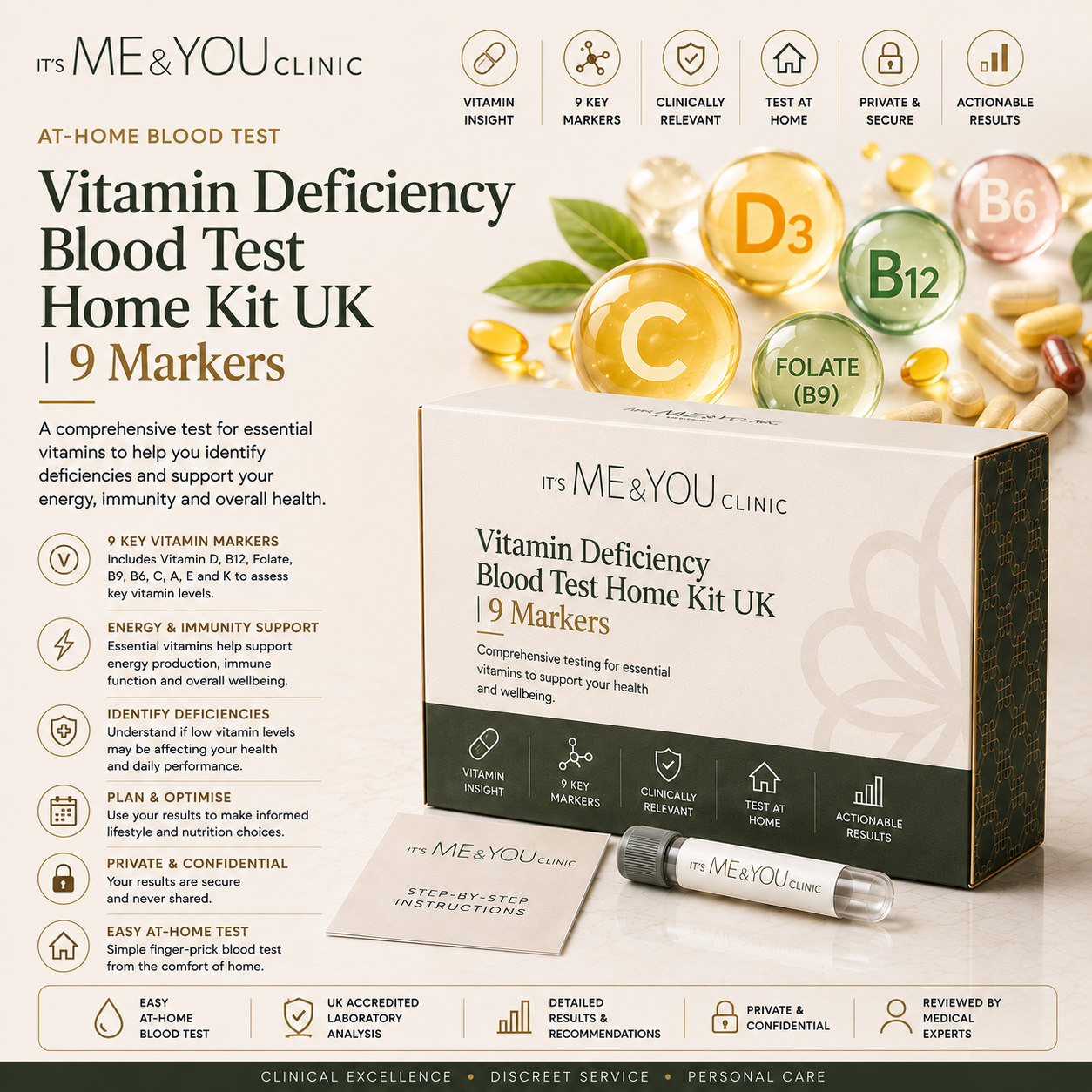
Vitamin Deficiency Blood Test Home Kit UK
A nine marker nutrition panel bringing vitamins, magnesium and a detailed iron profile into one laboratory report.
Tiredness, weakness, cramps and hair changes can lead to multiple supplements without a clear baseline. This panel is designed to identify selected nutritional patterns while preserving the need to investigate why a deficiency has occurred.
When it may be considered
Start with symptoms, risk and the reason for testing
- Persistent tiredness, weakness or reduced energy
- A vegan, vegetarian or restrictive diet
- Heavy menstrual bleeding or previous low iron stores
- Limited sunlight exposure
- Possible malabsorption or medicine related risk
- Diagnosing every vitamin or mineral deficiency
- Confirming anaemia without a full blood count
- Starting high dose supplements without considering cause and safety
The report at a glance
How the included markers fit together
Three nutritional pathways
Availability, storage and absorption
Patterns are more informative than isolated flags
Examples of combined findings
Nine individual markers
Colour coded interpretation by biomarker
Transferrin saturation
Transferrin saturation, often shortened to TSAT, estimates the percentage of iron binding sites on transferrin that are occupied. It is calculated from serum iron and TIBC.
A lower result can occur with iron deficiency, chronic blood loss, poor absorption, inflammation or increased iron requirements.
Discuss the complete iron pattern with a GP. A full blood count may also be required.The value sits inside the reporting laboratory’s stated interval.
Interpret it with ferritin and the other iron studies.A raised result can occur with excessive supplementation, recent iron treatment, hereditary haemochromatosis, liver disease or other causes.
Discuss a persistent or unexplained result with a clinician.Active vitamin B12
Active vitamin B12, also called holotranscobalamin, measures the portion of vitamin B12 available for cells to use. Vitamin B12 supports normal red blood cell formation and neurological function.
An active B12 result below 25 pmol/L is consistent with vitamin B12 deficiency under NICE guidance.
Arrange GP review, particularly if numbness, balance problems, memory changes or weakness are present.An active B12 result from 25 to 70 pmol/L is considered indeterminate and possible deficiency remains.
A clinician may consider symptoms, risk factors and further testing such as methylmalonic acid.A result above 70 pmol/L makes vitamin B12 deficiency less likely.
Persistent symptoms still need a wider medical assessment.High active B12 commonly reflects supplements or injections. Unexplained elevation may also occur with liver, kidney or blood conditions.
Discuss an unexplained high result with your GP.Ferritin
Ferritin is the main laboratory marker used to estimate stored iron. A low result strongly supports depleted iron stores.
Low ferritin indicates depleted iron stores. NICE guidance states that a result below 30 micrograms per litre confirms iron deficiency in adults.
Discuss the cause with a GP. Blood loss, diet, absorption and a full blood count may need assessment.The result falls within the reference interval.
Consider it with symptoms, TSAT, inflammation and the full blood count where available.A raised ferritin value can be seen with inflammation, infection, liver disease, alcohol use, metabolic conditions, iron overload or supplementation.
Do not assume iron overload from ferritin alone. Discuss the pattern with a clinician.Serum iron
Serum iron measures the amount of iron circulating in the blood at the time of collection. Iron is needed to produce haemoglobin, but serum iron varies with meals, time of day, supplements and illness.
A lower serum iron value can be seen with iron deficiency, inflammation, chronic illness, blood loss or poor absorption.
Interpret it with ferritin, TIBC, UIBC, TSAT and a full blood count.The result falls within the laboratory interval.
A normal serum iron result does not exclude depleted iron stores.High serum iron may reflect recent supplements, iron treatment, transfusion, liver disease, haemolysis or iron overload.
Discuss an unexpected result with a clinician.25 hydroxyvitamin D
25 hydroxyvitamin D is the principal blood marker used to assess vitamin D status. Vitamin D supports calcium and phosphate regulation and normal bones, teeth and muscles.
A very low result requires assessment of the cause and any related bone, muscle or calcium problems.
Discuss the result promptly with a clinician.Below 25 nmol/L is generally regarded in UK guidance as deficient.
Discuss treatment and the reason for deficiency with a doctor or pharmacist.A result from 25 to 50 nmol/L may be inadequate for some people.
Review risk factors, diet, sunlight exposure and suitable supplementation.Above 50 nmol/L is sufficient for most people according to current UK laboratory guidance.
Avoid unnecessary high dose supplementation.The value sits inside the reporting laboratory’s stated interval.
Maintain sensible dietary and supplementation measures.The result falls within a range described as favourable by the reporting laboratory.
More is not necessarily better. Avoid excessive doses.High vitamin D is usually caused by excessive supplementation and may raise calcium.
Stop non prescribed high dose supplements and arrange medical review.Very high vitamin D may cause nausea, thirst, frequent urination, weakness, confusion, kidney problems and abnormal heart rhythm.
Seek immediate medical advice.Magnesium
Magnesium supports normal nerve, muscle, heart and bone function. This test measures magnesium circulating in serum or plasma.
Severe hypomagnesaemia can cause seizures, muscle spasm and abnormal heart rhythms. UK guidance commonly regards below 0.5 mmol/L as severe.
Seek urgent medical review.Below the laboratory range may occur with poor intake, diarrhoea, malabsorption, alcohol use, diuretics, proton pump inhibitors or kidney losses.
Review the result with your GP.A typical adult serum reference interval is approximately 0.7 to 1.0 mmol/L, although the reporting laboratory range takes priority.
Persistent symptoms may need wider electrolyte and medical assessment.A raised magnesium is uncommon and value can be seen with kidney impairment or excessive magnesium containing medicines and supplements.
Stop non prescribed magnesium and Review the result with a clinician.A very high result can affect breathing, blood pressure, consciousness and heart rhythm.
Seek urgent medical review.Total iron binding capacity
Total iron binding capacity, known as TIBC, estimates how much iron the proteins in the blood could bind. It mainly reflects transferrin, the principal iron transport protein.
A lower TIBC value can be seen with inflammation, liver disease, poor nutrition, kidney disease or iron overload.
Interpret it with ferritin, serum iron and TSAT.The value sits inside the reporting laboratory’s stated interval.
Review the complete iron pattern rather than TIBC alone.High TIBC commonly occurs when iron stores are depleted and may also be influenced by pregnancy or oestrogen treatment.
Discuss the result with a GP if ferritin or TSAT is also low.Unsaturated iron binding capacity
Unsaturated iron binding capacity, known as UIBC, estimates the amount of transferrin binding capacity that is not currently occupied by iron.
Low UIBC may occur when more binding sites are occupied, including with high serum iron, recent supplementation or possible iron overload. It may also fall with low transferrin.
Interpret it with ferritin, serum iron and TSAT.The value sits inside the reporting laboratory’s stated interval.
Consider the overall iron pattern.High UIBC may occur when many binding sites remain unoccupied, which is commonly seen with low iron stores.
Discuss the complete iron profile with a GP.Serum folate
Folate, also called vitamin B9, supports cell division and normal red blood cell production. Serum folate is influenced by recent diet and supplementation.
A result in the lowest band can sometimes reflect significant deficiency, poor intake, malabsorption, pregnancy related demand, alcohol use or medicine effects.
Discuss the result promptly with a doctor.Low folate may contribute to abnormal red blood cell formation and symptoms such as tiredness, weakness or a sore tongue.
See your GP to assess the cause and check vitamin B12 and a full blood count.The value sits inside the reporting laboratory’s stated interval.
Persistent symptoms still require wider assessment.High folate most commonly reflects folic acid supplements or fortified foods.
Review supplement use and ensure vitamin B12 has been assessed.A markedly high result may reflect prolonged high dose folic acid use. The clinical importance depends on vitamin B12 status and symptoms.
Discuss the result and supplement dose with a doctor.Preparation protects the value of the result
Before collecting the sample
- Record vitamins, minerals, injections and infusions
- Follow the fasting instruction for the iron component
- Do not stop prescribed supplements without advice
- Collect consistently when comparing results
Collection requirements can vary with the laboratory method, sample stability and clinical purpose. An insufficient, contaminated, delayed or incorrectly labelled sample may not be suitable for analysis.
From order to secure report
How the home testing pathway works
Choose the right question
Review the exact markers, collection method and limitations before ordering.
Receive and register
Use the supplied registration details so the sample is matched to the correct person.
Prepare consistently
Follow timing, fasting, medicine, supplement and activity guidance specific to this test.
Collect at home
Collect the finger prick capillary blood sample exactly as instructed.
Return promptly
Use the supplied return materials within the stated stability window.
View results securely
The report is released through the relevant secure digital pathway after quality checks.
Fact checked and medically reviewed
Clinical and editorial oversight
This page was rebuilt from the supplied laboratory specification and checked against the UK medical, regulatory and professional sources listed below. Medical review is attributed to Dr Rimas Geiga, Dr Snieguole Geige, Veronika Matutyte. The wider clinic advisory network is shown in compact form.
 Dr Laura GeigeMedical Director, Senior Practitioner and Skin ExpertAdvisory contributor
 Dr Giedre NarkieneMedical Doctor, Board Certified Dermatologist and Advisory Board MemberAdvisory contributor
 Veronika MatutyteMedical Doctor, Healthcare Management Expert and Advisory Board MemberPage reviewer
 Dr Snieguole GeigeAesthetic Dentist, Medical Doctor and Advisory Board MemberPage reviewer
 Dr Rimas GeigaMedical Doctor, Nutritional Sciences Adviser and Advisory Board MemberPage reviewer
It’s Me & You Clinic in Kingston upon Thames
Doctor led interpretation with local continuity
It’s Me & You Clinic provides a discreet Kingston setting for people who want nutrition results interpreted as a pattern rather than as nine unrelated flags. The clinic is accessible from Norbiton, Surbiton and Richmond.
Find us
Office 7, Siddeley House, 50 Canbury Park Road
Kingston upon Thames KT2 6LX
Common questions
Clear answers without oversized FAQ cards
Does this test diagnose all vitamin deficiencies?
No. It measures a defined group of nine markers and does not include every vitamin, mineral or cause of fatigue.
What is active vitamin B12?
It measures the fraction of B12 carried by transcobalamin that is available for cells to use.
What is the difference between iron and ferritin?
Serum iron is a variable snapshot of circulating iron. Ferritin is the principal marker used to estimate stored iron.
Does the panel confirm iron deficiency anaemia?
No. A full blood count and clinical assessment may still be required.
Should I stop supplements before testing?
Record every supplement and follow the kit instructions. Do not stop prescribed treatment without advice.
UK medical and laboratory references
Sources used for this page
- NICE vitamin B12 deficiency guidance
- NHS active vitamin B12 interpretation
- NHS TIBC and transferrin information
- NICE iron deficiency guidance
- NHS 25 hydroxyvitamin D thresholds
- NHS magnesium reference information
- NHS vitamin B12 and folate deficiency diagnosis
- UKAS medical laboratory accreditation
- CQC diagnostic and screening services guidance
This page provides general information about selected laboratory markers. It does not provide a diagnosis or personal treatment recommendation. Do not delay care while waiting for a kit or result. Call 999 for a medical emergency. Use NHS 111 or an appropriate clinician for urgent concerns that are not immediately life threatening. Do not change prescribed treatment solely because of a home result.