








Blood test home kit UK
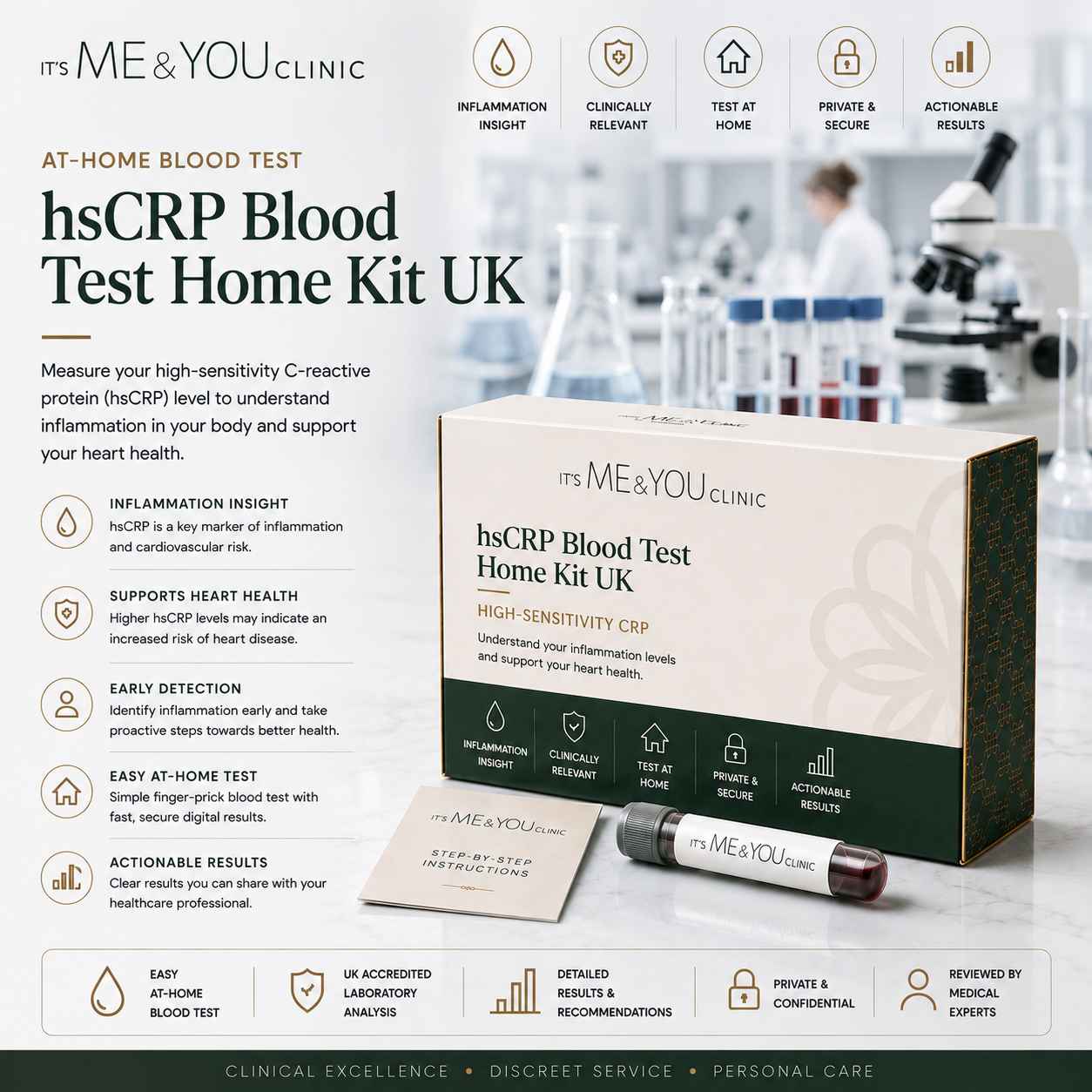
hsCRP Blood Test Home Kit UK
A focused high sensitivity C reactive protein test for selected inflammation and cardiovascular risk discussions.
hsCRP is sensitive but not specific. Infection, injury, dental inflammation, obesity and strenuous exercise can all move the result, so the most useful question is whether a value remains raised when you are otherwise well.
When it may be considered
Start with symptoms, risk and the reason for testing
- Repeating an earlier hsCRP result when free from acute illness
- Adding inflammation context to a wider cardiovascular assessment
- Monitoring requested by a doctor
- People who understand that the result is not a diagnosis
- Locating the source of inflammation
- Diagnosing heart disease from one marker
- Testing during an acute infection or immediately after injury
- Chest pain, stroke symptoms or severe breathlessness
The report at a glance
How the included markers fit together
A sensitive marker with broad influences
hsCRP result categories
The colour bands reproduce the supplier guidance. They do not identify the source of inflammation or diagnose cardiovascular disease.
No raised hsCRP was identified using the laboratory reference interval. This does not mean that overall cardiovascular risk is low.
Continue to assess cholesterol, blood pressure, diabetes risk, smoking and other established factors.Some interpretations compare results below and above 2 mg/L, while some UK laboratories use a reference interval up to 3 mg/L.
Use the exact laboratory comment. Consider repeat testing and a wider cardiovascular review rather than treating the number alone.A raised result indicates inflammation but does not identify the cause. Infection, injury, autoimmune activity, smoking, weight and other factors may contribute.
Discuss the result with a GP or qualified clinician, particularly if it is unexpected or persistent.A result above approximately 10 mg/L is more likely to reflect an active inflammatory, infectious or tissue injury process than stable low grade cardiovascular inflammation.
Seek clinical advice and consider repeat testing after recovery. Follow urgent laboratory instructions where provided.One part of cardiovascular assessment
What still matters beyond hsCRP
When a repeat may be more useful
A result obtained during infection, injury or unusually strenuous exercise may not represent usual low grade inflammation. The supplier guidance supports repeating selected raised results when clinically appropriate and when the temporary influence has resolved.
Chest pain, sudden weakness, severe breathlessness or collapse requires urgent assessment rather than a postal inflammation marker.
Preparation protects the value of the result
Before collecting the sample
- Collect when free from acute infection where possible
- Avoid unusually strenuous exercise before testing
- Record recent injury, dental treatment and inflammatory illness
- Repeat a raised result only as clinically advised
Collection requirements can vary with the laboratory method, sample stability and clinical purpose. An insufficient, contaminated, delayed or incorrectly labelled sample may not be suitable for analysis.
From order to secure report
How the home testing pathway works
Choose the right question
Review the exact markers, collection method and limitations before ordering.
Receive and register
Use the supplied registration details so the sample is matched to the correct person.
Prepare consistently
Follow timing, fasting, medicine, supplement and activity guidance specific to this test.
Collect at home
Collect the finger prick capillary blood sample exactly as instructed.
Return promptly
Use the supplied return materials within the stated stability window.
View results securely
The report is released through the relevant secure digital pathway after quality checks.
Fact checked and medically reviewed
Clinical and editorial oversight
This page was rebuilt from the supplied laboratory specification and checked against the UK medical, regulatory and professional sources listed below. Medical review is attributed to Dr Rimas Geiga, Veronika Matutyte, Dr Laura Geige. The wider clinic advisory network is shown in compact form.
 Dr Laura GeigeMedical Director, Senior Practitioner and Skin ExpertPage reviewer
 Dr Giedre NarkieneMedical Doctor, Board Certified Dermatologist and Advisory Board MemberAdvisory contributor
 Veronika MatutyteMedical Doctor, Healthcare Management Expert and Advisory Board MemberPage reviewer
 Dr Snieguole GeigeAesthetic Dentist, Medical Doctor and Advisory Board MemberAdvisory contributor
 Dr Rimas GeigaMedical Doctor, Nutritional Sciences Adviser and Advisory Board MemberPage reviewer
It’s Me & You Clinic in Kingston upon Thames
Doctor led interpretation with local continuity
The clinic is close to Kingston station and central parking. A raised hsCRP result belongs within a broader cardiovascular conversation rather than being presented as a stand alone heart score.
Find us
Office 7, Siddeley House, 50 Canbury Park Road
Kingston upon Thames KT2 6LX
Common questions
Clear answers without oversized FAQ cards
What is the difference between CRP and hsCRP?
Both measure C reactive protein. A high sensitivity method is designed to measure lower concentrations that may be considered in selected cardiovascular contexts.
Does hsCRP diagnose heart disease?
No. It does not show whether an artery is narrowed and cannot diagnose a heart attack.
What can temporarily raise hsCRP?
Infection, inflammation, injury, strenuous exercise and some chronic conditions can raise the result.
Should I repeat a value above 10 mg/L?
The supplier guidance recommends clinical review and often repeat testing when acute inflammation has resolved.
Is hsCRP suitable for routine screening?
Its value depends on the wider risk assessment. Cholesterol, blood pressure, smoking, diabetes and family history are usually more established starting points.
UK medical and laboratory references
Sources used for this page
- NICE cardiovascular disease risk assessment and reduction
- Association for Laboratory Medicine information about hsCRP
- Cambridge University Hospitals hsCRP test information
- Sheffield Laboratory Medicine hsCRP information
- British Heart Foundation guide to blood tests and heart risk
- UKAS medical laboratory accreditation
- CQC diagnostic and screening services guidance
This page provides general information about selected laboratory markers. It does not provide a diagnosis or personal treatment recommendation. Do not delay care while waiting for a kit or result. Call 999 for a medical emergency. Use NHS 111 or an appropriate clinician for urgent concerns that are not immediately life threatening. Do not change prescribed treatment solely because of a home result.