






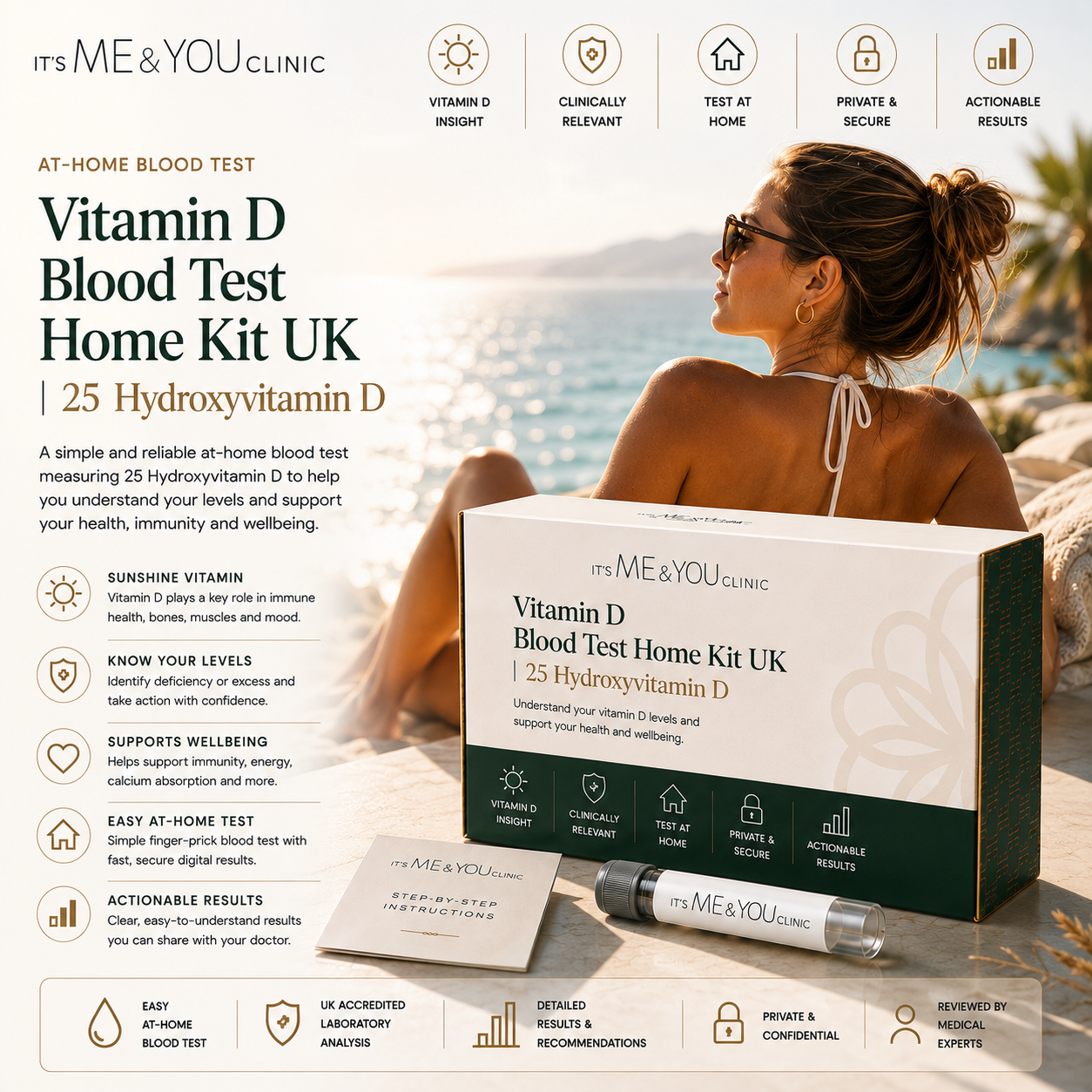
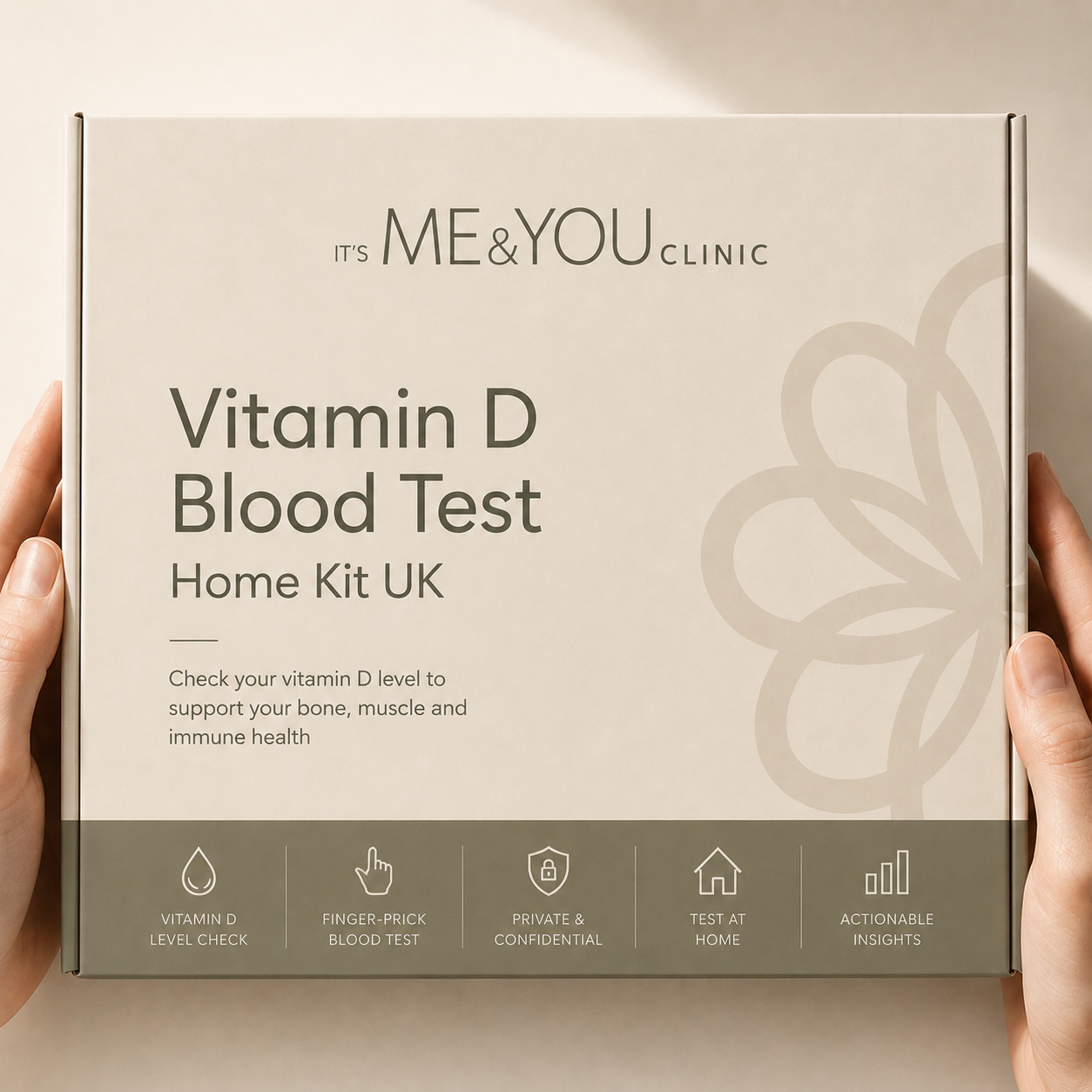


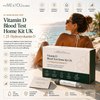
Blood test home kit UK
Vitamin D Blood Test Home Kit UK
A single marker test measuring total 25 hydroxyvitamin D, the standard blood measure used to assess vitamin D status.
Vitamin D symptoms are non specific, while supplement dose does not show what appears in the blood. The test replaces guesswork with a measured value and makes both deficiency and excessive supplementation visible.
When it may be considered
Start with symptoms, risk and the reason for testing
- Limited regular sunlight exposure
- Darker skin or clothing that covers most skin outdoors
- Bone pain or muscle weakness discussed with a clinician
- Malabsorption risk or bariatric surgery
- Reviewing an existing supplement plan
- Diagnosing every cause of tiredness or aches
- Assessing bone density
- Taking very high supplement doses solely to chase a target
The report at a glance
How the included markers fit together
From exposure to blood level
Why dose and result are not the same thing
Deficiency through excess
Vitamin D indicator scale
The laboratory category and clinical context remain authoritative. A high result can matter as much as a low one when excessive supplementation is involved.
A result in the lowest band can sometimes reflect osteomalacia, bone pain, muscle weakness or disturbed calcium balance.
Discuss the result promptly with a clinician so the cause, calcium status and treatment can be assessed.This is regarded in UK guidance as vitamin D deficiency and is associated with increased risk of poor bone and muscle health.
Discuss treatment and relevant risk factors with a doctor or pharmacist.This may be inadequate for some people, particularly where symptoms or risk factors are present.
Review diet, sunlight exposure, risk factors and appropriate supplementation with a healthcare professional.This is sufficient for most people under current UK guidance.
Maintain sensible public health supplementation and avoid unnecessary high doses.A high result is most commonly related to excessive supplementation. It may increase blood calcium.
Stop non prescribed high dose supplements and arrange medical review.Very high vitamin D may cause nausea, vomiting, thirst, frequent urination, weakness, confusion, kidney injury or abnormal heart rhythm.
Seek immediate medical advice and follow any urgent laboratory instruction.UK seasonal context
Sunlight exposure varies with season, skin type, clothing, time outdoors and location. Risk is therefore personal rather than determined by one month or one lifestyle label.
Do not take very high doses solely to reach a preferred number. Excess vitamin D can disturb calcium balance and cause harm.
Preparation protects the value of the result
Before collecting the sample
- Record the supplement dose and timing
- Fasting is not usually required
- Do not take extra vitamin D solely to influence the result
- Follow the sample volume line carefully
Collection requirements can vary with the laboratory method, sample stability and clinical purpose. An insufficient, contaminated, delayed or incorrectly labelled sample may not be suitable for analysis.
From order to secure report
How the home testing pathway works
Choose the right question
Review the exact markers, collection method and limitations before ordering.
Receive and register
Use the supplied registration details so the sample is matched to the correct person.
Prepare consistently
Follow timing, fasting, medicine, supplement and activity guidance specific to this test.
Collect at home
Collect the finger prick capillary blood sample exactly as instructed.
Return promptly
Use the supplied return materials within the stated stability window.
View results securely
The report is released through the relevant secure digital pathway after quality checks.
Fact checked and medically reviewed
Clinical and editorial oversight
This page was rebuilt from the supplied laboratory specification and checked against the UK medical, regulatory and professional sources listed below. Medical review is attributed to Dr Rimas Geiga, Dr Snieguole Geige, Veronika Matutyte. The wider clinic advisory network is shown in compact form.
 Dr Laura GeigeMedical Director, Senior Practitioner and Skin ExpertAdvisory contributor
 Dr Giedre NarkieneMedical Doctor, Board Certified Dermatologist and Advisory Board MemberAdvisory contributor
 Veronika MatutyteMedical Doctor, Healthcare Management Expert and Advisory Board MemberPage reviewer
 Dr Snieguole GeigeAesthetic Dentist, Medical Doctor and Advisory Board MemberPage reviewer
 Dr Rimas GeigaMedical Doctor, Nutritional Sciences Adviser and Advisory Board MemberPage reviewer
It’s Me & You Clinic in Kingston upon Thames
Doctor led interpretation with local continuity
Kingston’s riverside setting does not change the UK seasonal reality that sunlight exposure varies considerably. The clinic can place a result within individual risk, supplementation and wider health context where appropriate.
Find us
Office 7, Siddeley House, 50 Canbury Park Road
Kingston upon Thames KT2 6LX
Common questions
Clear answers without oversized FAQ cards
What does the vitamin D blood test measure?
It measures total 25 hydroxyvitamin D, the principal blood marker used to assess vitamin D status.
What level is described as deficient?
The supplier guidance identifies values below 25 nmol/L as deficient, with a separate severely deficient category.
Can vitamin D be too high?
Yes. Excessive supplementation can cause high levels and toxicity, so a raised result also needs review.
Do I need to fast?
Fasting is not usually required, but follow the exact kit instructions.
Should I stop vitamin D supplements before testing?
Record the dose and timing. Do not stop prescribed treatment without clinical advice.
UK medical and laboratory references
Sources used for this page
- UK National Diet and Nutrition Survey 2019 to 2023
- NHS vitamin D guidance
- NICE vitamin D testing guidance
- NICE vitamin D thresholds and risk factors
- UK government vitamin D deficiency and supplementation guidance
- Association for Laboratory Medicine vitamin D testing information
- UKAS medical laboratory accreditation
- CQC diagnostic and screening services guidance
This page provides general information about selected laboratory markers. It does not provide a diagnosis or personal treatment recommendation. Do not delay care while waiting for a kit or result. Call 999 for a medical emergency. Use NHS 111 or an appropriate clinician for urgent concerns that are not immediately life threatening. Do not change prescribed treatment solely because of a home result.