








Blood test home kit UK
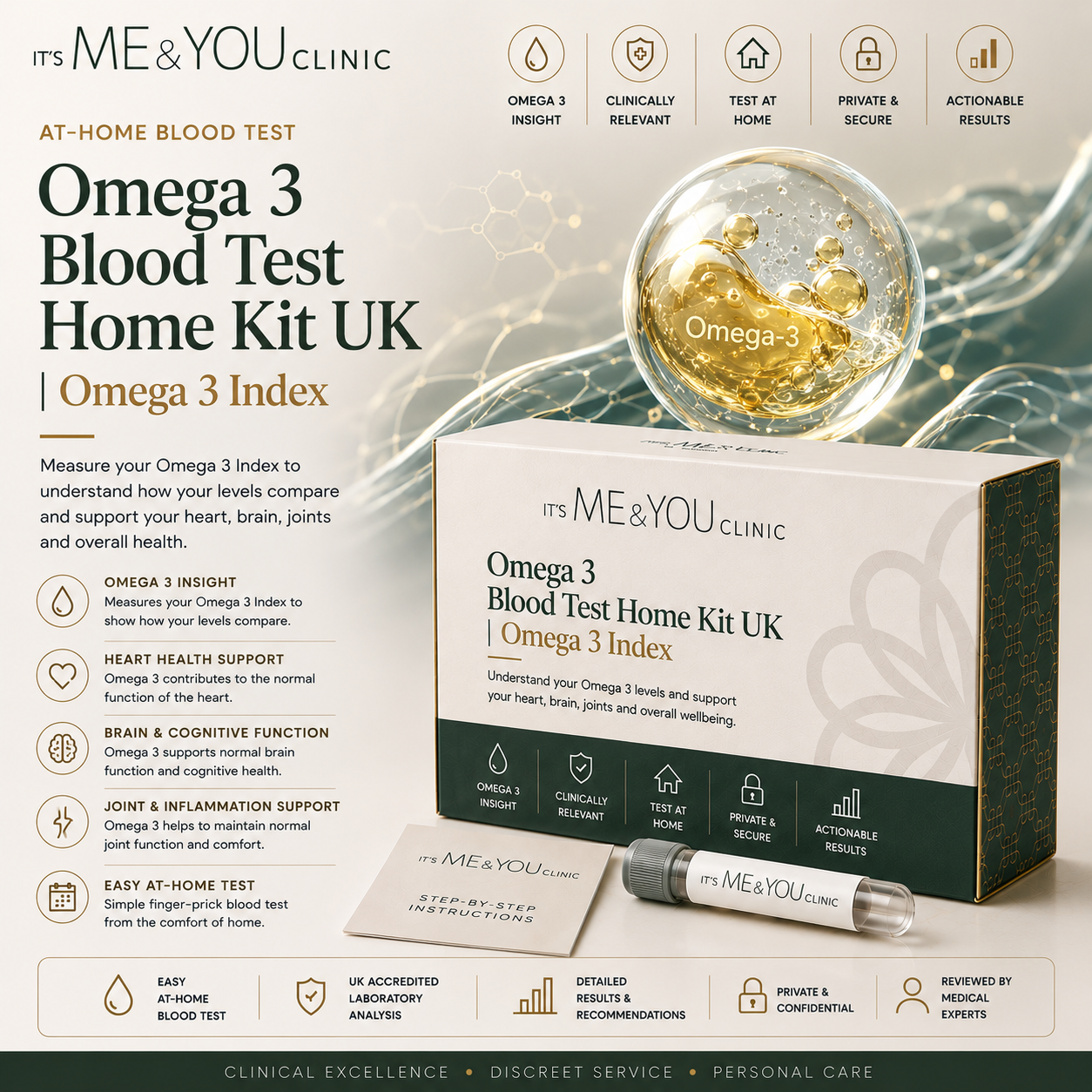
Omega 3 Blood Test Home Kit UK
A two marker fatty acid report showing the Omega 3 Index and the reported omega 6 to omega 3 balance.
A supplement label shows what was swallowed, not what appears in the measured blood fraction. This test can show whether a sustained dietary or supplement pattern is reflected in the reported fatty acid balance.
When it may be considered
Start with symptoms, risk and the reason for testing
- Reviewing regular oily fish intake
- Monitoring an omega 3 supplement plan
- Comparing results before and after a sustained dietary change
- Discussing nutrition with a GP or dietitian
- Diagnosing cardiovascular disease
- Using one ratio as a complete inflammation score
- Starting high dose supplements without considering medicines and bleeding risk
The report at a glance
How the included markers fit together
Balance rather than a single supplement claim
What the two reported markers describe
Two scales, two different questions
Omega 3 Index and fatty acid balance
Omega 3 Index
The Omega 3 Index provides information about the long chain omega 3 fatty acids EPA and DHA in the blood fraction used by the laboratory. These fatty acids are found mainly in oily fish, fortified foods and fish or algal oil products.
A low category may reflect limited EPA and DHA intake, recent dietary pattern, inconsistent supplement use, malabsorption or other individual factors.
Review diet and supplements with a qualified professional before making substantial changes.The result is below the range described by the reporting laboratory as favourable.
Consider the complete fatty acid report and wider health context.The result lies between the laboratory's lower and desirable categories.
A sustained dietary change may alter the result, but supplement decisions should consider medicines and medical history.The result falls within the laboratory reference or comparison interval.
A normal result does not replace standard cardiovascular risk assessment.The result falls within the range described by the laboratory as desirable.
Avoid assuming that a higher result would necessarily provide additional benefit.A high result commonly reflects regular oily fish intake or omega 3 supplementation. The clinical importance depends on the method, dose, medicines and medical history.
Discuss high dose supplements with a clinician, particularly when taking blood thinning medicines or before surgery.Omega 6 to Omega 3 balance
This result compares selected omega 6 fatty acids with selected omega 3 fatty acids measured by the laboratory. Omega 6 fatty acids are found in many vegetable oils, nuts, seeds and foods, while omega 3 fatty acids come from oily fish, algae and several plant sources.
A lower ratio may reflect proportionally more measured omega 3, less measured omega 6 or both.
Interpret the individual values and diet rather than assuming that the lowest possible ratio is best.The result falls within the laboratory comparison range.
Continue to consider the wider dietary pattern and established health risk factors.The ratio lies between the laboratory's preferred and higher categories.
Review oily fish, plant fats and supplement use with a qualified professional.The reporting laboratory considers the measured balance less favourable.
Do not interpret the ratio as proof of inflammation or disease.A high ratio may reflect proportionally lower omega 3, higher omega 6 or both.
Review the individual fatty acid results and overall diet before making changes.Oily fish, plant foods and the overall diet matter more than one isolated ratio.
Dose, formulation and duration can influence the result.
High dose supplements may not be appropriate with every medicine or bleeding risk.
Preparation protects the value of the result
Before collecting the sample
- Keep diet and supplement use consistent before collection
- Record oily fish intake and supplement dose
- Do not stop prescribed medicine
- Follow sample storage and return instructions carefully
Collection requirements can vary with the laboratory method, sample stability and clinical purpose. An insufficient, contaminated, delayed or incorrectly labelled sample may not be suitable for analysis.
From order to secure report
How the home testing pathway works
Choose the right question
Review the exact markers, collection method and limitations before ordering.
Receive and register
Use the supplied registration details so the sample is matched to the correct person.
Prepare consistently
Follow timing, fasting, medicine, supplement and activity guidance specific to this test.
Collect at home
Collect the finger prick capillary blood sample exactly as instructed.
Return promptly
Use the supplied return materials within the stated stability window.
View results securely
The report is released through the relevant secure digital pathway after quality checks.
Fact checked and medically reviewed
Clinical and editorial oversight
This page was rebuilt from the supplied laboratory specification and checked against the UK medical, regulatory and professional sources listed below. Medical review is attributed to Dr Rimas Geiga, Dr Snieguole Geige, Veronika Matutyte. The wider clinic advisory network is shown in compact form.
 Dr Laura GeigeMedical Director, Senior Practitioner and Skin ExpertAdvisory contributor
 Dr Giedre NarkieneMedical Doctor, Board Certified Dermatologist and Advisory Board MemberAdvisory contributor
 Veronika MatutyteMedical Doctor, Healthcare Management Expert and Advisory Board MemberPage reviewer
 Dr Snieguole GeigeAesthetic Dentist, Medical Doctor and Advisory Board MemberPage reviewer
 Dr Rimas GeigaMedical Doctor, Nutritional Sciences Adviser and Advisory Board MemberPage reviewer
It’s Me & You Clinic in Kingston upon Thames
Doctor led interpretation with local continuity
The clinic’s nutritional advisory perspective supports measured, sustainable dietary discussion rather than extreme ratio chasing. Siddeley House is close to Kingston station and the town centre.
Find us
Office 7, Siddeley House, 50 Canbury Park Road
Kingston upon Thames KT2 6LX
Common questions
Clear answers without oversized FAQ cards
What is an Omega 3 Index?
It reflects the proportion of EPA and DHA measured within the blood fraction used by the laboratory.
What does the omega 6 to omega 3 ratio show?
It describes the balance of the reported fatty acids. It is not a stand alone diagnosis or a complete measure of diet quality.
Does the test measure whether I need fish oil?
It gives a measured fatty acid result. Whether supplementation is appropriate depends on diet, medicines and clinical circumstances.
Do omega 3 supplements prevent heart disease?
Supplement evidence varies by population and dose. The result should not be used as a promise of cardiovascular protection.
Should I change my diet before collecting?
Prepare consistently and record your usual diet and supplement routine so the result reflects the pattern you are trying to assess.
UK medical and laboratory references
Sources used for this page
- NICE cardiovascular risk assessment and omega 3 recommendations
- NHS cardiovascular disease information
- SACN statement on fish and long chain omega 3 intake
- NHS anticoagulant and surgery considerations
- NHS patient information on apixaban and fish oil supplements
- British Heart Foundation cardiovascular information
- UKAS medical laboratory accreditation
- CQC diagnostic and screening services guidance
This page provides general information about selected laboratory markers. It does not provide a diagnosis or personal treatment recommendation. Do not delay care while waiting for a kit or result. Call 999 for a medical emergency. Use NHS 111 or an appropriate clinician for urgent concerns that are not immediately life threatening. Do not change prescribed treatment solely because of a home result.