








Blood test home kit UK
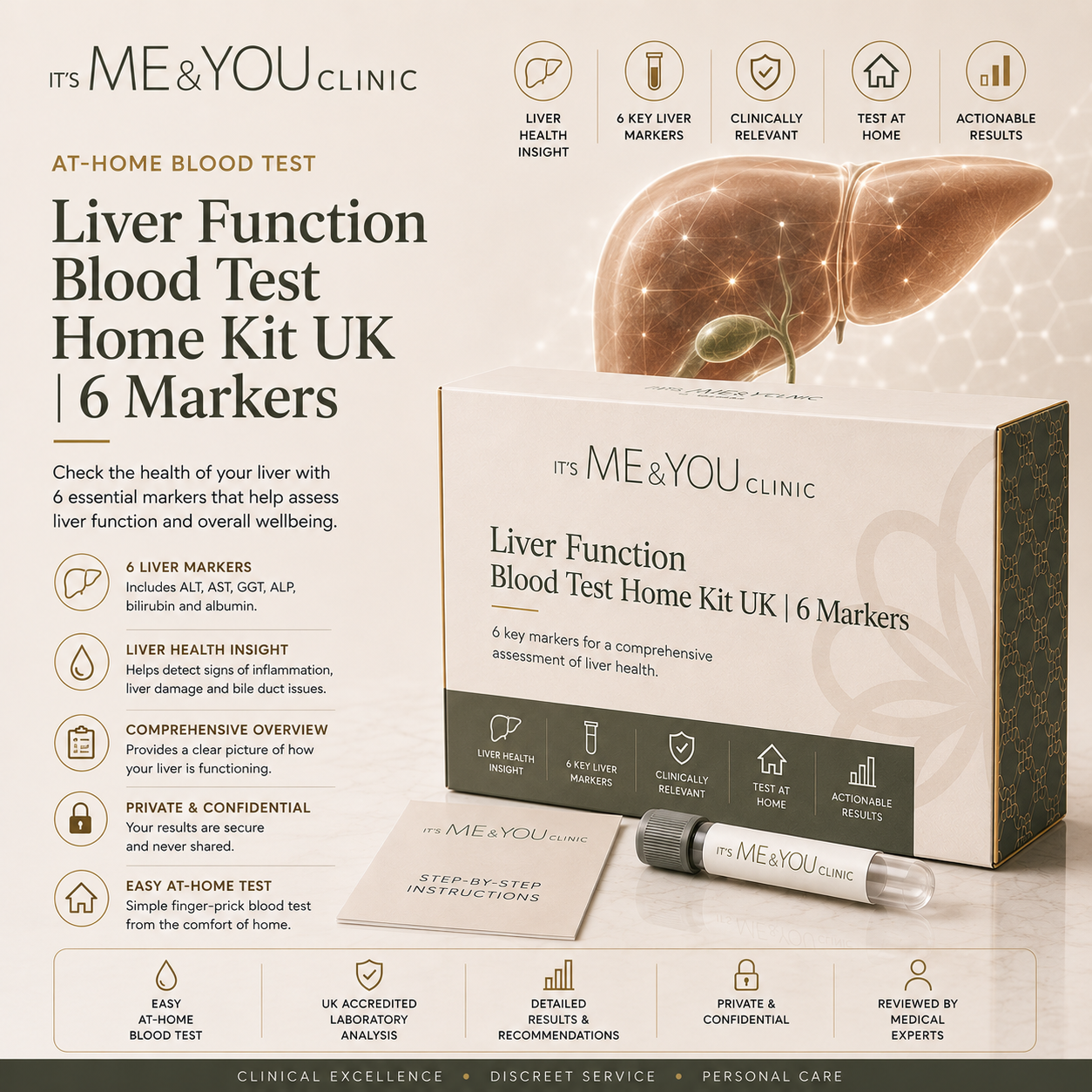
Liver Function Blood Test Home Kit UK
A six marker liver panel separating liver cell injury, bile related enzyme patterns and protein context.
What this product is designed to clarify: The familiar phrase liver function test can be misleading. ALT, GGT and ALP mainly describe enzyme patterns, while albumin and proteins add synthesis and systemic context. None of them alone stages fibrosis or proves that the liver is healthy.
When the product may be useful
Begin with the reason for testing
- A previous abnormal liver enzyme result
- Monitoring requested because of medicines or alcohol use
- Metabolic risk factors that may overlap with fatty liver disease
- Unexplained itching, fatigue or symptoms already discussed with a clinician
- Assessing jaundice, severe abdominal pain or confusion through the post
- Staging liver fibrosis or cirrhosis
- Excluding fatty liver, viral hepatitis or biliary disease from normal enzymes
- Stopping prescribed medicines independently
The report at a glance
What is measured and what remains outside the kit
Three kinds of information
Injury enzymes, biliary pattern and proteins
Why the name can mislead
Enzymes are not the same as remaining liver function
ALT, GGT and ALP mainly describe patterns of enzyme release. Albumin and proteins add context, but fibrosis, cirrhosis and biliary disease may require wider blood tests, imaging and specialist assessment.
Pattern led interpretation
Examples of common combinations
Six marker detail
Colour coded liver and protein results
Albumin
Albumin is the most abundant protein in blood plasma and is produced by the liver. It transports hormones, medicines and other substances and helps maintain fluid balance.
A very low result may occur with advanced liver disease, kidney protein loss, severe inflammation, malnutrition or critical illness.
Arrange prompt clinical review and follow the laboratory escalation advice.May reflect reduced synthesis, protein loss, inflammation, poor nutrition, malabsorption or fluid overload.
Discuss liver, kidney, inflammatory and nutritional assessment with a GP.Falls within the laboratory reference interval.
A normal albumin does not exclude liver inflammation, fatty liver, fibrosis or early cirrhosis.Most commonly reflects dehydration or concentration of the sample.
Review hydration and discuss a persistent or unexpected result.A markedly high result is unusual and commonly reflects significant dehydration, sample concentration or analytical factors.
Follow urgent or repeat testing advice from the laboratory.Total protein
Total protein is the combined amount of albumin and globulin in the blood. It provides broad information but does not identify which protein group is responsible for an abnormal result.
May occur with liver disease, kidney protein loss, malnutrition, malabsorption, inflammation or fluid overload.
Discuss albumin, globulin, kidney and nutritional assessment with a clinician.Falls within the laboratory interval.
A normal total protein does not prove that liver function is normal.May reflect dehydration, infection, inflammation, autoimmune disease or increased immunoglobulins.
A persistent unexplained result may require immunoglobulins or protein electrophoresis.Globulin
Globulin is usually calculated by subtracting albumin from total protein. The globulin fraction includes antibodies and several transport proteins.
May occur with immunodeficiency, protein loss, liver disease, malnutrition or some blood conditions.
Discuss repeat testing and the need for immunoglobulin or kidney assessment.Falls within the laboratory interval.
A normal globulin does not exclude liver or immune disease.May occur with infection, inflammation, autoimmune disease, chronic liver disease or paraprotein disorders.
A persistent unexplained rise may require immunoglobulins and protein electrophoresis.Gamma glutamyl transferase (GGT)
GGT is an enzyme found mainly in the liver and biliary system. It can support interpretation of a raised ALP and may rise with cholestasis, alcohol exposure, metabolic liver disease and several medicines.
A low GGT is usually not clinically concerning.
Interpret the wider panel and symptoms rather than the low result alone.Falls within the laboratory interval.
A value in range does not exclude fatty liver, fibrosis, hepatitis or another liver condition.May occur with alcohol exposure, cholestasis, metabolic liver disease, hepatitis, medicines or enzyme induction.
Discuss alcohol, medicines, metabolic risk and the ALP and ALT pattern with a GP.A markedly raised result may accompany significant cholestasis, alcohol related injury, medicine effects or other liver disease.
Arrange prompt clinical review and follow the laboratory escalation advice.Alanine aminotransferase (ALT)
ALT is an enzyme concentrated in liver cells. It may enter the blood when hepatocytes are injured and is therefore a marker of hepatocellular injury rather than a direct measure of liver function.
A low ALT is usually not clinically concerning, although it may occur with low muscle mass, frailty or nutritional factors.
Interpret the result with symptoms and the wider clinical picture.Falls within the laboratory interval.
A normal ALT does not exclude fatty liver, hepatitis, fibrosis, cirrhosis or liver cancer.May indicate liver cell injury from metabolic liver disease, alcohol, viral hepatitis, medicines, supplements or other causes.
Discuss the result, trend, alcohol and medicine history with a GP.A marked rise can occur with acute hepatitis, medicine related injury, ischaemia or another significant liver insult.
Seek prompt medical assessment and follow the laboratory's urgent advice.Alkaline phosphatase (ALP)
ALP is an enzyme found in the bile ducts, bones, placenta and other tissues. It is not specific to the liver.
A markedly low ALP is uncommon and may reflect malnutrition, zinc or magnesium deficiency, hypothyroidism, severe anaemia or rare hypophosphatasia.
Arrange clinical review where the result is persistent or symptoms are present.May occur with nutritional deficiency, hypothyroidism, anaemia, medicine effects or rare inherited conditions.
Discuss repeat testing and the clinical context with a GP.Falls within the laboratory interval.
A normal ALP does not exclude liver or bone disease.May arise from cholestasis, bile duct obstruction, bone turnover, vitamin D deficiency, pregnancy or other causes.
Interpret it with GGT, symptoms, pregnancy and bone or vitamin D context.A markedly raised result can occur with significant biliary obstruction, cholestatic liver disease or major bone pathology.
Arrange prompt medical review and follow the laboratory escalation advice.Preparation and collection quality
Before taking the sample
- Avoid unusually heavy alcohol intake before collection
- Record paracetamol, statins, antibiotics, antiepileptics and supplements
- Do not stop prescribed medicines independently
- Avoid unusually strenuous exercise before testing because enzymes can be affected
- Follow the kit instruction on fasting and sample return
Small preparation details can change interpretation
Laboratory methods, sample stability and collection devices vary. An insufficient, delayed, contaminated or incorrectly labelled sample may not be suitable for analysis.
From selection to secure report
How this home testing pathway works
Record exposures
Include alcohol, medicines, supplements, illness and strenuous exercise.
Collect consistently
Follow the finger prick and sample volume instructions.
Return promptly
Use the laboratory packaging within the stated window.
Separate enzyme groups
ALT, ALP and GGT describe different patterns.
Add protein context
Albumin, total protein and globulin can reflect liver and non liver factors.
Consider wider assessment
Bilirubin, AST, platelets, imaging and fibrosis tools may still be needed.
Fact checked and medically reviewed
Clinical and editorial oversight
This page was rebuilt from the supplied laboratory specification and checked against the UK medical, regulatory and professional sources listed below. Medical review is attributed to Dr Snieguole Geige, Dr Rimas Geiga, Dr Laura Geige. The wider clinic advisory network is shown in compact form.
 Dr Laura GeigeMedical Director, Senior Practitioner and Skin Expert
Page reviewer
Dr Laura GeigeMedical Director, Senior Practitioner and Skin Expert
Page reviewer Dr Giedre NarkieneMedical Doctor, Board Certified Dermatologist and Advisory Board Member
Advisory contributor
Dr Giedre NarkieneMedical Doctor, Board Certified Dermatologist and Advisory Board Member
Advisory contributor Veronika MatutyteMedical Doctor, Healthcare Management Expert and Advisory Board Member
Advisory contributor
Veronika MatutyteMedical Doctor, Healthcare Management Expert and Advisory Board Member
Advisory contributor Dr Snieguole GeigeAesthetic Dentist, Medical Doctor and Advisory Board Member
Page reviewer
Dr Snieguole GeigeAesthetic Dentist, Medical Doctor and Advisory Board Member
Page reviewer Dr Rimas GeigaMedical Doctor, Nutritional Sciences Adviser and Advisory Board Member
Page reviewer
Dr Rimas GeigaMedical Doctor, Nutritional Sciences Adviser and Advisory Board Member
Page reviewerIt’s Me & You Clinic in Kingston upon Thames
Local continuity for private laboratory results
The clinic in Kingston upon Thames can place liver markers alongside alcohol intake, medicines, weight, metabolic risk, symptoms and whether imaging or wider blood tests are needed.
Clinic details
Office 7, Siddeley House, 50 Canbury Park Road
Kingston upon Thames KT2 6LX
Questions people ask before ordering
Concise answers without heavy FAQ cards
Is this a complete liver function test?
It measures six defined markers. It does not include bilirubin, AST, platelets, clotting or a fibrosis score.
What can a raised ALT mean?
It can occur with metabolic liver disease, alcohol, medicines, viral hepatitis and other causes. The height does not reliably stage fibrosis.
Why are ALP and GGT considered together?
A raised ALP with raised GGT can support a liver or biliary source, while isolated ALP may come from bone or other contexts.
Can normal liver enzymes rule out fatty liver or fibrosis?
No. Normal values do not exclude either condition.
Can alcohol and supplements affect results?
Yes. Record alcohol intake, medicines and supplements, and avoid unusual exposure before testing.
UK medical, professional and laboratory references
Sources used for this page
Home testing provides laboratory information, not a diagnosis or personal treatment plan. Do not delay urgent care while waiting for a kit or result. Call 999 for a medical emergency. Use NHS 111 or an appropriate clinician for urgent concerns that are not immediately life threatening. Do not start, stop or alter prescribed treatment solely because of a home result.