






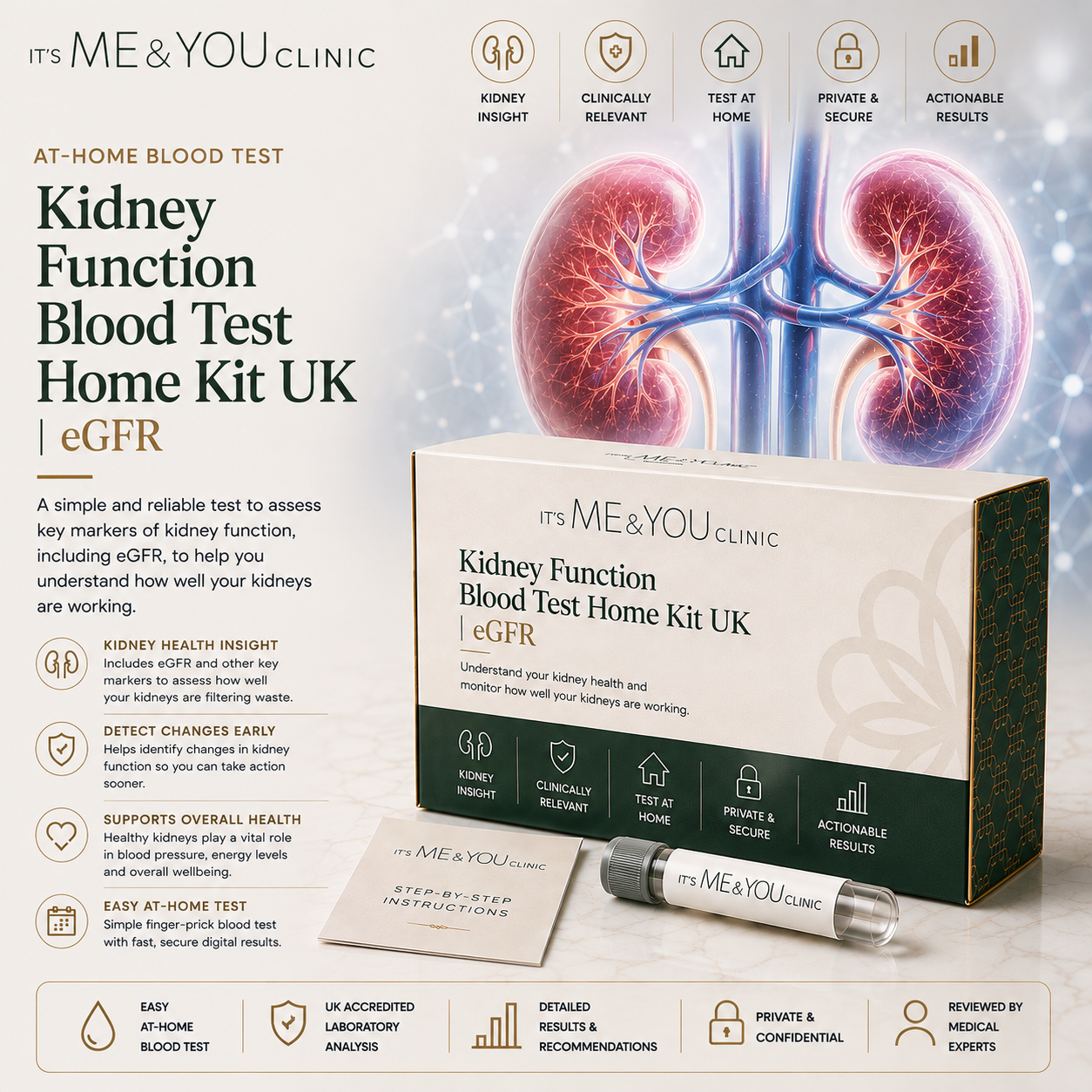


Blood test home kit UK
Kidney Function Blood Test Home Kit UK
A three marker kidney blood panel measuring urea and creatinine and using creatinine to calculate an estimated filtration rate.
What this product is designed to clarify: eGFR is an estimate, not a direct measurement. Muscle mass, meat intake, hydration, illness and medicines can affect creatinine, while chronic kidney disease usually requires persistence or another marker of damage such as urine albumin.
When the product may be useful
Begin with the reason for testing
- Monitoring requested because of blood pressure or diabetes
- A previous abnormal creatinine or eGFR result
- Medicine safety monitoring arranged by a clinician
- A family history or risk factor for kidney disease
- Diagnosing chronic kidney disease from one eGFR
- Assessing urine protein, because urine ACR is not included
- Testing during severe dehydration, acute illness or reduced urine output
- Adjusting kidney sensitive medicines without medical advice
The report at a glance
What is measured and what remains outside the kit
Measured, calculated and missing
What the three reported markers represent
eGFR categories
Filtration bands need persistence and urine context
Patterns within the blood test
Why creatinine and urea may move differently
Three marker interpretation
Results, influences and possible next steps
Urea
Urea is produced in the liver during protein metabolism and is removed mainly by the kidneys. Its blood concentration depends on kidney filtration, hydration, protein intake, tissue breakdown, liver urea production and gastrointestinal bleeding.
A markedly low result is uncommon and may reflect severe liver dysfunction, overhydration, very low protein intake or another serious condition.
Follow the laboratory advice and arrange clinical review when unexpected or accompanied by symptoms.May occur with low protein intake, pregnancy, overhydration, malnutrition or reduced liver urea production.
Discuss a persistent or unexpected result with a GP.Falls within the laboratory reference interval.
A normal urea does not prove that kidney function is normal.May occur with dehydration, reduced kidney filtration, high protein intake, gastrointestinal bleeding, severe illness, tissue breakdown or medicines.
Review hydration, creatinine, eGFR, symptoms and medicines with a clinician.A markedly raised result may accompany severe dehydration, acute kidney injury, advanced kidney impairment or gastrointestinal bleeding.
Seek prompt medical assessment and follow the laboratory escalation advice.Creatinine
Creatinine is produced from normal muscle metabolism and removed mainly by kidney filtration. It is the blood marker used to calculate eGFR.
Often reflects lower muscle mass, small body size, pregnancy, malnutrition or reduced creatine production.
Interpret it with body composition, diet and the calculated eGFR.Falls within the laboratory interval.
A normal creatinine does not exclude early kidney disease or urine albumin loss.May reflect reduced kidney filtration, dehydration, muscle injury, strenuous exercise, creatine use, recent cooked meat or medicines that alter creatinine handling.
Discuss the result, trend, eGFR, hydration and medicines with a GP.A markedly raised result may indicate significant acute or chronic kidney impairment, severe dehydration or major muscle injury.
Seek prompt medical assessment and follow the laboratory's urgent advice.Estimated glomerular filtration rate (eGFR)
eGFR is calculated from creatinine and demographic information to estimate kidney filtration. It is usually reported in mL/min/1.73m².
Usually represents normal or high filtration. Kidney disease can still be present if urine albumin, blood, imaging or another marker is abnormal.
Consider urine ACR and risk factors where clinically appropriate.Mildly reduced filtration. This may be age related or clinically insignificant without another marker of kidney damage.
Compare with previous results and consider urine ACR.Mild to moderate reduction in estimated filtration.
Arrange GP review, repeat testing and urine ACR assessment.Moderate to severe reduction in estimated filtration.
Prompt clinical review and medication, blood pressure and complication assessment are appropriate.Severe reduction in estimated filtration.
Urgent specialist or GP review is generally required.Kidney failure range, although interpretation still depends on clinical context and whether the change is acute or chronic.
Seek urgent medical assessment.A high calculated eGFR may be normal, particularly in younger adults, or may occur with pregnancy or hyperfiltration. Accuracy is reduced at high values.
Discuss an unexpected result if diabetes, pregnancy or other risk factors are present.Important missing test
Urine ACR is not included
Urine albumin to creatinine ratio can identify kidney damage even when eGFR remains preserved. It is a separate urine test.
One result does not define chronic kidney disease
Persistence for at least three months or another marker of kidney damage is usually required.
Preparation and collection quality
Before taking the sample
- Maintain normal hydration and avoid deliberate overhydration
- Avoid an unusually large cooked meat meal before testing
- Record creatine supplements, NSAIDs, diuretics and other relevant medicines
- Avoid unusually intense exercise before collection
- Do not test during severe dehydration or acute illness when direct assessment is more appropriate
Small preparation details can change interpretation
Laboratory methods, sample stability and collection devices vary. An insufficient, delayed, contaminated or incorrectly labelled sample may not be suitable for analysis.
From selection to secure report
How this home testing pathway works
Prepare normally
Maintain usual hydration and avoid unusual meat intake or exercise.
Record medicines and supplements
Include NSAIDs, diuretics, creatine and kidney sensitive treatment.
Collect the sample
Fill the capillary tube to the stated line.
Return for analysis
Use the supplied postal materials promptly.
Read creatinine with eGFR
The filtration estimate is calculated from creatinine rather than directly measured.
Add trend and urine context
Repeat values and urine ACR may be needed to assess chronic kidney disease.
Fact checked and medically reviewed
Clinical and editorial oversight
This page was rebuilt from the supplied laboratory specification and checked against the UK medical, regulatory and professional sources listed below. Medical review is attributed to Veronika Matutyte, Dr Snieguole Geige, Dr Rimas Geiga. The wider clinic advisory network is shown in compact form.
 Dr Laura GeigeMedical Director, Senior Practitioner and Skin Expert Advisory contributor
 Dr Giedre NarkieneMedical Doctor, Board Certified Dermatologist and Advisory Board Member Advisory contributor
 Veronika MatutyteMedical Doctor, Healthcare Management Expert and Advisory Board Member Page reviewer
 Dr Snieguole GeigeAesthetic Dentist, Medical Doctor and Advisory Board Member Page reviewer
 Dr Rimas GeigaMedical Doctor, Nutritional Sciences Adviser and Advisory Board Member Page reviewer
It’s Me & You Clinic in Kingston upon Thames
Local continuity for private laboratory results
The Kingston clinic can help place kidney results within blood pressure, diabetes risk, medicines, hydration and previous trends. Reduced urine output, swelling with breathlessness or severe illness needs urgent assessment.
Clinic details
Office 7, Siddeley House, 50 Canbury Park Road
Kingston upon Thames KT2 6LX
Questions people ask before ordering
Concise answers without heavy FAQ cards
What is eGFR?
It is a calculated estimate of kidney filtration based mainly on creatinine and personal characteristics.
Can one low eGFR diagnose chronic kidney disease?
No. Chronic kidney disease usually requires persistence for at least three months or another marker of kidney damage.
Does this test include urine ACR?
No. Urine albumin to creatinine ratio is a separate test and can detect kidney damage even when eGFR is preserved.
Can eGFR be inaccurate?
Yes. Muscle mass, meat intake, supplements, illness and some medicines can affect creatinine and the estimate.
Why does trend matter?
A stable long term result and a sudden fall can have very different implications.
UK medical, professional and laboratory references
Sources used for this page
Home testing provides laboratory information, not a diagnosis or personal treatment plan. Do not delay urgent care while waiting for a kit or result. Call 999 for a medical emergency. Use NHS 111 or an appropriate clinician for urgent concerns that are not immediately life threatening. Do not start, stop or alter prescribed treatment solely because of a home result.