





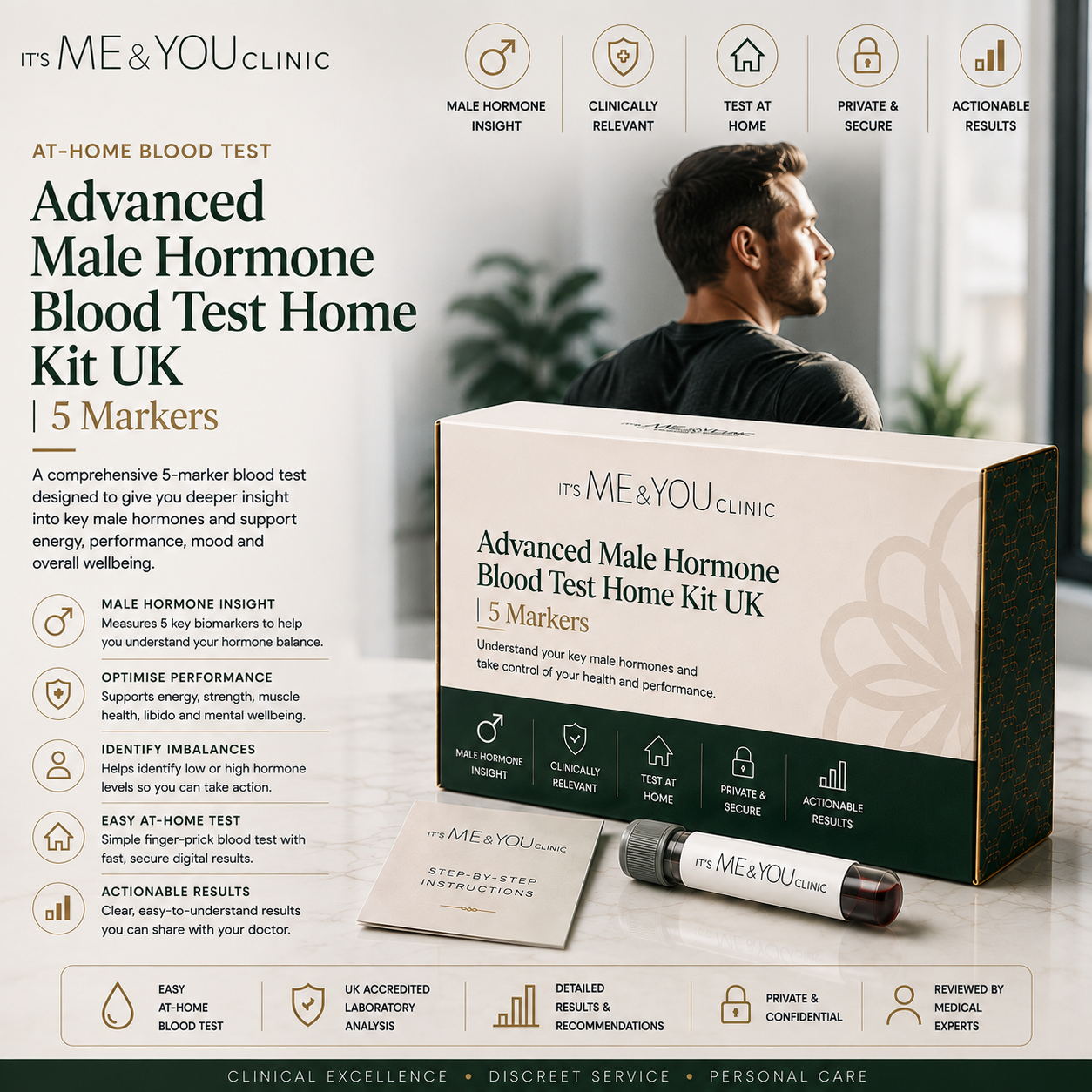




Advanced male hormone blood test home kit UK
Advanced Male Hormone Blood Test Home Kit UK
A focused five marker testosterone panel designed to show not only how much testosterone is present, but how binding proteins may change the amount estimated to be available to tissues.
What makes this test advanced: total testosterone is considered alongside SHBG, albumin, calculated free testosterone and FAI. The relationship between the markers is more informative than any one result, but the panel still does not diagnose hypogonadism or identify its cause by itself.
When this panel may be considered
Begin with symptoms and the clinical question
- Reduced libido or loss of morning erections
- Erectile symptoms that need broader medical assessment
- Persistent tiredness, reduced strength or low mood
- A previous low, borderline or unexpected total testosterone result
- A need to understand whether SHBG may be changing hormone availability
- Monitoring requested by a clinician
- There is testicular pain, swelling or a new lump
- A severe headache or new visual change is present
- There is unexplained weight loss, a new breast symptom or rapidly progressing illness
- Fertility is the main concern and semen analysis is required
- Testosterone, anabolic steroids or fertility medicines are being considered without clinician supervision
- Any symptom feels urgent or severe
The testosterone transport model
Five results describing amount, binding and estimated availability
Why the headline value can mislead
Total testosterone and free testosterone may tell different stories
A man with lower SHBG may have a lower total testosterone result while calculated free testosterone remains less reduced. A man with high SHBG may have total testosterone inside the laboratory interval while calculated free testosterone is lower. This is why symptoms, SHBG and a validated calculation can matter when the total value is borderline or does not fit the clinical picture.
Confirm how free testosterone is reported
Laboratories may directly measure or calculate free testosterone using different methods. The final report should identify the method. Calculated values rely on the quality of the total testosterone, SHBG and albumin measurements.
Morning testing and repeat confirmation
Control the conditions before interpreting the number
What can temporarily change testosterone
Context to record on collection day
- Recent infection or acute illness
- Poor sleep, shift work or marked sleep disruption
- Major calorie restriction, rapid weight change or overtraining
- Opioids, glucocorticoids, anticonvulsants and some psychiatric medicines
- Testosterone, anabolic steroids, fertility treatment or hormone supplements
- Skin contact with another person’s testosterone gel
Do not stop prescribed treatment independently
Record the medicine, dose and timing. A clinician may want testing at a particular point in a treatment cycle or may advise additional monitoring.
Combined patterns
The relationship between markers guides the next question
What is not included
The panel does not identify the cause of a low result
- LH and FSH, which help distinguish testicular from pituitary or hypothalamic patterns
- Prolactin, which may be relevant with low testosterone and low or inappropriately normal gonadotrophins
- Oestradiol
- Thyroid function
- Full blood count and haematocrit
- Liver profile and PSA
Testosterone blood results do not measure sperm
Male fertility assessment may require semen analysis, examination, LH, FSH, prolactin, genetic testing or specialist review. Testosterone treatment can suppress sperm production and should not be started casually when biological parenthood is a priority.
Five marker interpretation
Colour coded results with clinically bounded next steps
The reporting laboratory’s units, reference intervals, calculation method and escalation comments remain authoritative. The explanations below clarify the supplier categories without treating a colour as a diagnosis.
Total testosterone
Total testosterone measures testosterone carried in the blood in both bound and unbound forms. It is usually the first laboratory measurement when testosterone deficiency is considered in men, but it must be interpreted with symptoms, collection time, health status, medicines and binding proteins.
A lower morning result may occur with acute illness, obesity, sleep disruption, major calorie restriction, opioid or glucocorticoid exposure, anabolic steroid withdrawal, pituitary disease or testicular disease.
Do not diagnose testosterone deficiency from one result. Repeat a controlled morning measurement and consider LH, FSH and prolactin.The result sits inside the laboratory’s stated interval.
Persistent symptoms may still require assessment because SHBG and free testosterone can alter interpretation, and symptoms may have another cause.A raised result can reflect prescribed testosterone, anabolic agents, supplement exposure, gel contamination or less common endocrine conditions.
Review all hormone products and repeat under controlled conditions if unexpected.Calculated free testosterone
Calculated free testosterone estimates the small fraction of testosterone not strongly bound to proteins. It is particularly useful when SHBG is outside the expected range, although the result depends on the calculation method and the accuracy of total testosterone, SHBG and albumin measurements.
A lower result may reflect low total testosterone, high SHBG or both.
Interpret it with symptoms and repeat morning testing before considering a diagnosis.The calculated value sits inside the laboratory interval.
A normal result does not prove that persistent symptoms are caused or excluded by testosterone.A raised result may reflect high total testosterone, low SHBG, prescribed hormones, anabolic agents or another endocrine context.
Discuss an unexpected result and all medicines or supplements with a clinician.Sex hormone binding globulin, SHBG
SHBG binds a large proportion of circulating testosterone. When SHBG is high, less testosterone may be available to tissues than the total testosterone result suggests. When SHBG is low, the total testosterone result may appear lower even when estimated free testosterone is less affected.
A lower result may occur with obesity, insulin resistance, hypothyroidism, glucocorticoids, androgens or some progestogens.
Read total and calculated free testosterone together. Consider metabolic and thyroid context where clinically relevant.The result sits inside the stated laboratory interval.
Continue to interpret it with total testosterone, free testosterone, albumin and symptoms.A raised value may occur with ageing, hyperthyroidism, liver disease, lower body weight, anticonvulsants or oestrogen exposure.
A high SHBG result can reduce calculated free testosterone even when total testosterone appears acceptable.Albumin
Albumin binds testosterone more weakly than SHBG and is used in some free testosterone calculations. Albumin is also influenced by hydration, inflammation, liver synthesis, kidney protein loss and nutritional status, so it should not be treated as a male hormone marker by itself.
A markedly low result can occur with serious liver disease, kidney protein loss, severe inflammation, malnutrition or critical illness.
Arrange prompt clinical review and follow the laboratory escalation advice.A lower value may reflect inflammation, liver disease, kidney loss, malabsorption, poor intake or fluid overload.
Discuss wider liver, kidney, inflammatory and nutritional assessment with a clinician.The result sits inside the laboratory interval.
Use it as one input within the calculated free testosterone interpretation.A raised albumin value is most commonly associated with dehydration or concentration of the sample.
Review hydration and repeat if the result is unexpected.A markedly raised value is unusual and may indicate significant dehydration or a sample or analytical issue.
Follow the laboratory advice and arrange clinical review where indicated.Free androgen index, FAI
FAI is calculated from total testosterone and SHBG. It is widely used when assessing androgen excess in women, but it has important limitations in men and should not be treated as a substitute for calculated free testosterone or a clinical diagnosis.
A lower ratio may result from lower total testosterone, higher SHBG or both.
Do not diagnose testosterone deficiency from FAI. Review calculated free testosterone, symptoms and repeat morning results.The ratio sits inside the reporting category.
A normal FAI does not prove that male androgen status is normal.The ratio could not be interpreted reliably, often because one input was outside the analytical range.
Follow the laboratory recommendation and discuss repeat testing.A raised ratio may reflect higher total testosterone, lower SHBG, hormone treatment, anabolic agents or another endocrine influence.
Review medicines, supplements, sample contamination and the complete hormone pattern.From order to secure report
How the home testing pathway works
Confirm the question
Decide whether the aim is a first testosterone check, a repeat or clarification of a previous total testosterone result.
Choose a controlled morning
Follow the fasting instruction and avoid testing during acute illness where practical.
Record relevant context
Include symptoms, collection time, medicines, hormones, supplements, sleep and recent illness.
Collect capillary blood
Warm the hands and fill the microtainer to the stated line using the supplied finger prick instructions.
Return promptly
Use the supplied packaging within the sample stability window.
Read all five markers
Compare total testosterone with SHBG, albumin and calculated free testosterone before deciding whether repeat or wider testing is needed.
Medical and editorial governance
Clinical oversight and advisory contributors
This page has been rebuilt from the supplier description supplied by the user and checked against the UK medical and pathology references listed below. The exact final version should complete the clinic’s documented medical approval process before publication.
 Dr Laura GeigeMedical Director, Senior Practitioner and Skin ExpertPage reviewer
 Dr Giedre NarkieneMedical Doctor, Board Certified Dermatologist and Advisory Board MemberAdvisory contributor
 Veronika MatutyteMedical Doctor, Healthcare Management Expert and Advisory Board MemberAdvisory contributor
 Dr Snieguole GeigeAesthetic Dentist, Medical Doctor and Advisory Board MemberPage reviewer
 Dr Rimas GeigaMedical Doctor, Nutritional Sciences Adviser and Advisory Board MemberPage reviewer
It’s Me & You Clinic in Kingston upon Thames
Private support for results that need a wider hormone assessment
The clinic provides a local setting for discussing symptoms, sample timing, medicines, hormone exposure, fertility priorities and whether a result should be repeated or followed by LH, FSH, prolactin, thyroid testing or another clinical pathway.
Clinic details
Office 7, Siddeley House
50 Canbury Park Road
Kingston upon Thames KT2 6LX
Questions before ordering
Advanced Male Hormone blood test FAQs
What does the Advanced Male Hormone test measure?
It reports total testosterone, calculated free testosterone, SHBG, albumin and free androgen index from a capillary blood sample.
What time should I collect the sample?
Collect in the morning, ideally between 8 am and 10 am, because testosterone changes through the day. Follow the exact kit instructions.
Should I fast?
A fasting morning sample provides a more controlled comparison when low testosterone is being investigated. Plain water is generally allowed unless the kit states otherwise.
Can one low result diagnose testosterone deficiency?
No. Diagnosis requires compatible symptoms and repeat appropriately timed blood testing, with clinical assessment.
Why are SHBG and albumin included?
They bind testosterone and help explain why total testosterone may not reflect the amount estimated to be available to tissues.
Is free testosterone directly measured?
The supplier description identifies it as part of a panel using binding proteins and calculations. Check the laboratory report for the precise method.
Is free androgen index reliable in men?
It has important limitations in men and should not replace calculated free testosterone, repeat morning testing or clinical assessment.
Does this test assess fertility?
No. It does not measure sperm count, movement or shape and does not include LH or FSH.
What is not included?
LH, FSH, prolactin, oestradiol, thyroid markers, full blood count, liver profile and PSA are not included.
Can I start testosterone after a low result?
No. Do not start, stop or change testosterone or fertility treatment without clinician led diagnosis and monitoring.
UK medical and pathology references
Sources used to check this page
- NHS: The male menopause and late onset hypogonadism
- North Bristol NHS Trust: Testosterone sampling at 9 am
- Royal United Hospitals Bath: Repeat 9 am fasting testosterone and free testosterone calculation
- Lab Tests Online UK: SHBG and testosterone binding
- Gloucestershire Hospitals: Free androgen index
- Society for Endocrinology: Male hypogonadism and testosterone replacement
- NHS North Cumbria: Testosterone replacement therapy
This page provides general information about laboratory markers. It does not diagnose low testosterone, infertility, erectile dysfunction, pituitary disease, testicular disease or another endocrine condition. Do not delay urgent care while waiting for a kit or result. Call 999 for a medical emergency. Use NHS 111 or an appropriate clinician for urgent concerns that are not immediately life threatening. Do not start, stop or alter testosterone, fertility treatment or prescribed medicines solely because of a home result.