




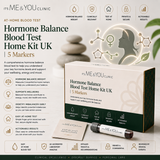


Five marker female hormone blood test home kit UK
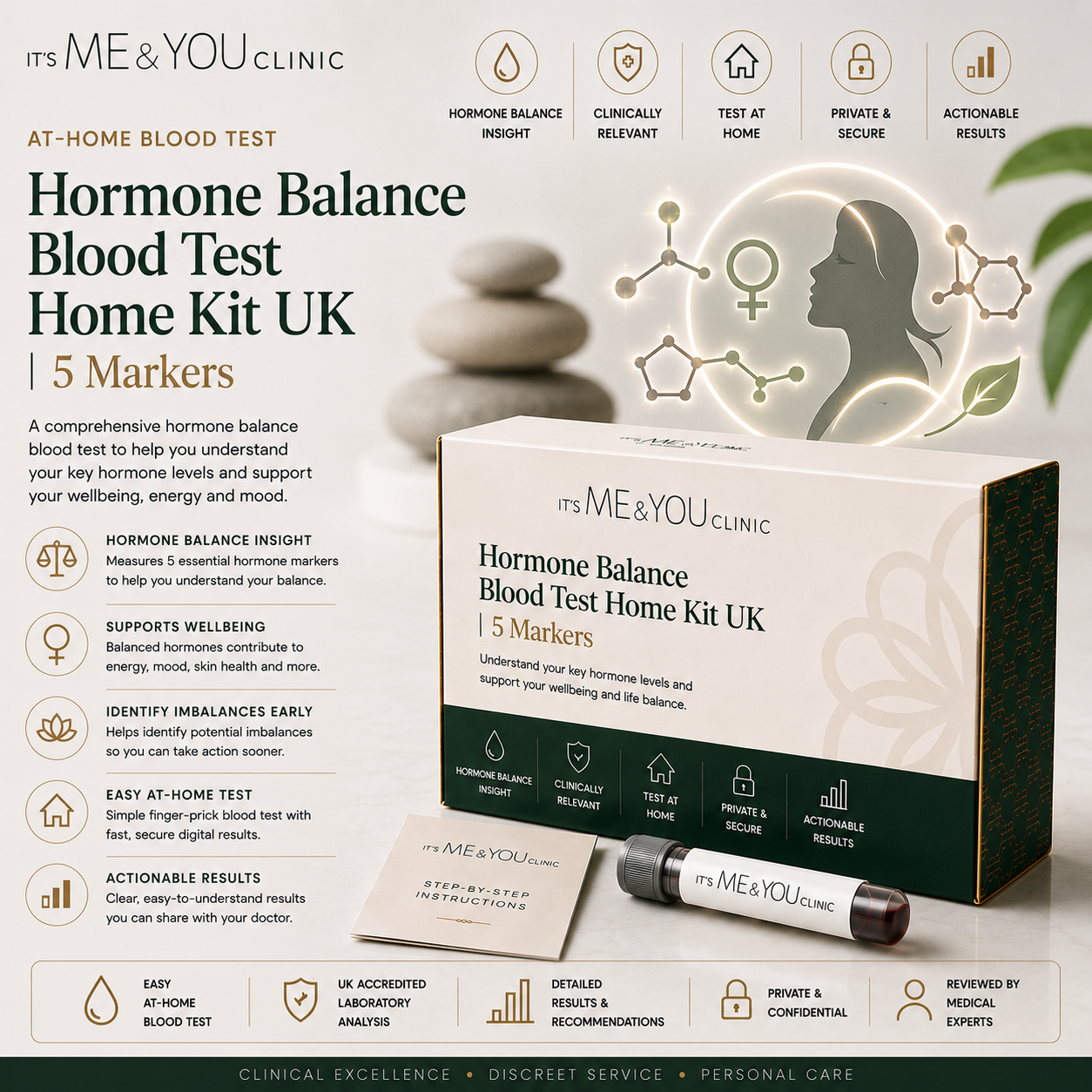
Hormone Balance Blood Test Home Kit UK
A cycle aware home blood test measuring pituitary hormone signals and biochemical androgen balance through LH, FSH, total testosterone, SHBG and calculated free androgen index.
What this panel is designed to clarify: whether menstrual, skin, hair or reproductive concerns are accompanied by a hormone pattern that may justify repeat testing or a wider clinical assessment.
When this focused panel may be considered
Start with the symptom pattern
- Irregular or absent periods
- Acne, increased facial hair or scalp hair thinning
- Questions about biochemical androgen excess
- A previous LH, FSH or testosterone result that needs cycle context
- Monitoring requested by a clinician
- Early stage investigation before deciding whether a broader panel is appropriate
Symptoms need direct medical assessment
- Severe pelvic pain or sudden abdominal pain
- Very heavy bleeding, bleeding in pregnancy or fainting
- Unexpected weight loss or rapidly worsening illness
- Rapid voice change, marked new facial hair or other rapidly progressive androgen symptoms
- Urgent fertility, pregnancy or menopause related concerns
Cycle day is part of the result
Any day can be reported, but not every day answers the same question
How to record Day 1
The first day of full menstrual bleeding
Day 1 is the first day of full flow, not light spotting. Record the date, cycle day, usual cycle length and whether cycles are regular.
LH is not normally highest on day 3
The normal LH surge occurs around ovulation. Early follicular testing is used because it provides a steadier baseline for gonadotrophin comparison.
Two hormone systems within one report
Pituitary signals and androgen availability
Supports ovulation and ovarian hormone production. Meaning changes substantially with cycle stage.
Stimulates ovarian follicle development. A single result does not measure ovarian reserve or fertility.
Measures circulating testosterone before the effect of binding proteins is considered.
Helps explain why the available androgen fraction may differ from total testosterone alone.
Uses total testosterone and SHBG to estimate androgen availability. It is supportive rather than diagnostic.
The reporting sequence
Read the panel from signal to calculated androgen context
Common combinations, not diagnoses
How patterns may change the next question
Five separate marker scales
Colour coded interpretation with cycle aware limits
The reporting laboratory’s reference intervals and cycle stage comments remain authoritative. The explanations below support the report but do not turn a category into a diagnosis.
Luteinising hormone, LH
LH is released by the pituitary gland. In people who menstruate, its meaning depends strongly on the cycle stage because the normal mid cycle surge helps trigger ovulation.
A lower LH result can occur with hypothalamic or pituitary suppression, low energy availability, significant illness or some medicines.
Interpret it with cycle day, FSH, symptoms, weight change, exercise, medicines and pregnancy context.The value sits inside the cycle stage or postmenopausal interval used by the reporting laboratory.
A value in range does not prove normal ovulation, fertility or the absence of PCOS.A raised LH value may be physiological near ovulation, or may occur after menopause, with ovarian insufficiency or in some PCOS patterns.
Cycle timing is essential. Review FSH, testosterone, SHBG and symptoms rather than using LH alone.Follicle stimulating hormone, FSH
FSH is released by the pituitary gland and supports ovarian follicle development. Baseline interpretation is usually most comparable in the early follicular phase.
A lower FSH result can occur with hypothalamic or pituitary suppression, hormone treatment, pregnancy or significant illness.
Interpret it with LH, cycle stage, menstrual pattern, medicines and symptoms.The value is within the laboratory interval for the recorded cycle stage or menopause status.
A normal FSH does not by itself confirm ovulation, fertility or ovarian reserve.A raised FSH may occur with menopause or reduced ovarian function, depending on age and cycle stage.
One result does not diagnose menopause, premature ovarian insufficiency or infertility. Repeat testing may be required.Total testosterone
Total testosterone is produced by the ovaries and adrenal glands in women. The result should be considered with SHBG, FAI, medicines and clinical signs of androgen excess.
A lower total testosterone value in women is often difficult to interpret in isolation and may be influenced by SHBG, medicines and ovarian or adrenal production.
Review symptoms and the calculated androgen picture rather than treating the number alone.The total testosterone value is within the reporting laboratory’s interval.
Biochemical androgen excess can still require assessment of SHBG, FAI and clinical features.A raised result can occur with PCOS, hormone or anabolic exposure and less commonly ovarian or adrenal causes.
Rapidly developing facial hair, voice change, marked hair loss or a substantially raised result needs prompt medical assessment.Sex hormone binding globulin, SHBG
SHBG binds testosterone and oestrogen. Changes in SHBG can alter calculated androgen availability even when total testosterone is unchanged.
Lower SHBG can increase the calculated free androgen fraction and may be associated with insulin resistance, higher body weight, hypothyroidism or androgen exposure.
Review testosterone, FAI, thyroid and metabolic context with a clinician.The value lies within the laboratory interval.
The wider androgen picture still depends on total testosterone, symptoms and treatment context.Higher SHBG can reduce calculated androgen availability and may be influenced by oestrogen treatment, pregnancy, hyperthyroidism, liver factors or lower body weight.
Record contraception, HRT, pregnancy and relevant medicines before interpretation.Free androgen index, FAI
FAI is calculated from total testosterone and SHBG. It can support assessment of biochemical androgen excess in women but should not be used as a stand alone diagnosis.
A lower FAI reflects lower testosterone, higher SHBG or both.
It does not diagnose androgen deficiency in women and should be interpreted with symptoms and the component results.The calculated index falls within the laboratory category.
A normal FAI does not exclude every endocrine or reproductive condition.The calculation could not be interpreted reliably, often because testosterone or SHBG was outside the analytical range.
Follow the laboratory note and discuss whether repeat or alternative testing is needed.A raised FAI can support biochemical androgen excess and may occur with PCOS, lower SHBG, hormone exposure or less common ovarian or adrenal causes.
PCOS diagnosis requires clinical context and exclusion of other causes. A rapidly progressive pattern needs prompt assessment.What this panel does not include
Important questions remain outside the test
- Oestradiol
- Progesterone or confirmation of ovulation
- Prolactin
- Thyroid function
- AMH or ovarian reserve assessment
- HbA1c, glucose or lipid markers
- Pelvic ultrasound or structural assessment
Neither an LH to FSH ratio nor FAI is a diagnosis
PCOS diagnosis requires clinical assessment and exclusion of other causes. Fertility assessment may also require ovulation testing, ovarian reserve investigations, imaging, tubal assessment and partner testing.
Hormone treatment and medicines
Record every relevant exposure
- Combined or progestogen only contraception
- Hormone replacement therapy
- Fertility medicines
- Testosterone, anabolic steroids or androgen containing products
- Anticonvulsants and other medicines that may affect hormones
- High dose biotin where the laboratory method may be affected
Do not stop prescribed treatment independently
Hormone treatment may make the result reflect the medicine rather than the untreated cycle. That information is still useful when it is accurately recorded.
From order to secure report
How the at home testing pathway works
Define the question
Decide whether the purpose is cycle context, possible androgen excess or a clinician requested repeat.
Record the cycle
Note Day 1, the collection day, usual cycle length and whether periods are regular.
List treatment
Record contraception, HRT, fertility medicines, supplements and other relevant medicines.
Collect capillary blood
Warm the hands, follow the finger prick instructions and fill the microtainer to the stated line.
Return promptly
Use the supplied packaging and dispatch within the sample stability window.
Interpret the pattern
Review the five markers together and decide whether repeat or wider testing is appropriate.
Fact checked and medically reviewed
Clinical oversight and advisory contributors
The page has been rebuilt from the supplied laboratory specification and checked against current UK guidance on cycle timing, PCOS investigation, fertility assessment and menopause. The exact final version should complete the clinic’s documented medical approval process before publication.
 Dr Laura GeigeMedical Director, Senior Practitioner and Skin ExpertAdvisory contributor
 Dr Giedre NarkieneMedical Doctor, Board Certified Dermatologist and Advisory Board MemberPage reviewer
 Veronika MatutyteMedical Doctor, Healthcare Management Expert and Advisory Board MemberPage reviewer
 Dr Snieguole GeigeAesthetic Dentist, Medical Doctor and Advisory Board MemberAdvisory contributor
 Dr Rimas GeigaMedical Doctor, Nutritional Sciences Adviser and Advisory Board MemberPage reviewer
It’s Me & You Clinic in Kingston upon Thames
Private support when hormone numbers need clinical context
The clinic provides a local setting for discussing menstrual history, skin and hair changes, contraception, HRT, fertility priorities and whether a focused home panel should be followed by a broader medical assessment.
Clinic details
Office 7, Siddeley House
50 Canbury Park Road
Kingston upon Thames KT2 6LX
Questions before ordering
Hormone Balance blood test FAQs
What does the Hormone Balance test measure?
It measures LH, FSH, total testosterone and SHBG and reports a calculated free androgen index.
Which cycle day is best?
The sample can be taken on any convenient day when the cycle day is recorded. Days 2 to 5 are preferred when the main purpose is a baseline early follicular comparison.
Is LH normally highest on day 3?
No. LH normally rises sharply around ovulation. Early cycle testing is used to obtain a baseline gonadotrophin pattern, not because day 3 is the normal LH peak.
Can this test diagnose PCOS?
No. PCOS assessment requires clinical features and exclusion of other causes. An LH to FSH ratio or raised FAI cannot diagnose PCOS by itself.
Can this test confirm menopause?
Not by itself. In people aged 45 or over with typical symptoms, menopause is usually diagnosed clinically rather than through routine hormone testing.
Does this test assess fertility?
It provides selected hormone information but does not confirm ovulation, ovarian reserve, fallopian tube health, egg quality or partner factors.
Can hormonal contraception or HRT affect the results?
Yes. Contraception, HRT, pregnancy and fertility medicines can materially alter LH, FSH, testosterone and SHBG.
What is free androgen index?
FAI is calculated from total testosterone and SHBG. It is a supporting estimate of androgen availability and must be interpreted cautiously.
UK medical and professional references
Sources used to check this page
This page provides general information about five laboratory measures. It does not diagnose PCOS, infertility, menopause or another endocrine condition. Do not delay care while waiting for a kit or result. Call 999 for a medical emergency. Use NHS 111 or an appropriate clinician for urgent concerns that are not immediately life threatening. Do not start, stop or alter prescribed treatment solely because of a home result.