Polynucleotides For Under Eyes in Kingston, London: Complete Guide to Under Eye Rejuvenation

Polynucleotides For Under Eyes in Kingston, London: Complete Guide to Under Eye Rejuvenation
The under eye area is often one of the first places to show signs of ageing. The skin beneath the eyes is significantly thinner and more delicate than elsewhere on the face, making it particularly vulnerable to changes in skin quality, hydration and elasticity.
Many people notice concerns such as tired looking eyes, fine lines, crepey skin and a loss of skin quality long before other signs of ageing become apparent. As a result, demand for non surgical under eye rejuvenation treatments has grown significantly in recent years.
Among the most exciting developments in regenerative aesthetics is the use of Polynucleotides for under eye rejuvenation.
At It's Me & You Aesthetics Skin Clinic in Kingston, we regularly see patients from Kingston, Surbiton, Richmond, Wimbledon, Twickenham, Esher, Walton on Thames, Cobham and throughout London who want to improve the appearance of the eye area while maintaining natural looking results.
Polynucleotide treatments have become increasingly popular because they focus on improving skin quality rather than adding volume or dramatically altering facial appearance.
In this comprehensive guide, we explain what Polynucleotides are, how they work around the eyes, expected results, treatment timelines and why they have become one of the most sought after regenerative treatments for under eye rejuvenation.
Why Does The Under Eye Area Age So Quickly?
The under eye region is unique compared with other parts of the face.
Several factors contribute to visible ageing around the eyes.
Thin Skin
The skin beneath the eyes is naturally delicate and contains less supportive tissue than many other facial areas.
Collagen Decline
As collagen production decreases with age, skin may become thinner and less resilient.
Reduced Elasticity
Loss of elastin can contribute to fine lines and changes in skin texture.
Environmental Exposure
Sun exposure, pollution and lifestyle factors can influence skin quality over time.
Natural Ageing
The ageing process affects hydration, skin structure and overall skin health.
These changes can contribute to an appearance that many people describe as tired, even when they feel well rested.
What Are Polynucleotides?
Polynucleotides are regenerative injectable treatments designed to support tissue repair and improve skin quality.
Unlike dermal fillers, which primarily focus on restoring volume, Polynucleotides work by supporting the skin's natural regenerative processes.
The treatment aims to improve:
-
Skin quality
-
Hydration
-
Elasticity
-
Skin texture
-
Overall skin health
This makes Polynucleotides particularly attractive for delicate treatment areas such as the under eyes.
Why Are Polynucleotides Popular For Under Eyes?
The eye area presents unique challenges.
Many patients want improvement without looking overfilled or unnatural.
Polynucleotides have become increasingly popular because they focus on skin quality rather than volume enhancement.
Patients often choose treatment because they are looking for:
-
Fresher looking eyes
-
Improved skin texture
-
Better hydration
-
More youthful looking skin
-
Natural rejuvenation
-
Subtle enhancement
The gradual nature of results is often viewed as a significant advantage.
What Concerns Can Polynucleotides Address Around The Eyes?
Patients commonly seek treatment for:
Fine Lines
The delicate under eye area is prone to fine lines and early skin ageing.
Crepey Skin
Loss of elasticity can lead to skin that appears thin and crepey.
Poor Skin Quality
Some individuals simply feel that the under eye area appears tired or lacks vitality.
Dehydrated Skin
The eye area often benefits from treatments that support hydration and skin health.
General Eye Rejuvenation
Many patients seek overall improvement rather than targeting one specific concern.
How Do Polynucleotides Work Under The Eyes?
Polynucleotides support the skin's natural repair processes.
Rather than creating immediate volume, they help create an environment that supports skin regeneration and improved skin quality.
As the skin responds over time, patients often notice improvements in:
-
Hydration
-
Texture
-
Elasticity
-
Smoothness
-
Overall appearance
The result is typically subtle, progressive and natural looking.
What Happens During Treatment?
Treatment begins with a detailed consultation.
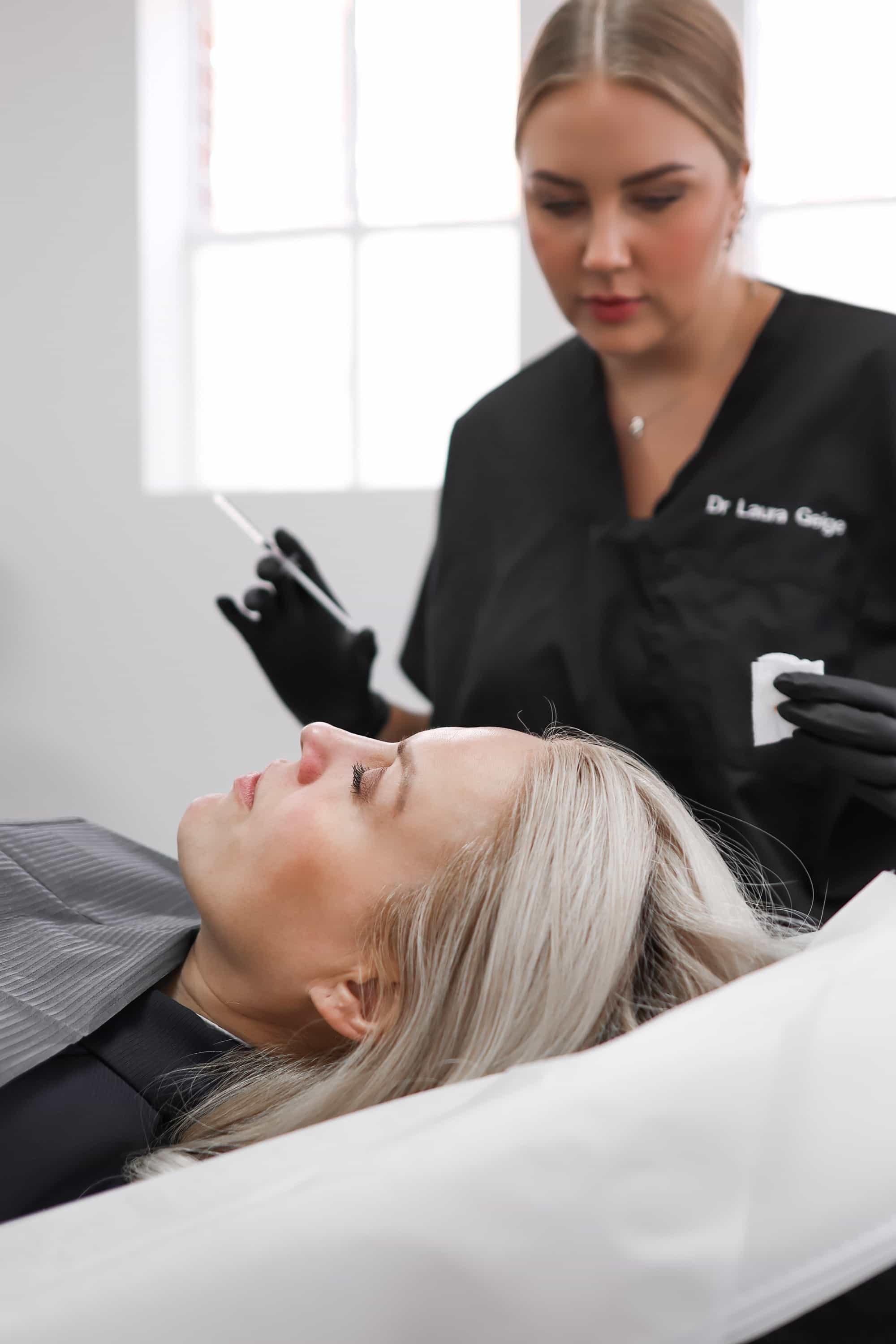
At It's Me & You Aesthetics Skin Clinic, Dr Laura Geige carefully assesses:
-
Skin quality
-
Facial anatomy
-
Eye area concerns
-
Medical history
-
Treatment goals
Following assessment, a personalised treatment plan is created.
The procedure itself involves a series of carefully placed injections in the under eye area.
Most appointments are completed relatively quickly.
Polynucleotides For Under Eyes Before And After Results
One of the most common questions patients ask is what improvements they can realistically expect.
Unlike dermal fillers, the results are not immediate.
Instead, improvements tend to develop gradually.
Many patients report:
-
Brighter looking eyes
-
Improved skin quality
-
Better hydration
-
Smoother skin texture
-
More refreshed appearance
-
Greater confidence
The emphasis is typically on looking healthier and more rested rather than dramatically different.
Polynucleotides Under Eyes Recovery Timeline
Immediately After Treatment
Patients may experience:
-
Mild redness
-
Small bumps
-
Minor swelling
-
Tenderness
These effects are usually temporary.
First Week
Most temporary treatment related effects settle.
The skin begins responding to treatment.
Two To Six Weeks
Subtle improvements often become increasingly noticeable.
Two To Three Months
Many patients appreciate the most significant changes during this stage.
Before and after photographs frequently demonstrate the greatest difference at this point.
How Many Treatments Are Needed?
The number of treatments varies depending on:
-
Age
-
Skin quality
-
Treatment goals
-
Individual response
Many patients undergo an initial course of treatment followed by maintenance appointments.
A consultation allows a personalised treatment plan to be developed.
How Long Do Polynucleotide Results Last?
Longevity varies between individuals.
Factors influencing results include:
-
Age
-
Lifestyle
-
Sun exposure
-
Skincare routine
-
Overall skin health
Maintenance treatments may help preserve and support ongoing improvements.
Polynucleotides Versus Tear Trough Fillers
Many patients compare Polynucleotides with tear trough fillers.
The two treatments address different concerns.
Tear Trough Fillers
Generally focus on:
-
Volume restoration
-
Structural support
-
Hollowing beneath the eyes
Polynucleotides
Focus on:
-
Skin quality
-
Hydration
-
Skin health
-
Regenerative support
In some cases, treatments may be used as part of a broader rejuvenation strategy.
Why More Patients Are Choosing Regenerative Aesthetics
The aesthetic industry has seen a growing shift towards regenerative treatments.
Patients increasingly seek procedures that support natural biological processes and improve skin quality over time.
Polynucleotides fit perfectly within this trend.
Rather than changing facial structure, they aim to improve the health and resilience of the skin itself.
Why Choose It's Me & You Aesthetics Skin Clinic?
Our clinic is conveniently located in Kingston and serves patients from throughout Surrey and London.
It's Me & You Aesthetics Skin Clinic
Siddeley House, Room 7 Ground Floor
50 Canbury Park Road
Kingston Upon Thames
KT2 6LX
Patients appreciate the clinic's central location close to:
-
Bentall Centre
-
Kingston Riverside
-
Restaurants and cafés
-
Independent boutiques
-
Public transport links
-
Convenient parking facilities
Many visitors enjoy shopping, dining or exploring Kingston before or after their appointment.
About Dr Laura Geige
Dr Laura Geige is an experienced aesthetic practitioner with expertise in regenerative aesthetic treatments and facial rejuvenation.
Her approach focuses on patient education, personalised care and natural looking outcomes.
Every consultation includes a detailed assessment to ensure treatment recommendations are tailored to the individual's anatomy, concerns and long term goals.
Frequently Asked Questions
Are Polynucleotides good for under eyes?
Polynucleotides have become increasingly popular for improving under eye skin quality, hydration and overall rejuvenation.
Can Polynucleotides replace tear trough fillers?
The treatments serve different purposes and suitability depends on individual anatomy and concerns.
How long do under eye Polynucleotides take to work?
Results develop gradually, with many patients noticing improvements over several weeks and months.
How many sessions are needed?
Treatment plans vary, although many patients benefit from an initial treatment course.
Is there any downtime?
Most patients experience only mild temporary redness, swelling or tenderness.
Can younger patients have under eye Polynucleotides?
Yes. Some younger patients choose treatment to support skin quality and preventative skin health.
Do Polynucleotides add volume?
Polynucleotides primarily focus on skin quality and regeneration rather than volume restoration.
How long do results last?
Longevity varies depending on individual factors and maintenance schedules.
Final Thoughts
Polynucleotides for under eyes represent one of the most exciting advances in regenerative aesthetics.
By focusing on skin quality, hydration and natural rejuvenation, they provide an attractive option for patients seeking fresher, healthier looking eyes without dramatic changes to facial appearance.
As demand for natural looking aesthetic treatments continues to grow, Polynucleotides are likely to remain one of the most sought after options for under eye rejuvenation.
At It's Me & You Aesthetics Skin Clinic in Kingston, Dr Laura Geige provides personalised consultations and bespoke treatment plans designed to help patients achieve brighter, healthier and more youthful looking eyes through evidence based regenerative aesthetic care.