

Botox in Your 20s – Preventative Treatments
Botox in your twenties is a topic that consistently attracts curiosity, debate and myth. Many young adults wonder whether early expression lines are normal, whether preventive treatment is useful and how muscle movement at this age may influence future concerns. At It’s Me and You Clinic in Kingston Upon Thames, Surrey, London, our doctors approach the subject with caution and clarity. Botox is a prescription only medicinal product, and this article is purely educational. It explores why people in their twenties think about Botox, what preventative treatment means in medical terms and how facial anatomy behaves during early adulthood.
Because this guide is created for informational purposes only, it does not encourage treatment or suggest suitability. Preventative Botox is a cultural term, not a medical indication. The purpose of this article is simply to explain the factors that influence early expression lines and why some individuals become interested in Botox during this decade. To understand how concerns evolve across later decades, readers may find it useful to explore related topics such as Botox in your thirties or Botox in your forties, as well as the overarching parent article Botox by age.
Why People in Their Twenties Research Botox
The twenties are marked by strong facial muscle activity, expressive habits, lifestyle experimentation and early environmental exposure. Although the skin usually has abundant collagen and elastin, certain individuals notice early signs of expressive creasing, particularly across the forehead, frown lines and around the eyes. These lines typically appear only during movement, but in some cases they become faint static lines visible at rest.
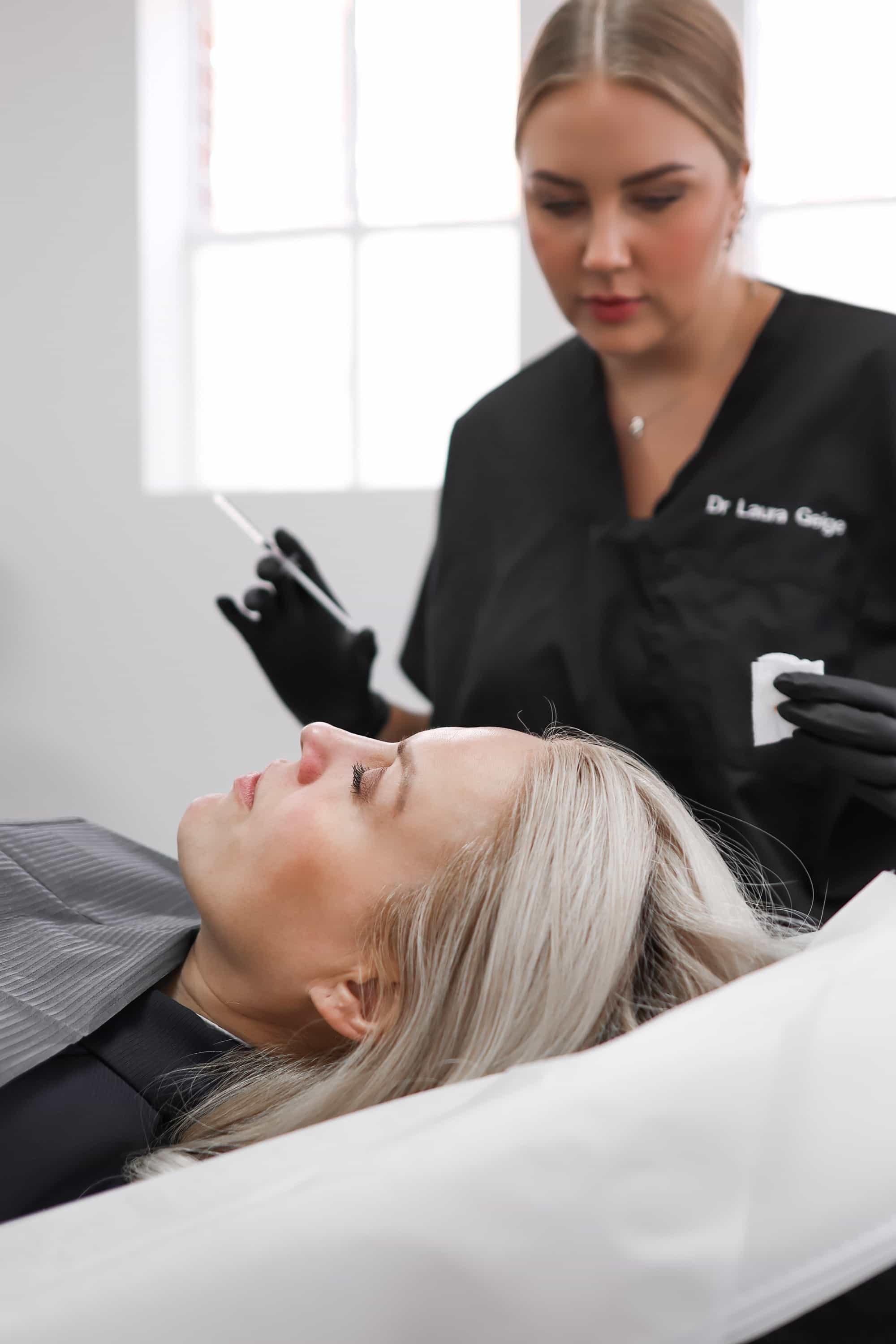
Dr Laura Geige, who frequently assesses young adults seeking educational guidance on early lines, explains, “Expression lines develop at different rates depending on genetics, repetitive habits and environmental conditions. Two individuals of the same age may show completely different movement patterns. It is rarely about age, it is about behaviour, muscle strength and long term skin resilience.”
Because social media often highlights the term preventative Botox, many young adults assume that without early treatment lines will worsen. In reality, as Dr Giedre Narkiene notes, “Skin ageing is multifactorial. Sun exposure, stress, hydration, nutrition and sleep play enormous roles. Botox does not influence these factors. It simply reduces muscle strength in targeted areas. Preventative treatment is a behavioural concept, not a medical requirement.”
What Preventative Botox Actually Means
The phrase preventative Botox often implies the idea of reducing repetitive dynamic movement to slow the development of deeper lines. However, this is not a medical claim. Botox does not prevent ageing. It temporarily weakens selected muscles, which may reduce the appearance of movement based creasing.
Understanding this distinction is crucial. Preventative Botox does not stop ageing. It does not change the structure of the skin. It does not affect collagen production. It does not prevent environmental damage. It simply reduces excessive movement in chosen muscles for a limited period.
Because of this, preventative Botox is more accurately described as an approach to moderating expressive habits. Some people have naturally stronger frontalis or corrugator activity, which makes creasing more visible even when young. Others barely crease even in their thirties or forties.
To fully understand early facial anatomy, some readers explore related educational resources such as brow lift concepts, bunny lines anatomy or crow’s feet considerations, all of which help explain how movement patterns differ person to person.
Early Expression Lines in the Twenties
Expression lines in your twenties are normal. They occur primarily with movement and reflect the strength and pattern of the underlying muscles. The most common areas where young adults notice early dynamic lines include:
- The forehead, due to strong frontalis activity.
- The glabella, where frowning or concentrating habits crease the skin.
- The outer eyes, where smiling can create temporary crow’s feet.
These lines usually disappear when the face relaxes. If they remain visible at rest as faint imprints, they are referred to as early static lines. These do not necessarily predict deeper wrinkles later. Many static lines fluctuate depending on hydration, lifestyle, sleep and skin care.
Genetics, Lifestyle and Environmental Factors
The twenties are a decade marked by variable lifestyle patterns. Stress, late nights, alcohol, sun exposure, indoor screen time and irregular routines all influence skin quality. These factors have a greater long term impact on ageing than muscle movement alone.
Dermatological scientist Dr Rimas Geiga highlights this distinction, “Chronological age has little predictive value. Biological age, environmental exposure and personal habits are far more significant. A twenty six year old who tans frequently may exhibit deeper creasing than a forty year old who practices sun protection.”
Therefore, Botox in your twenties should never be framed as necessary. Education should always emphasise modifiable habits.
Skin Biology During the Twenties
Biologically, the twenties are a period of peak collagen density. The dermis remains strong, hydrated and resilient. Lines that form are largely dynamic, not structural. Any faint static lines are typically superficial.
Facial fat pads are stable at this age, meaning the face retains its volume and youthful contour. Therefore, Botox in your twenties, when discussed culturally, relates exclusively to expressive habit modification, not ageing reversal.
The Role of Muscle Overactivity
Some people have naturally dominant muscle groups. For example, a very active frontalis creates horizontal forehead lines even in early adulthood. Strong corrugators can create a prominent frown crease. Dominant orbicularis activity produces deeper crow’s feet with smiling.
This is why preventative interest often stems from seeing expressive lines in photographs. Young adults notice that smiling, frowning or raising their eyebrows creates pronounced creases which appear more obvious under bright light or camera flash.
Pages such as upper face anatomy provide helpful context for understanding how these muscle groups function.
Preventative Botox as Habit Moderation
Preventative Botox can be thought of as a method of moderating repetitive movement. Rather than preventing ageing, it simply limits how strongly the targeted muscles contract. This may reduce the intensity of lines during expression.
However, this is not suitable for everyone. Excessive reduction of movement in the twenties could affect natural expression, which many young adults wish to maintain. Because of this, treatment in the twenties, when explored, is usually very conservative.
Dr Snieguole Geige notes, “Young adults tend to want extremely subtle outcomes. They do not want to appear frozen. This means the threshold for any intervention must be thoughtful, minimal and carefully balanced.”
Misconceptions About Prevention
There are several myths surrounding preventative Botox:
- Myth one, Botox prevents ageing It does not. Ageing involves multiple biological pathways beyond muscle movement.
- Myth two, everyone needs treatment early Most people do not. Many individuals show minimal expressive creasing and do not benefit from treatment.
- Myth three, early treatment stops wrinkles forming It does not stop wrinkles, it may soften movement driven lines temporarily.
Understanding the true purpose of Botox can prevent unnecessary or unrealistic expectations.
When Do Early Static Lines Appear
Static lines can appear at different ages depending on lifestyle and genetics. A person who squints frequently or frowns while concentrating may develop early glabellar creasing. Someone who raises their eyebrows when speaking may see early forehead imprints.
This means that preventative interest is more about movement patterns than age.
How Doctors Evaluate Suitability in Twenties
When young adults seek educational consultations, doctors typically evaluate:
- Whether lines are dynamic or static.
- Muscle dominance and strength.
- Skin thickness and elasticity.
- Lifestyle and environmental exposure.
- Underlying asymmetries or habitual expressions.
Dr Carol Mastropierro explains, “Suitability is not based on age. It is based on whether the goals are achievable through temporary muscle modulation. If expression lines are minor and lifestyle changes would be more impactful, that perspective is discussed.”
Common Areas of Interest in the Twenties
The most common expressive areas young adults enquire about include:
- Forehead lines from eyebrow elevation.
- Glabellar frown lines from habitual concentration.
- Crow’s feet from smiling.
- Bunny lines from nose scrunching.
- A subtle brow lift effect through depressor balancing.
- Lip flip concepts for smile balance but not for volume.
Educational anatomy pages like lip flip mechanics or brow lift anatomy offer helpful visual explanations.
The Influence of Social Media and Beauty Culture
Social media has normalised injectable discussions, often without clinical context. Preventative Botox is sometimes portrayed as essential, which creates unnecessary pressure. Many influencers promote early intervention without addressing scientific accuracy.
Dr Rimas Geiga cautions, “Preventative trends often arise from aesthetic culture rather than biological need. Young adults benefit from understanding the evidence, limitations and alternative strategies before forming expectations.”
Natural Alternatives Prior to Considering Botox
There are many non medical methods young adults use to support skin quality:
- Daily sun protection.
- Hydration and nutrition.
- Quality sleep.
- Stress management.
- Topical skincare with proven active ingredients.
- Avoiding smoking and excess alcohol.
These factors significantly influence long term skin appearance.
Botox Limitations in the Twenties
It is equally important to understand what Botox cannot do in this decade:
- It cannot prevent ageing.
- It cannot improve skin texture.
- It cannot change pigmentation or pores.
- It cannot replace sun protection or lifestyle adjustments.
- It cannot address volume loss or deep structural issues.
These limitations highlight why preventative perspectives should remain realistic.
When Preventative Interest May Be Reasonable
This article does not recommend treatment. However, people may explore preventative ideas when they have:
- Strong expressive habits with pronounced lines during movement.
- Early faint static lines that concern them aesthetically.
- Asymmetrical movement patterns.
- Genetically dominant frown or forehead activity.
Even in these cases, conservative approaches, if considered, are typically preferred.
Why Many People Wait Until Their Thirties
Most individuals do not consider Botox until their thirties, when early static lines become more visible and movement patterns are more established. This decade is explored further in Botox in your thirties maintaining skin smoothness.
Summary
Botox in your twenties is less about ageing and more about understanding expressive habits. Preventative Botox is a cultural concept rather than a clinical necessity. Young adults benefit from learning how genetics, lifestyle and muscle dominance influence early lines. The decision to explore Botox in this decade is personal and rooted in individual concerns rather than age based expectations.
This content is strictly educational and does not constitute treatment advice. Botox is a prescription only medicine and suitability can only be determined through a regulated medical assessment.