



Doctor led women’s health testing from Kingston
Women’s Health and Hormone Blood Tests UK
Three distinct home testing routes for focused female hormones, hormone and metabolic context, and ovarian reserve with fertility hormones.
Cycle changes, acne, unwanted hair growth, scalp hair thinning, fertility questions and weight or glucose concerns can have several causes. A blood test may add selected laboratory context, but it cannot diagnose PCOS, infertility, menopause or another endocrine condition by itself.

Focused hormones, metabolic context and fertility hormones are separate routes rather than simple upgrades.

The collection has been deliberately narrowed
The three most relevant women’s health products
This collection focuses on three clearly different questions. The focused hormone panel measures LH, FSH and androgen related markers. The metabolic panel adds HbA1c and vitamin D. The fertility panel adds AMH and progesterone to a wider reproductive hormone profile.
The separate skin, hair and nail panel has not been included because it belongs to its own collection and contains many non hormone markers. A duplicate female hormone route has also been excluded so the comparison remains clear.
For LH, FSH and androgen related context without unrelated additions.
For the focused hormone profile with HbA1c and vitamin D.
For AMH, progesterone and selected reproductive hormone context.
Severe pelvic pain, heavy bleeding with dizziness or fainting, possible pregnancy with pain or bleeding, severe headache with visual change, rapidly progressing voice or hair changes, or feeling acutely unwell require prompt medical assessment.
Before choosing a panel
Four details can materially change the meaning of a result
LH, FSH and progesterone vary across the menstrual cycle. Record the first day of full bleeding as Day 1.
The pill, implant, injection and hormonal coil can alter bleeding patterns and hormone results.
Hormone replacement treatment changes the context in which reproductive hormone results are interpreted.
Possible pregnancy requires the appropriate clinical pathway rather than relying on a general hormone panel.
Biotin, steroids and other treatments may affect selected assays or the wider symptom picture.
Irregular periods, acne, fertility concerns and weight change have several possible causes.
Current It’s Me & You Clinic products
Home female hormone and fertility blood tests
The products below use the current clinic routes and their matching It’s Me & You Clinic imagery.

Focused reproductive hormone route
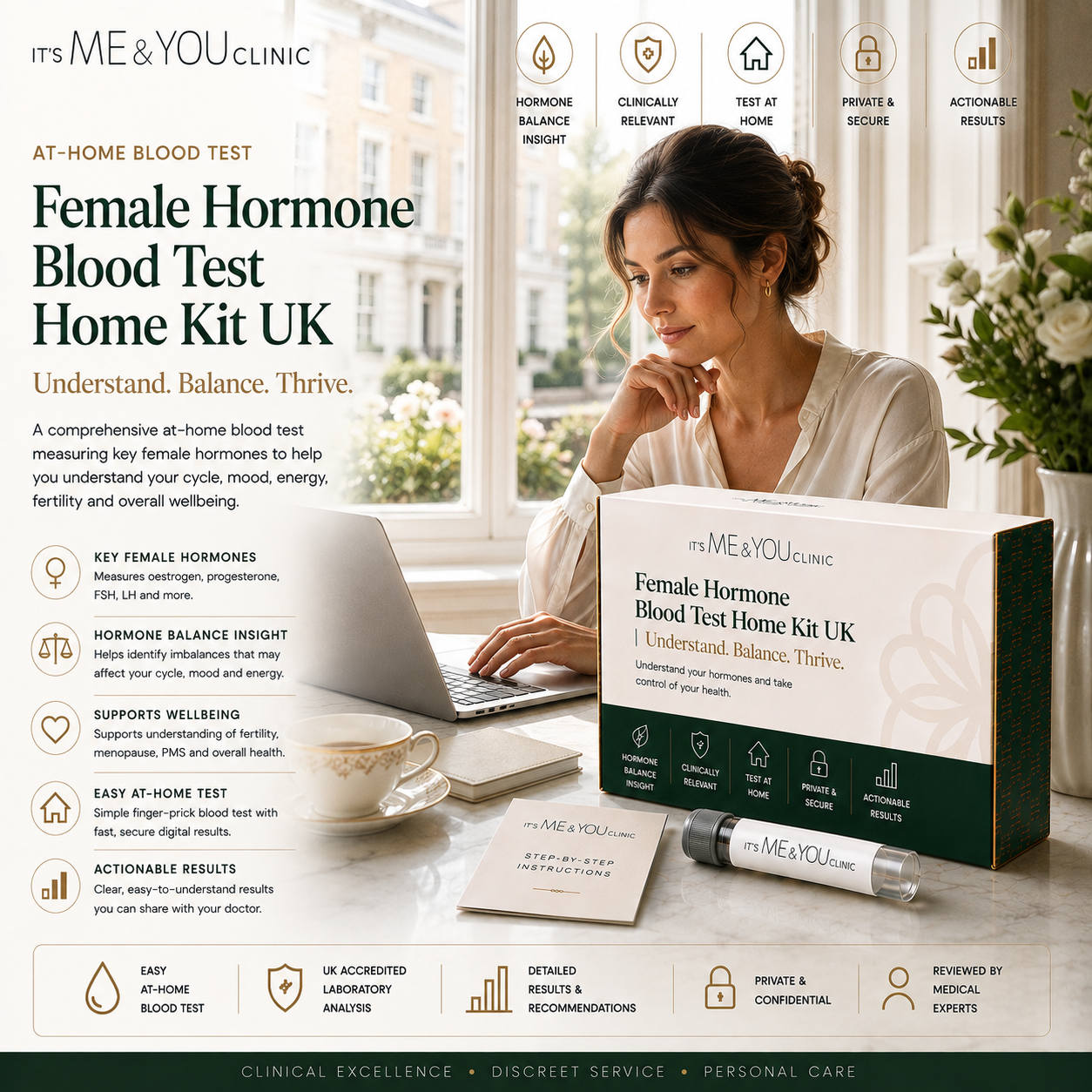
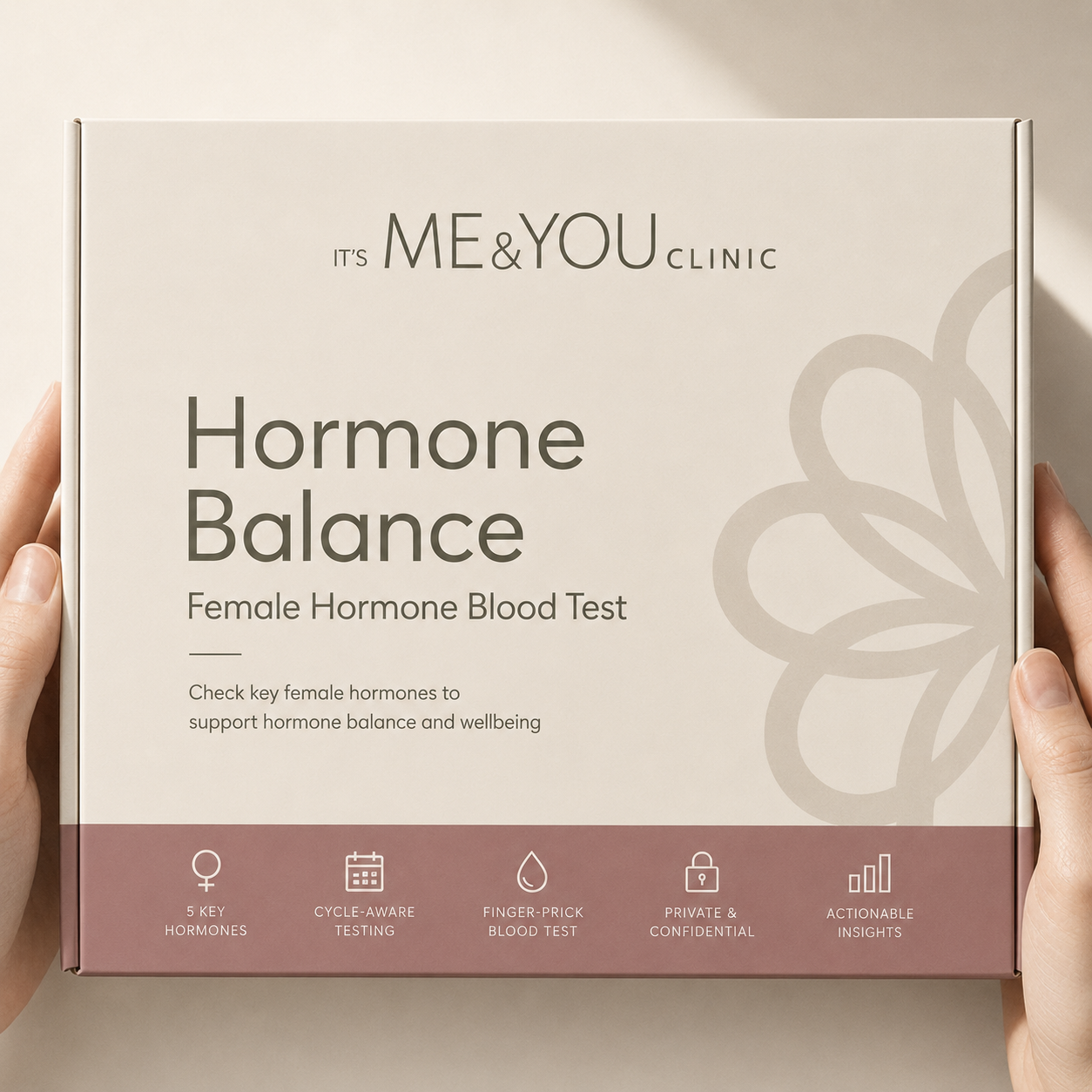
Female Hormone Blood Test Home Kit UK
The most focused option in the collection, designed for a defined reproductive hormone question without adding glucose or vitamin markers.
- Markers
- LH, FSH, total testosterone, SHBG and calculated free androgen index
- Most relevant when
- A focused question involving reproductive hormone signalling or androgen context
- Timing
- Record the cycle day; days 2 to 5 are preferred when baseline LH and FSH comparison is the aim
- Important limit
- Does not diagnose PCOS, infertility, menopause or the cause of irregular periods
Hormones with selected metabolic context
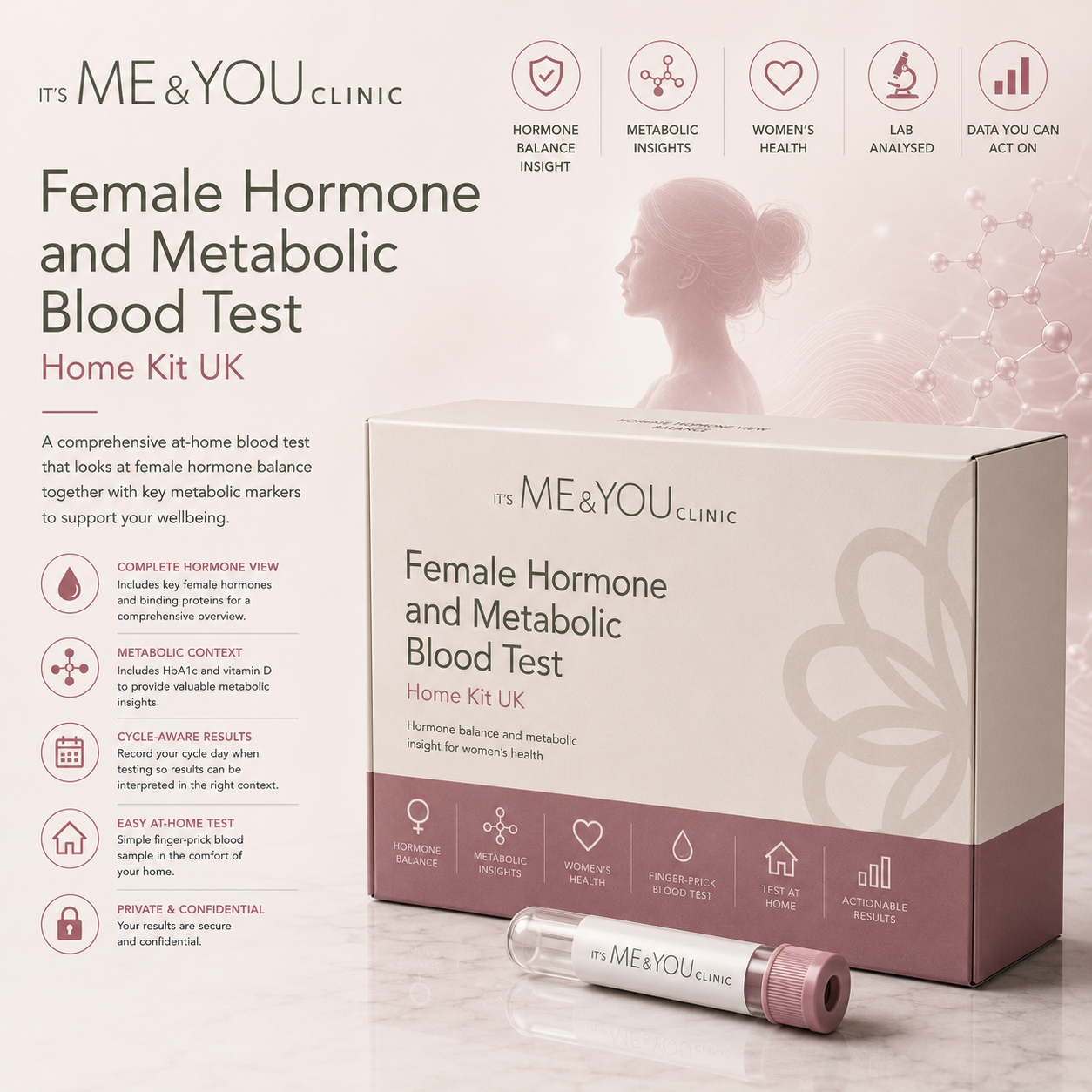
Female Hormone and Metabolic Blood Test Home Kit UK
A seven marker panel combining the focused female hormone profile with HbA1c and vitamin D where those additional measurements are genuinely relevant.
- Markers
- LH, FSH, total testosterone, SHBG, calculated free androgen index, HbA1c and vitamin D
- Most relevant when
- A combined hormone, longer term glucose and vitamin D question
- Timing
- Record the cycle day; follow the product instructions for collection and interpretation
- Important limit
- Does not diagnose PCOS, diabetes, menopause or explain weight change by itself

Ovarian reserve and reproductive hormone route
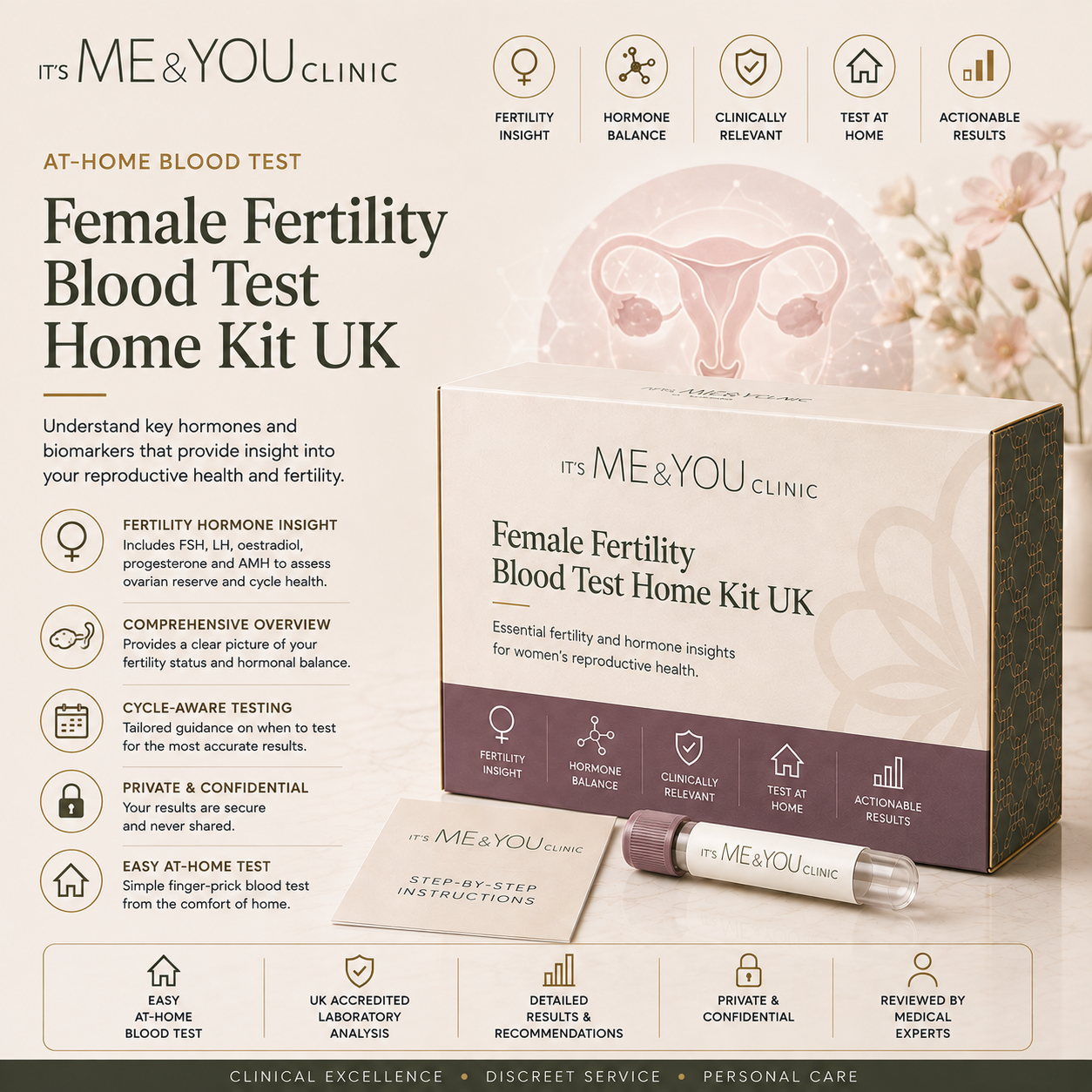
Female Fertility Blood Test Home Kit UK
A seven marker fertility related panel that combines AMH with gonadotrophin, progesterone and androgen context.
- Markers
- AMH, LH, FSH, progesterone, total testosterone, SHBG and calculated free androgen index
- Most relevant when
- Selected ovarian reserve, ovulation and reproductive hormone context
- Timing
- AMH is less cycle dependent; baseline LH and FSH and progesterone answer different timing questions
- Important limit
- Does not measure egg quality, tubal function or the likelihood of natural conception
Side by side comparison
Compare exactly what each women’s health test adds
| Test | Markers | Most relevant when | Timing | Important limit |
|---|---|---|---|---|
| Female Hormone Test | LH, FSH, total testosterone, SHBG and calculated free androgen index | A focused question involving reproductive hormone signalling or androgen context | Record the cycle day; days 2 to 5 are preferred when baseline LH and FSH comparison is the aim | Does not diagnose PCOS, infertility, menopause or the cause of irregular periods |
| Female Hormone and Metabolic Test | LH, FSH, total testosterone, SHBG, calculated free androgen index, HbA1c and vitamin D | A combined hormone, longer term glucose and vitamin D question | Record the cycle day; follow the product instructions for collection and interpretation | Does not diagnose PCOS, diabetes, menopause or explain weight change by itself |
| Ovarian Reserve and Fertility Test | AMH, LH, FSH, progesterone, total testosterone, SHBG and calculated free androgen index | Selected ovarian reserve, ovulation and reproductive hormone context | AMH is less cycle dependent; baseline LH and FSH and progesterone answer different timing questions | Does not measure egg quality, tubal function or the likelihood of natural conception |
Cycle timing guide
The same hormone can mean something different on another day
Preferred when the main aim is an early follicular baseline comparison of LH and FSH.
LH may rise around ovulation, so a higher result may reflect normal cycle physiology.
Progesterone is usually interpreted around seven days before the expected next period rather than on one fixed calendar day.
Record the last menstrual period, usual pattern, contraception and hormone treatment.
Do not stop prescribed contraception, HRT, fertility treatment or another medicine simply to obtain a home result unless the responsible clinician advises it.
Plain English biomarker guide
What the principal markers may contribute
A pituitary hormone involved in ovulation and ovarian signalling. It varies markedly across the cycle.
A pituitary hormone used with age, cycle stage and other findings when considering ovarian function.
An androgen present in women as well as men. Results require symptom and laboratory context.
A binding protein that affects the relationship between total and available testosterone.
A calculation based on testosterone and SHBG that provides biochemical androgen context.
A marker of average glucose exposure over recent weeks and months rather than a direct hormone measure.
A nutritional marker relevant to bone health and selected deficiency questions.
A marker used to provide ovarian reserve context. It does not measure egg quality.
A cycle dependent hormone that may support evidence of recent ovulation when timed appropriately.
PCOS and androgen symptoms
Hormone results form only one part of assessment
Irregular periods, acne, unwanted hair growth and scalp hair thinning may prompt hormone and metabolic testing, but they are not specific to PCOS.
- Clinical history and examination remain important
- Other endocrine causes may need exclusion
- Ultrasound is not required in every diagnostic pathway
- A normal home panel does not explain persistent symptoms
Fertility and ovarian reserve
AMH does not provide a fertility verdict
AMH can provide ovarian reserve context and may support treatment planning, but it does not measure egg quality or guarantee natural conception.
- Age remains important to fertility
- Ovulation, tubal function and semen factors may matter
- Progesterone requires appropriate cycle timing
- Persistent fertility concerns deserve a complete assessment
From order to result
How home women’s health testing works
Select the panel whose markers match the question.
Review cycle timing, treatment, fasting and collection instructions.
Provide the required capillary blood sample using the supplied equipment.
Package and return the sample through the stated pathway promptly.
Interpret the report with cycle stage, symptoms and treatment context.
Laboratory analysis and reporting
Reproductive hormones, HbA1c, vitamin D and AMH use different analytical methods
The sample must be correctly identified, accepted and analysed using the appropriate method. Calculated values such as free androgen index depend on the underlying measurements and formula used.
Laboratory, accreditation, sample stability and reporting details can differ between products. The individual product page remains the definitive source for the current pathway applying to that kit.


Clinic address
Ground floor
Siddeley House
50 Canbury Park Road
Kingston upon Thames
KT2 6LX
Doctor led care in Kingston
Support when cycle, fertility or hormone results need individual judgement
It’s Me & You Clinic is led by Dr Laura Geige and is located around five minutes from Kingston station. The clinic is convenient for Kingston, Norbiton, Surbiton, Richmond, Hampton Wick, New Malden and neighbouring Surrey areas.
The Rotunda, Bentall Centre, Fenwick, cafés and Kingston riverside are nearby. Drivers can use central off street parking serving the Bentall Centre and wider town centre.
Medical and editorial oversight
Women’s health, dermatology and metabolic context

Medical oversight
Dr Laura Geige
Clinical scope includes urgent symptom boundaries, pregnancy safeguards, hormone treatment context and the distinction between information and diagnosis.
View professional profile
Androgen and skin context
Dr Giedre Narkiene
Clinical scope includes acne, hirsutism, scalp hair change, rapid virilisation warnings and dermatological causes that may coexist with hormone concerns.
View professional profile
Metabolic and nutritional context
Dr Rimas Geiga
Clinical scope includes HbA1c, vitamin D, body composition, nutrition and the limits of using one panel to explain non specific symptoms.
View professional profileGeneral website information is educational and does not replace individual medical advice, examination or treatment planning.
UK guidance and further reading
Selected women’s health, fertility and menopause sources
Current NHS information on irregular periods, androgen related symptoms, fertility and metabolic context.
Current NICE fertility guidance, published in March 2026 and replacing the earlier CG156 guideline.
Current guidance on identifying menopause, premature ovarian insufficiency and treatment decisions.
Regulator information explaining AMH as an ovarian reserve related marker.
Patient information on heavy bleeding, possible causes and when to seek assessment.
Clinical context for suspected menopause before age 45.
Frequently asked questions
Women’s health and hormone blood tests
Which women’s health test should I choose?
Choose the focused female hormone test for LH, FSH and androgen context, the metabolic panel when HbA1c and vitamin D are also relevant, and the fertility panel for AMH, progesterone and ovarian reserve context.
Why are only three products included?
These are the three clearest and most relevant core routes. The skin, hair and nail test belongs to a separate collection, while duplicate hormone routes have been excluded to avoid confusing overlap.
Can these tests diagnose PCOS?
No. Hormone and metabolic results can provide context, but diagnosis requires clinical assessment and exclusion of other causes.
What day of my cycle should I test?
Timing depends on the marker and question. Days 2 to 5 are preferred for baseline LH and FSH comparison, while progesterone is generally timed around seven days before the expected next period.
Can I test while using contraception or HRT?
You can collect a sample, but hormonal treatment may materially change results. Record the product, dose, route and timing, and do not stop prescribed treatment without advice.
Can AMH tell me whether I am fertile?
No. AMH provides ovarian reserve context but does not measure egg quality or predict whether natural conception will occur.
Does a low AMH result mean pregnancy is impossible?
No. AMH should be interpreted with age, cycle history and the wider fertility picture.
Can the metabolic panel explain weight gain?
No. HbA1c and vitamin D add selected context, but weight change can involve sleep, medicines, thyroid function, diet, activity and other factors.
Do I need to fast?
Follow the current instructions for the selected product. The individual product page takes priority.
Can these tests diagnose menopause?
Not by themselves. Menopause is often identified clinically from age, symptoms and menstrual history, with testing reserved for selected situations.
What should I do with an abnormal result?
Read the laboratory commentary and arrange appropriate clinical follow up. Repeat testing, imaging or specialist assessment may be required.
Are the corresponding It’s Me & You Clinic products included?
Yes. The focused female hormone, female hormone and metabolic, and ovarian reserve and fertility routes use their matching current clinic images.
Choose the scope deliberately
Begin with the smallest panel that can answer the women’s health question
Compare the three core It’s Me & You Clinic products, or contact the doctor led Kingston clinic when cycle timing, fertility, treatment or persistent symptoms make the next step less straightforward.
These tests provide selected laboratory information and do not replace diagnosis, pregnancy care, fertility assessment, emergency care or treatment planning.