





Doctor led organ function testing from Kingston
Liver and Kidney Function Blood Tests UK
Two focused home blood testing routes for selected liver enzymes and proteins, or kidney filtration markers including creatinine, urea and eGFR.
The liver and kidneys perform different roles. Their blood tests should not be treated as interchangeable, and neither panel can diagnose every condition affecting the relevant organ. The value of testing depends on the clinical question, medicines, alcohol, hydration, exercise, previous results and the need for urine tests or imaging.

Choose by organ pathway
The correct test begins with the question, not the symptom alone
A liver panel may be relevant where selected enzyme or protein monitoring is required. A kidney panel may be relevant where creatinine, urea and estimated filtration are the focus. Symptoms such as tiredness, nausea, swelling or abdominal discomfort are not specific enough to select a test without context.
Where symptoms are significant, rapidly worsening or accompanied by jaundice, bleeding, confusion, major changes in urine output or breathlessness, clinical assessment is more appropriate than a home kit.
The current home panel reports selected enzymes and proteins.
- ALT, GGT and ALP provide different enzyme patterns
- Albumin, total protein and globulin add protein context
- The panel does not include every liver marker or imaging
- An abnormal result should be interpreted with history and previous tests
The current home panel reports selected filtration related measurements.
- Creatinine is affected by kidney filtration and non kidney factors
- eGFR is calculated rather than directly measured
- Urea is affected by hydration and protein metabolism
- Urine ACR and repeat results may be essential to interpretation
Yellow skin or eyes, vomiting blood, black stools, confusion, severe abdominal pain, a major reduction in urine output, blood in the urine with severe pain, facial swelling, collapse or sudden breathlessness require prompt assessment.
A more considered testing journey
Interpret patterns rather than isolated numbers
Liver enzymes can be affected by alcohol, medicines, metabolic health, biliary conditions, muscle injury and exercise. Kidney measurements can be affected by hydration, muscle mass, diet, medicines, supplements and acute illness. One number is rarely the whole answer.


It’s Me & You Clinic collection
Home liver and kidney function blood tests
These two product routes preserve the intended scope of the supplied collection while using current It’s Me & You Clinic product links, imagery and completely rewritten clinical guidance.

Six liver markers
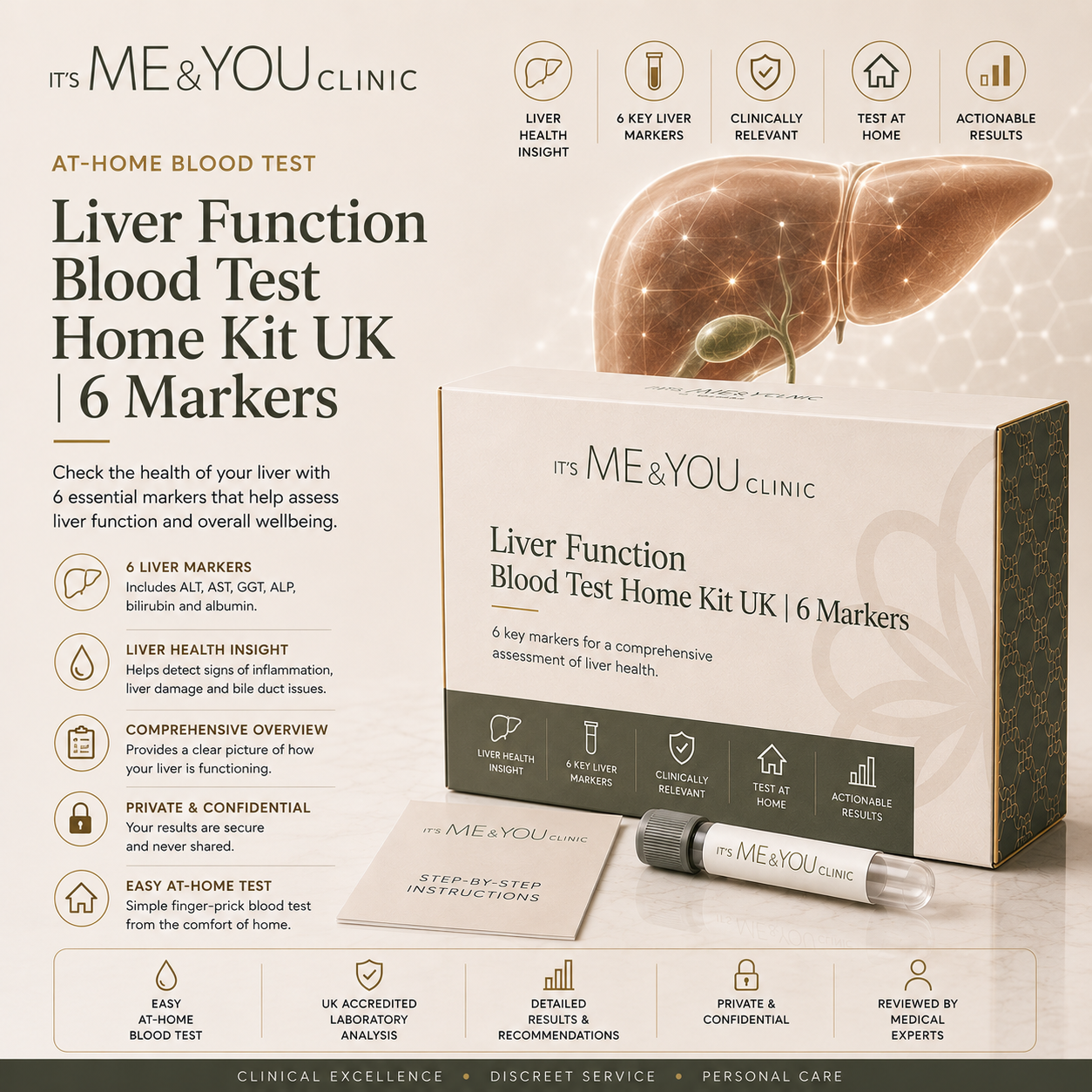
Liver Function Blood Test Home Kit UK
A focused home blood test reporting selected enzymes and proteins that can provide context about liver cell injury, biliary patterns and protein status.
- Reported
- Albumin, total protein, globulin, GGT, ALT and ALP
- May be relevant when
- Monitoring advised by a clinician or a defined liver related question
- Important limit
- Does not include bilirubin, AST, INR, platelets, viral testing, imaging or fibrosis assessment

Urea, creatinine and eGFR
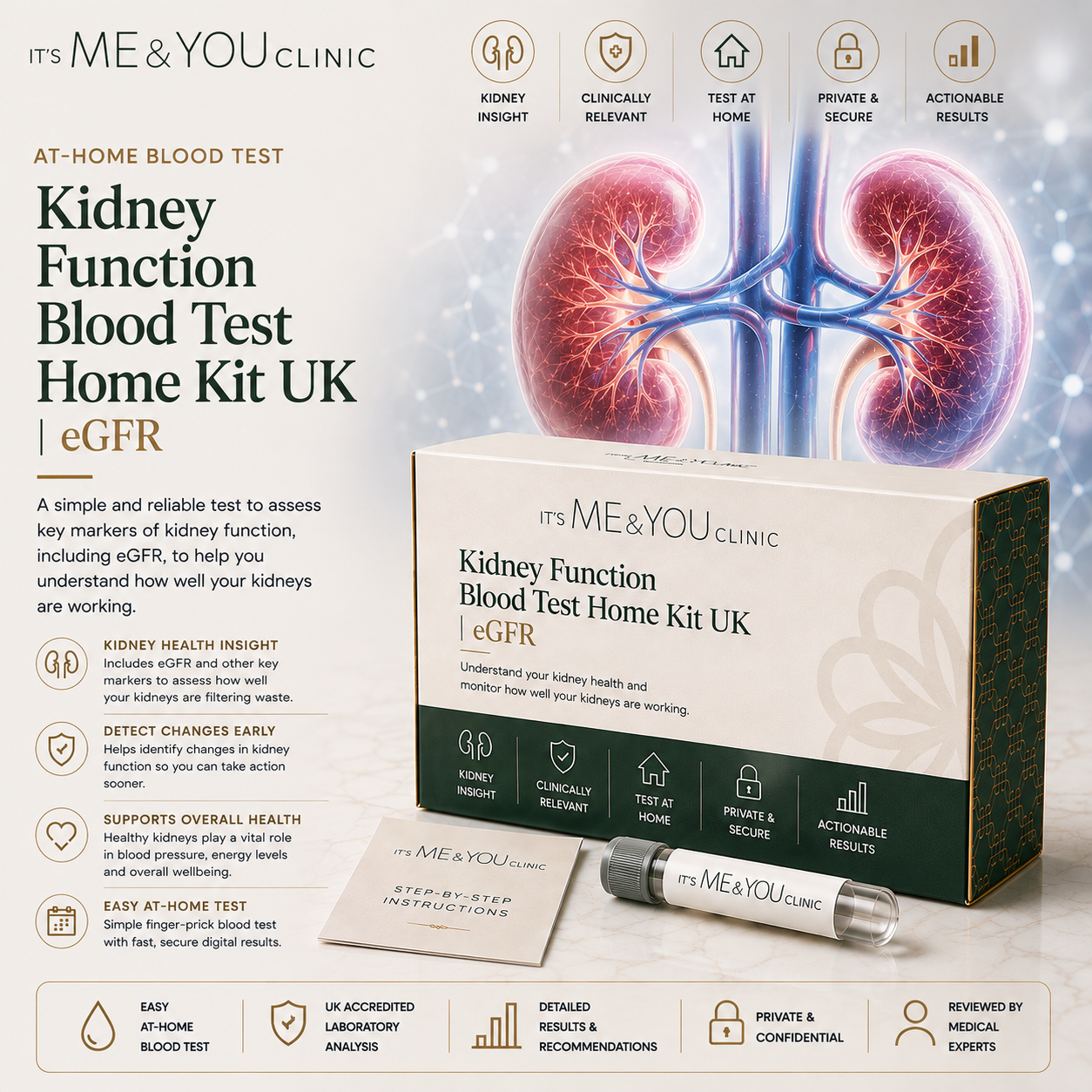
Kidney Function Blood Test Home Kit UK
A focused home blood test measuring selected waste products and calculating an estimate of kidney filtration.
- Reported
- Urea, creatinine and calculated eGFR
- May be relevant when
- A defined kidney filtration or monitoring question
- Important limit
- Does not include urine ACR, urinalysis, electrolytes, cystatin C, imaging or repeat measurements
Side by side comparison
Liver panel or kidney filtration test?
Liver Function Blood Test
- Main purpose
- Selected liver enzyme and protein context
- Reported
- ALT, GGT, ALP, albumin, total protein and globulin
- May be relevant
- Where liver related monitoring or a defined clinical question is present
- Not included
- Bilirubin, AST, INR, platelets, hepatitis testing, imaging or fibrosis assessment
Kidney Function Blood Test
- Main purpose
- Selected kidney filtration and waste handling context
- Reported
- Urea, creatinine and calculated eGFR
- May be relevant
- Where kidney monitoring or a filtration question is appropriate
- Not included
- Urine ACR, urinalysis, electrolytes, cystatin C, imaging or repeat measurements
Plain English marker guide
What each reported measurement may add
An enzyme found mainly in liver cells. A raised result has several possible causes and is not a diagnosis.
An enzyme influenced by alcohol, medicines and biliary conditions. It is not specific to one disease.
An enzyme associated with bile ducts and bone. Other findings help indicate the likely source.
A protein made by the liver. Lower levels may also reflect inflammation, kidney loss or nutritional factors.
The combined concentration of albumin and globulins in the blood.
A calculated or measured group of proteins involved in immune and transport functions.
A waste product affected by muscle mass, hydration, diet, exercise and kidney filtration.
A calculated estimate of filtration. Trends, age, clinical context and urine testing can be important.
A waste product influenced by hydration, protein intake, bleeding, catabolism and kidney function.
Preparation and interpretation
Improve the usefulness of the result
Prescription medicines, pain relief, antibiotics, herbal products and bodybuilding supplements may affect results.
Alcohol can influence liver enzyme patterns and should be considered during interpretation.
Dehydration can increase urea and creatinine and may lower calculated eGFR temporarily.
Muscle injury and strenuous exercise can affect creatinine and selected enzyme measurements.
The direction and persistence of change may be more informative than one isolated value.
Unexpected results may require venous blood, urine testing, imaging or clinical assessment.
From order to result
How home blood testing works
Select the liver or kidney route according to the defined question.
Read the collection instructions and record relevant medicines and context.
Use the supplied equipment and follow every collection step carefully.
Package the sample and use the specified return pathway promptly.
Consider the complete pattern and arrange proportionate follow up.
Laboratory analysis and reporting
A defined pathway after the sample leaves your home
Liver enzymes, proteins, creatinine and urea use different analytical methods. The sample must be identified, accepted, analysed using the appropriate assay and reported through the relevant secure pathway.
The current product information states UKAS accredited and CQC registered laboratory processing for these tests. Accreditation, sample stability, acceptance criteria and reporting details should still be checked on the individual product page.


Clinic address
Ground floor
Siddeley House
50 Canbury Park Road
Kingston upon Thames
KT2 6LX
Doctor led care in Kingston
Support when organ function results need more judgement
It’s Me & You Clinic is led by Dr Laura Geige and is located around five minutes from Kingston station. The clinic is convenient for Kingston, Norbiton, Surbiton, Richmond, Hampton Wick, New Malden and neighbouring Surrey areas.
The Rotunda, Bentall Centre, Fenwick, cafés and Kingston riverside are nearby. Drivers can use central off street parking serving the Bentall Centre and the wider town centre.
Medical and editorial review
Medical safety, metabolic context and patient pathway review
The page has been reviewed for liver and kidney testing boundaries, urgent symptoms, hydration and metabolic context, laboratory limitations, repeat testing and responsible follow up.

Medical oversight
Dr Laura Geige
Reviewed urgent warning signs, diagnostic boundaries, follow up wording and the distinction between home laboratory information and individual medical assessment.
View professional profile
Metabolic context
Dr Rimas Geiga
Reviewed hydration, alcohol, medicine, supplement, metabolic and lifestyle factors that may affect liver and kidney results.
View professional profile
Patient pathways
Veronika Matutyte
Reviewed laboratory pathway language, repeat testing, urine test limitations, governance and patient centred follow up communication.
View professional profileMedical and editorial review date: 4 August 2026. General website information is educational and does not replace individual medical advice.
UK research and further reading
Selected university and medical journal sources
British guidance emphasising interpretation with previous results, medical history and current clinical context.
A recent clinical update explaining the low diagnostic specificity of core liver blood tests.
A prospective primary care study addressing how abnormal liver results are investigated.
Population research using eGFR as a measure of kidney function and examining kidney related disease pathways.
Research on changes in estimated filtration and their relationship with later kidney outcomes.
Research context showing why age, risk and communication matter when discussing reduced filtration estimates.
Frequently asked questions
Liver and kidney blood tests
Which test should I choose?
Choose the liver test for selected liver enzymes and proteins. Choose the kidney test for urea, creatinine and calculated eGFR. Significant symptoms or uncertainty require clinical assessment rather than guesswork.
Can these tests diagnose liver or kidney disease?
No. They provide selected laboratory information. Diagnosis may require repeat blood tests, urine testing, imaging, examination and a medical history.
Why are liver blood tests sometimes called liver function tests?
The name is commonly used, but several reported markers are enzymes associated with injury or biliary patterns rather than direct measurements of liver function.
Does the liver test include bilirubin?
No. The supplied liver panel reports albumin, total protein, globulin, GGT, ALT and ALP. Review the current product specification before ordering.
Does one low eGFR mean chronic kidney disease?
No. Chronic kidney disease generally requires persistent evidence over time or another marker of kidney damage. Repeat blood tests and urine ACR may be needed.
Can dehydration affect kidney results?
Yes. Dehydration can increase urea and creatinine and may reduce calculated eGFR temporarily.
Can exercise affect creatinine or liver enzymes?
Yes. Strenuous exercise and muscle injury can alter creatinine and selected enzyme measurements.
Can alcohol affect liver blood tests?
Yes. Alcohol can influence liver enzyme patterns, particularly GGT, although an abnormal result is not specific to alcohol use.
Do I need to fast?
Fasting is not generally required for these focused panels, but the current instructions supplied with the individual kit take priority.
What should I do with an abnormal result?
Review the degree and pattern of abnormality with a healthcare professional. Repeat venous testing, urine tests, imaging or further investigations may be appropriate.
Can normal results exclude liver or kidney disease?
No. A limited panel may be normal despite a condition that requires different markers, urine testing, imaging or clinical assessment.
When should I seek urgent medical help?
Seek urgent assessment for jaundice with severe illness, vomiting blood, black stools, confusion, severe abdominal pain, a major fall in urine output, facial swelling, collapse or sudden breathlessness.
Choose with clarity
Select the organ pathway that matches the question and understand the limits of one blood sample
Compare the two focused home tests when laboratory context is appropriate, or contact the doctor led Kingston clinic when symptoms, medicines or previous results make the next step less straightforward.
These tests provide selected laboratory information and do not replace medical assessment, diagnosis, emergency care or treatment.