





Doctor led heart health testing from Kingston
Cholesterol and Heart Health Blood Tests UK
Compare a focused lipid profile, a broader heart health panel and high sensitivity CRP testing from home.
Raised cholesterol commonly causes no symptoms. Testing may identify an unexpected result, but cardiovascular risk also depends on age, blood pressure, smoking, diabetes, kidney health, family history and existing medical conditions. One blood panel does not replace a complete risk assessment.

Choose the question before the panel
Cholesterol, cardiometabolic context or inflammation?
The focused lipid profile is the direct route when the main question concerns cholesterol and triglycerides. The broader heart health panel may be useful when longer term blood sugar context is also relevant. hsCRP answers a different question and should not be used as a replacement for lipid testing.
The most useful panel is the one that can change the next step. More markers do not automatically make a test more informative.
For a direct view of LDL, HDL, total cholesterol, non HDL cholesterol, triglycerides and the cholesterol ratio.
For people who need cholesterol and the listed longer term blood sugar information considered together.
For selected inflammatory context after infection, injury, dental inflammation and strenuous exercise have been considered.
Severe or persistent chest pressure, pain spreading to the arm, jaw, back or stomach, sudden breathlessness, collapse, facial droop, one sided weakness or speech difficulty require emergency assessment rather than a home blood test.
Risk is wider than one laboratory result
Use blood testing as one part of a considered cardiovascular picture
Cholesterol results are interpreted with blood pressure, smoking, age, sex, diabetes, kidney health, family history and existing cardiovascular disease. A reassuring result does not rule out structural heart disease or remove the need to address other risk factors.


It’s Me & You Clinic collection
Home cholesterol and heart health blood tests
These three product routes preserve the intended scope of the supplied collection while using It’s Me & You Clinic product links, current imagery and completely rewritten guidance.

Focused six marker lipid profile
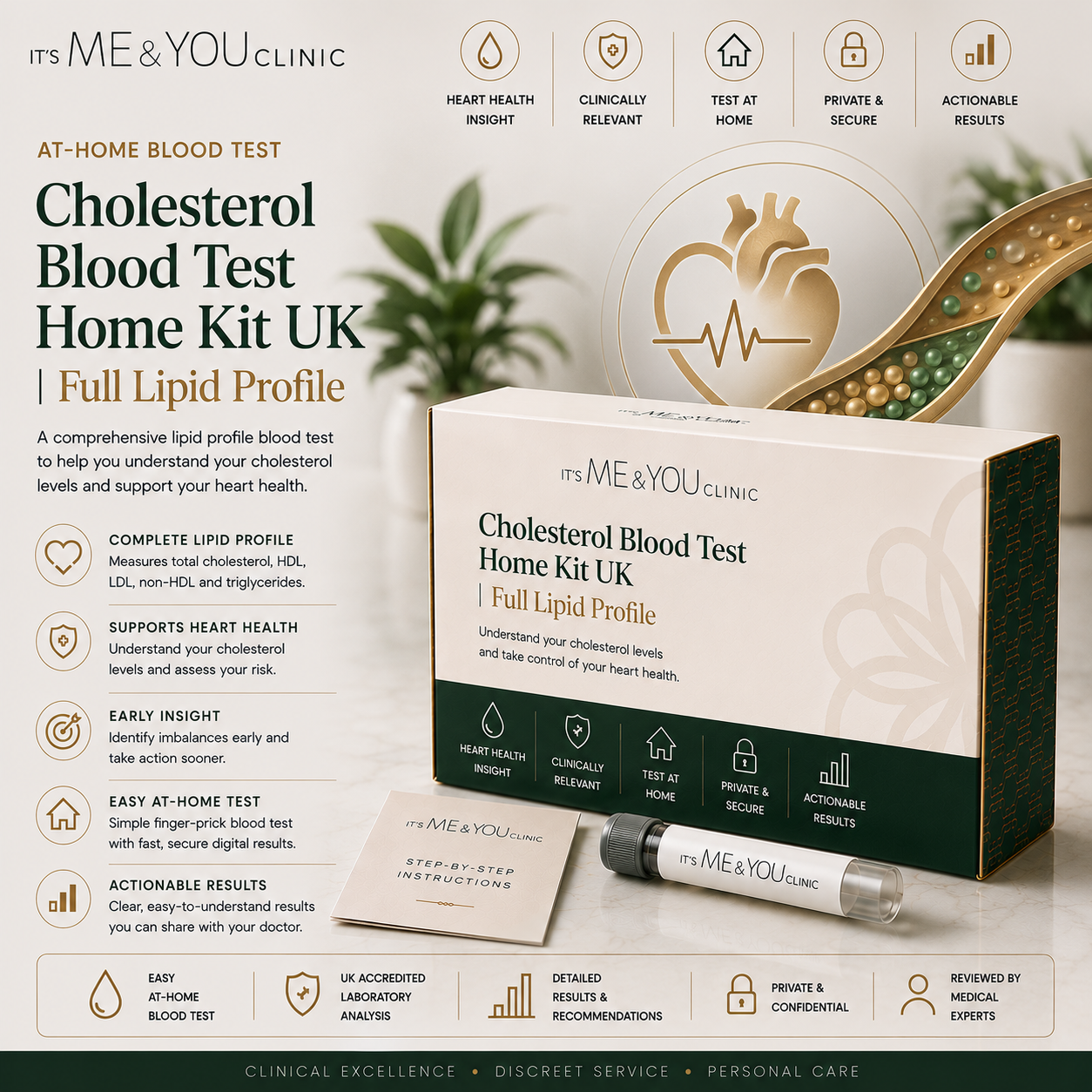
Cholesterol Blood Test Home Kit UK
A direct cholesterol route for people who want a current lipid pattern without adding unrelated metabolic or inflammatory measurements.
- Focus
- LDL, total cholesterol, non HDL cholesterol, HDL, triglycerides and total cholesterol to HDL ratio
- May be relevant when
- A baseline cholesterol question, agreed monitoring or review of lifestyle change
- Important limit
- Does not calculate complete cardiovascular risk or diagnose heart disease

Cholesterol and blood sugar context
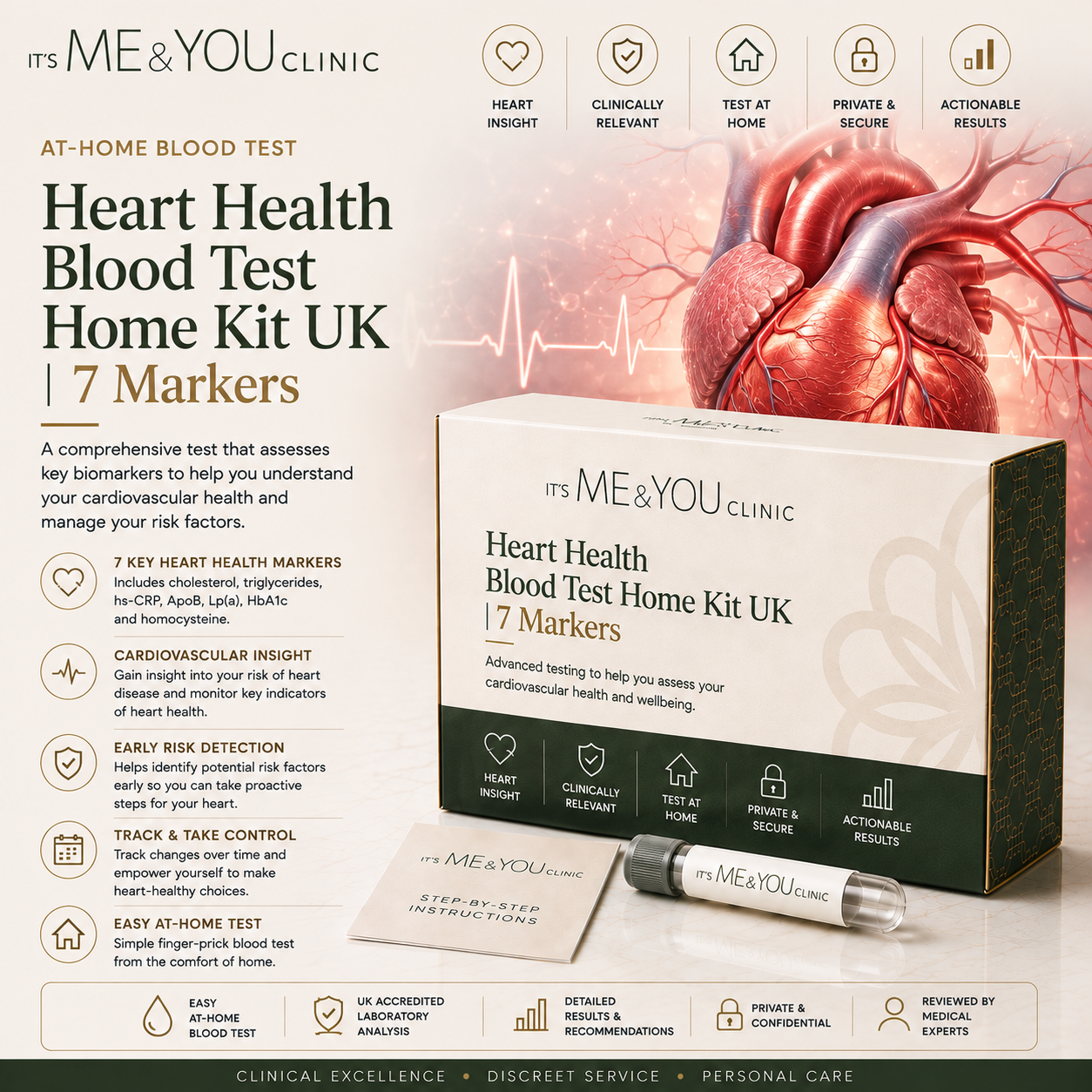
Heart Health Blood Test Home Kit UK
A broader cardiometabolic route combining lipid information with the diabetes related measurements listed on the individual product page.
- Focus
- The seven heart health and blood sugar related markers stated on the product page
- May be relevant when
- A defined need to consider cholesterol and longer term glucose context together
- Important limit
- Still does not replace blood pressure measurement, formal risk scoring or cardiovascular assessment

Focused inflammatory context
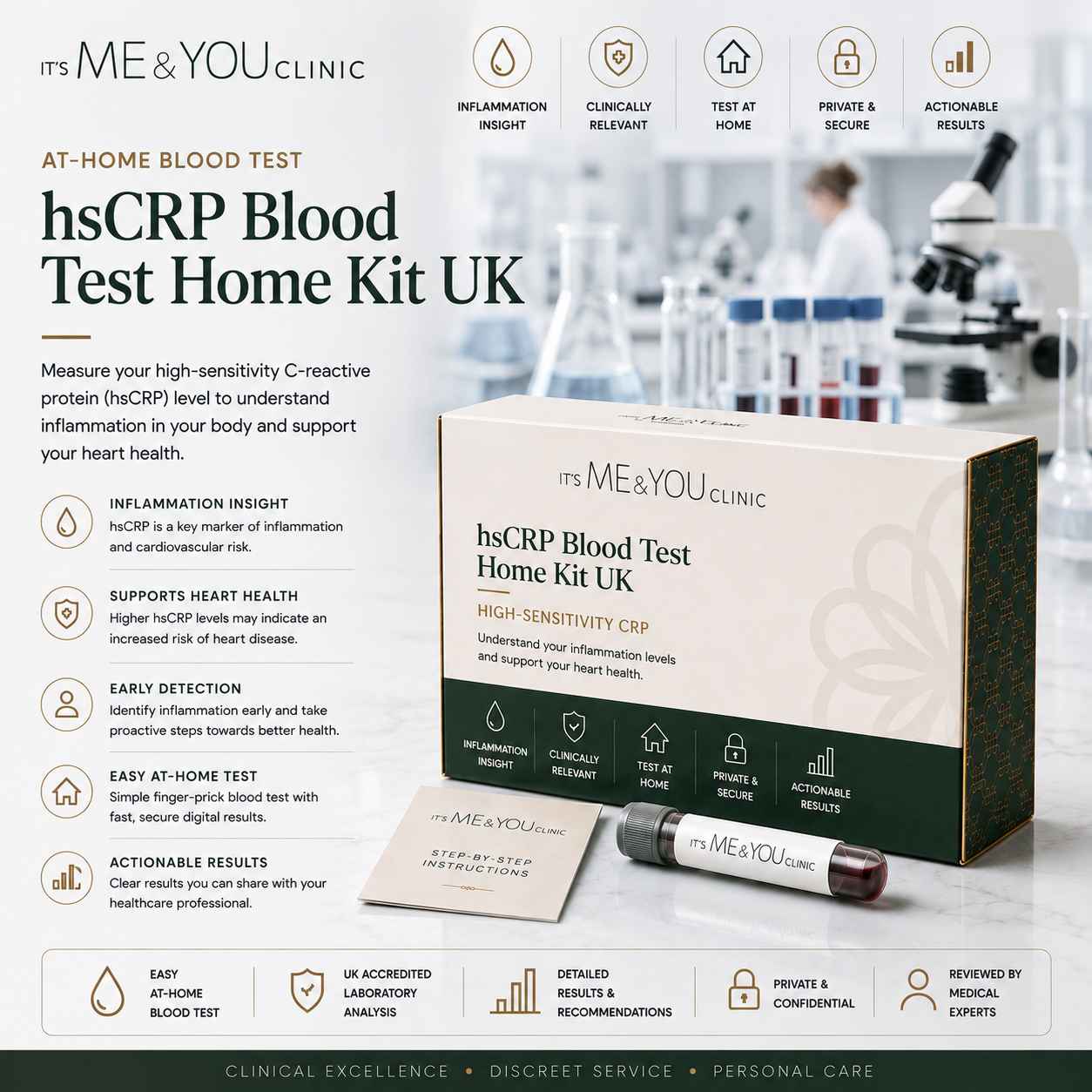
hsCRP Blood Test Home Kit UK
A single marker high sensitivity CRP route for selected inflammatory risk context when temporary causes of raised CRP have been considered.
- Focus
- High sensitivity C reactive protein
- May be relevant when
- A clinician directed or clearly defined hsCRP question alongside conventional risk factors
- Important limit
- CRP is non specific and may rise with infection, injury, dental inflammation or strenuous exercise
Side by side comparison
Which heart health blood test answers which question?
| Test | Main focus | May be relevant when | Important limit |
|---|---|---|---|
| Full Lipid Profile | LDL, total cholesterol, non HDL cholesterol, HDL, triglycerides and total cholesterol to HDL ratio | A baseline cholesterol question, agreed monitoring or review of lifestyle change | Does not calculate complete cardiovascular risk or diagnose heart disease |
| Heart Health Profile | The seven heart health and blood sugar related markers stated on the product page | A defined need to consider cholesterol and longer term glucose context together | Still does not replace blood pressure measurement, formal risk scoring or cardiovascular assessment |
| High Sensitivity CRP Test | High sensitivity C reactive protein | A clinician directed or clearly defined hsCRP question alongside conventional risk factors | CRP is non specific and may rise with infection, injury, dental inflammation or strenuous exercise |
Plain English biomarker guide
What the principal markers may add
The total cholesterol carried in the main lipoprotein fractions. It does not describe the complete distribution by itself.
An atherogenic lipid measure that should be interpreted according to overall cardiovascular risk and treatment context.
Part of risk interpretation, but a higher HDL result does not cancel other important risk factors.
Total cholesterol minus HDL, representing cholesterol carried in several potentially atherogenic particles.
Circulating fats influenced by genetics, food intake, alcohol, metabolic health and medicines.
A calculated relationship that may contribute to risk estimation but should not be viewed without the underlying values.
A measure reflecting average glucose exposure over recent weeks and months. It provides metabolic rather than cholesterol information.
A non specific inflammatory marker that can rise for many reasons unrelated to atherosclerotic cardiovascular disease.
A complete risk picture needs more than bloods
Important cardiovascular information not measured by these kits
Hypertension is a major cardiovascular risk factor and requires a separate measurement.
Smoking materially changes risk even where cholesterol is not markedly raised.
Baseline risk changes across the life course and contributes to formal risk estimation.
Reduced kidney function may alter cardiovascular risk and treatment thresholds.
Early heart disease or very high cholesterol in close relatives may indicate inherited risk.
People with cardiovascular disease need clinical management rather than consumer interpretation alone.
Familial cholesterol conditions
When a home result is only the first step
Familial hypercholesterolaemia is an inherited condition associated with persistently high cholesterol and earlier cardiovascular disease. A home lipid result cannot confirm the diagnosis.
Arrange clinical assessment where cholesterol is repeatedly very high, a close relative has familial hypercholesterolaemia, or heart attack or stroke occurred unusually early in the family. Repeat laboratory testing, family history review and specialist or genetic assessment may be appropriate.
Do not start, stop or change a statin or another prescribed medicine because of one home result without advice from the clinician responsible for your treatment.
Preparation and timing
Improve the usefulness of the result before collecting
Many routine lipid profiles do not require fasting, but product specific guidance takes priority.
Statins, other lipid lowering medicines, hormones and several treatments affect interpretation.
Infection and inflammation may alter hsCRP and can influence lipid measurements.
Recent intense activity may raise hsCRP temporarily.
Alcohol may affect triglycerides and the wider metabolic picture.
Unexpected results may require venous testing, blood pressure measurement and formal risk assessment.
From order to result
How home heart health testing works
Match the panel to the question rather than the number of markers.
Read fasting, illness, medicine, exercise and collection instructions.
Use the supplied equipment and provide the required blood sample.
Package and return the sample through the specified pathway promptly.
Consider the report with wider risk factors and arrange follow up.
Laboratory analysis and reporting
A defined pathway after the sample leaves your home
Lipid, glucose and high sensitivity CRP measurements use different analytical methods and quality controls. The sample must be identified, accepted, analysed using the correct assay and reported through the relevant secure pathway.
Current product information states UKAS accredited and CQC registered laboratory processing where applicable. Accreditation, sample stability, acceptance criteria and reporting details should still be checked on each individual product page.


Clinic address
Ground floor
Siddeley House
50 Canbury Park Road
Kingston upon Thames
KT2 6LX
Doctor led care in Kingston
Support when cholesterol or heart health results need more judgement
It’s Me & You Clinic is led by Dr Laura Geige and is located around five minutes from Kingston station. The clinic is convenient for Kingston, Norbiton, Surbiton, Richmond, Hampton Wick, New Malden and neighbouring Surrey areas.
The Rotunda, Bentall Centre, Fenwick, cafés and Kingston riverside are nearby. Drivers can use central off street parking serving the Bentall Centre and the wider town centre.
Medical and editorial review
Medical oversight, cardiometabolic context and patient pathway review
The page has been reviewed for urgent cardiovascular symptoms, lipid and glucose context, hsCRP limitations, medicine cautions, inherited risk and appropriate follow up.

Medical oversight
Dr Laura Geige
Reviewed emergency symptoms, diagnostic boundaries, medicine cautions and responsible positioning of home heart health testing.
View professional profile
Cardiometabolic context
Dr Rimas Geiga
Reviewed LDL, HDL, non HDL cholesterol, triglycerides, HbA1c, nutrition and metabolic risk context.
View professional profile
Patient pathways
Veronika Matutyte
Reviewed laboratory pathway wording, fasting guidance, risk communication, quality governance and result follow up.
View professional profileMedical and editorial review date: 4 August 2026. General website information is educational and does not replace individual medical advice.
UK guidance and further reading
Selected official and peer reviewed sources
UK guidance on formal risk assessment, lipid testing and cholesterol lowering treatment.
Patient information on cholesterol, testing, risk factors and treatment.
Guidance on inherited high cholesterol, family history and specialist pathways.
Research context covering cholesterol, blood pressure, smoking, adiposity and kidney disease.
Research highlighting the importance of cumulative cholesterol exposure across life.
Peer reviewed evidence supporting non fasting lipid profiles in many routine situations.
Frequently asked questions
Home cholesterol and heart health blood tests
Which home heart health test should I choose?
Choose the lipid profile when the main question is cholesterol. Choose the broader heart health panel when blood sugar context is also relevant. Choose hsCRP only for a clearly defined inflammatory question.
Can I check cholesterol with a home blood test?
Yes. These kits use home sample collection followed by laboratory analysis. Follow the current registration, collection and return instructions.
Does high cholesterol cause symptoms?
High cholesterol usually causes no symptoms. A blood test is needed to identify an unexpected result.
Do I need to fast?
Many routine lipid profiles do not require fasting, but the current instructions for the selected product take priority.
Can a cholesterol test diagnose heart disease?
No. It measures selected risk related biomarkers but cannot show whether an artery is narrowed or diagnose a heart attack.
What is the difference between LDL and non HDL cholesterol?
LDL estimates cholesterol in low density lipoproteins. Non HDL cholesterol is total cholesterol minus HDL and includes several potentially atherogenic particles.
Is higher HDL always protective?
No. HDL contributes to risk interpretation, but a higher result does not cancel raised LDL, smoking, high blood pressure, diabetes or other risks.
What does hsCRP tell me?
It measures a non specific inflammatory protein at low concentrations. It may rise with infection, injury, dental inflammation, strenuous exercise and many other conditions.
Can I test while taking statins?
Testing may be used within an agreed monitoring plan. Do not change prescribed treatment because of one home result without clinical advice.
What if heart disease runs in my family?
Arrange clinical assessment if close relatives developed cardiovascular disease unusually early or have familial hypercholesterolaemia.
How often should I repeat a cholesterol test?
The appropriate interval depends on previous results, treatment, age, risk factors and the clinician’s plan.
What happens if my result is abnormal?
Read the laboratory commentary and contact a GP or suitable clinician. Repeat testing, blood pressure measurement, formal risk assessment or specialist review may be appropriate.
Choose with clarity
Start with the heart health test that matches the question and understand what it does not measure
Compare the focused lipid profile, broader cardiometabolic panel and hsCRP route when home testing is appropriate, or contact the doctor led Kingston clinic when family history, medicines or previous results make the next step less straightforward.
These tests provide selected laboratory information and do not replace cardiovascular assessment, diagnosis, emergency care or treatment.