






Kisspeptin-10 UK: Reproductive Hormone Research in the Peptides UK Market
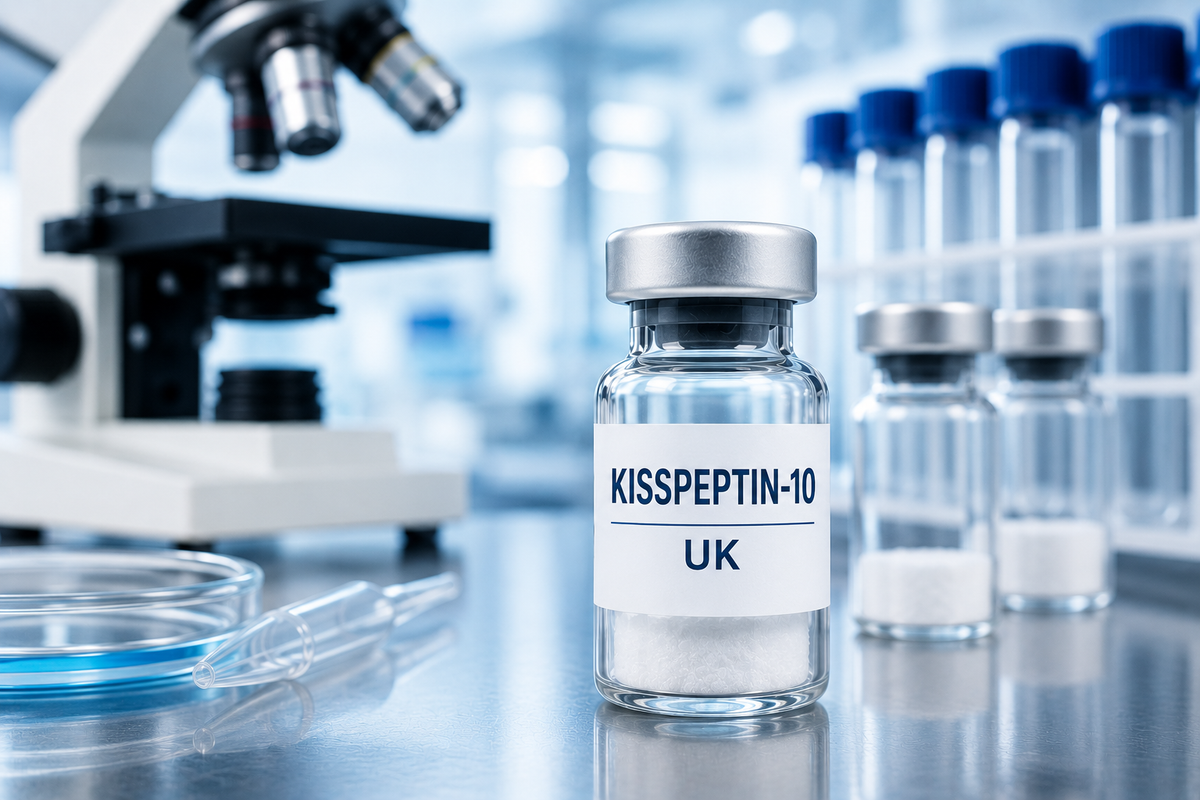
Kisspeptin-10 UK: Reproductive Hormone Research in the Peptides UK Market
Kisspeptin-10 is a naturally occurring ten-amino-acid fragment of the KISS1 peptide family and a potent activator of the kisspeptin receptor. It plays a central role in experimental research into puberty, gonadotrophin-releasing hormone, luteinising hormone and reproductive physiology. Human studies demonstrate short-term hormonal activity, but Kisspeptin-10 is not an authorised UK fertility or hormone treatment and significant questions remain about chronic exposure, product quality and safety.
Direct Answer
Kisspeptin-10 is a C-terminally amidated decapeptide with the sequence Tyr-Asn-Trp-Asn-Ser-Phe-Gly-Leu-Arg-Phe-NH2. It represents the shortest naturally occurring kisspeptin fragment that retains strong activity at the kisspeptin receptor, also called KISS1R or GPR54.
KISS1R activation on hypothalamic gonadotrophin-releasing hormone neurons can stimulate the reproductive hormone axis. GnRH release prompts the pituitary gland to release luteinising hormone and follicle-stimulating hormone, which can then influence gonadal hormone production and reproductive function.
Small human studies show that acute Kisspeptin-10 exposure can increase luteinising hormone in healthy men and in women during particular phases of the menstrual cycle. The response is not uniform, and the evidence does not establish a routine treatment for low testosterone, infertility, sexual dysfunction or delayed puberty.
No UK marketing authorisation for a medicinal product containing Kisspeptin-10 was identified in the official product sources reviewed for this article. Research products sold online should not be assumed to match the chemically characterised material used in supervised clinical research.
Kisspeptin-10 Key Points
The central scientific, clinical and regulatory distinctions for Peptides UK readers.
What Is Kisspeptin-10?
Kisspeptin-10 is the shared biologically active C-terminal sequence found within longer kisspeptin peptides.
The human KISS1 gene encodes a larger precursor protein that is processed into several peptide fragments. These include kisspeptin-54, kisspeptin-14, kisspeptin-13 and kisspeptin-10.
Each fragment contains the same ten-amino-acid sequence at its carboxyl end. This shared sequence is Kisspeptin-10 and is sufficient to activate the kisspeptin receptor.
The final phenylalanine is amidated. C-terminal amidation is part of the biologically active structure and should be identified clearly when a synthetic research product is characterised.
Kisspeptin-10 is also described as metastin 45–54 because it corresponds to the final ten residues of kisspeptin-54, historically called metastin.
Kisspeptin-10 in the Peptides UK Research Market
Commercial visibility has increased faster than the evidence supporting unsupervised use.
Kisspeptin-10 now appears in Peptides UK catalogues alongside gonadorelin, oxytocin, growth-hormone-related compounds and experimental reproductive peptides.
Online pages frequently associate it with testosterone, fertility, libido, hormone balance, testicular function or recovery after anabolic-steroid exposure. These descriptions often convert short experimental hormone responses into broad treatment claims.
The research-market name does not establish whether the vial contains correctly amidated human Kisspeptin-10, an acetate or trifluoroacetate salt, another kisspeptin fragment or an inaccurately labelled peptide.
Nor does the label establish peptide quantity, sterility, endotoxin control, aggregation, stability or equivalence to material prepared for a regulated human study.
Hormone activity is not proof of a suitable treatment
An acute rise in luteinising hormone demonstrates biological activity. It does not establish an appropriate long-term treatment, improve fertility outcomes automatically or prove that repeated stimulation is safe.
The Kisspeptin Peptide Family
The different fragments activate the same receptor but do not have identical pharmacokinetic properties.
| Peptide | Length | Alternative Name | Important Distinction |
|---|---|---|---|
| Kisspeptin-54 | 54 amino acids | Metastin | Longer endogenous fragment used in several reproductive and IVF studies |
| Kisspeptin-14 | 14 amino acids | Kp-14 | Contains the same active C-terminal ten-residue sequence |
| Kisspeptin-13 | 13 amino acids | Kp-13 | Another processed KISS1 fragment |
| Kisspeptin-10 | 10 amino acids | Kp-10 or metastin 45–54 | Shortest naturally occurring fragment retaining strong KISS1R activity |
All four peptides share the amidated Arg-Phe C-terminal region required for receptor activity.
Although they act on the same receptor, the fragments may differ in enzymatic stability, circulation time, tissue exposure and the duration of receptor stimulation.
Evidence involving kisspeptin-54 should therefore not be presented as though the exact same product, exposure profile and clinical outcome have been established for Kisspeptin-10.
History and Discovery
The kisspeptin system was discovered through cancer-biology research before its reproductive role became clear.
Discovery of KISS1
KISS1 was initially investigated as a metastasis-suppressor gene because its expression was associated with reduced metastatic behaviour in selected tumour models.
Identification of Metastin
A 54-amino-acid KISS1-derived peptide was identified as a ligand for the orphan receptor GPR54 and was named metastin.
Genetic Evidence in Humans
Loss-of-function mutations affecting GPR54 were linked with failure to progress through normal puberty and with hypogonadotropic hypogonadism.
Animal Reproductive Studies
Experiments demonstrated that kisspeptin fragments potently stimulate the hypothalamic–pituitary–gonadal axis in several animal species.
First Human Hormone Studies
Human research showed that exogenous kisspeptin could acutely increase luteinising hormone, follicle-stimulating hormone and downstream sex-hormone measurements.
Current Translational Research
Research continues in reproductive diagnosis, hypothalamic amenorrhoea, hypogonadism, IVF, sexual processing and longer-acting KISS1R agonists.
Molecular and Scientific Profile
Correct identity requires confirmation of sequence, C-terminal amidation and the product’s salt form.
Human Kisspeptin-10
The complete sequence is H-Tyr-Asn-Trp-Asn-Ser-Phe-Gly-Leu-Arg-Phe-NH2.
KISS1R or GPR54
KISS1R is a G-protein-coupled receptor expressed in reproductive neuroendocrine pathways and several peripheral tissues.
Its activation is particularly important in GnRH-producing neurons involved in the onset and maintenance of reproductive function.
| Common name | Kisspeptin-10 |
|---|---|
| Alternative names | Kp-10, KiSS-10 and metastin 45–54 |
| Peptide length | Ten amino-acid residues |
| Sequence | Tyr-Asn-Trp-Asn-Ser-Phe-Gly-Leu-Arg-Phe-NH2 |
| Free-peptide molecular formula | C63H83N17O14 |
| Approximate molecular weight | Approximately 1,302 g/mol |
| C-terminal modification | Amidated phenylalanine |
| Primary receptor | KISS1R, formerly known as GPR54 |
| Main research pathway | GnRH, luteinising hormone and follicle-stimulating hormone signalling |
Molecular formula and weight may differ when a certificate includes acetate, trifluoroacetate, water or another counterion.
A seller should not use the molecular weight of the free peptide while failing to disclose that the supplied material contains substantial counterion or moisture.
How Does Kisspeptin-10 Signal?
Kisspeptin-10 primarily acts by activating KISS1R on neurons involved in GnRH release.
KISS1R Activation
KISS1R is generally described as a Gq or G11-coupled receptor. Receptor activation stimulates phospholipase C and downstream signalling involving inositol trisphosphate, diacylglycerol and intracellular calcium.
Within GnRH neurons, this signalling can promote neuronal excitation and GnRH secretion.
Pituitary Gonadotrophin Release
GnRH travels through the hypothalamic–pituitary portal circulation and activates GnRH receptors on pituitary gonadotroph cells.
The pituitary then releases luteinising hormone and follicle-stimulating hormone. The relative response can depend on sex, reproductive status, gonadal-steroid feedback and the pattern of stimulation.
Gonadal Hormone Response
Luteinising hormone can influence testosterone production in the testes and steroid production in the ovaries. Follicle-stimulating hormone has roles in sperm development and ovarian follicle function.
These downstream effects are indirect and depend on an intact reproductive endocrine system. A person with pituitary, gonadal or receptor-level dysfunction may respond differently.
The response is not necessarily linear
Reproductive hormone systems depend on pulses, timing and feedback. More frequent or continuous receptor stimulation may produce a different response from a single physiological-like signal and can lead to reduced responsiveness in some experimental settings.
Kisspeptin-10 and the Reproductive Hormone Axis
The peptide is best understood as an upstream signal rather than a replacement for testosterone, oestrogen or gonadotrophins.
Kisspeptin neurons integrate information from gonadal steroids, nutritional state, development and other neuronal systems.
During puberty, increased activity within the kisspeptin–GnRH network contributes to reactivation of pulsatile reproductive-hormone secretion.
In adults, different hypothalamic kisspeptin-neuron populations contribute to pulse generation and, in women, to the preovulatory hormone surge.
Oestrogen can exert negative or positive feedback on reproductive signalling depending on the neuronal population, hormone concentration and stage of the menstrual cycle.
This physiological complexity helps explain why a Kisspeptin-10 exposure can produce a strong luteinising-hormone response in one setting and a much weaker response in another.
Human Kisspeptin-10 Research in Men
Small experimental studies demonstrate acute endocrine activity but do not establish routine treatment.
Acute Hormone Responses
Early human studies found that Kisspeptin-10 boluses could produce substantial short-term increases in luteinising hormone in healthy adult men.
Follicle-stimulating hormone and testosterone measurements also changed in some experiments, although the luteinising-hormone response was generally the most prominent and immediate finding.
Pulse Frequency
A controlled study reported that Kisspeptin-10 boluses evoked luteinising-hormone secretion and that continuous experimental infusion increased luteinising-hormone pulse frequency and pulse size.
These observations demonstrate that Kisspeptin-10 can interact with the endogenous GnRH pulse-generating system.
They do not establish that long-term administration maintains a favourable response, improves fertility or provides a safer alternative to licensed hormone treatment.
Secondary Hypogonadism Claims
Kisspeptin-10 has been marketed for secondary hypogonadism because it acts upstream of pituitary gonadotrophins.
FDA’s formal review concluded that the available literature did not provide adequate evidence of effectiveness for this proposed use. Human studies were small, short and not designed as confirmatory treatment trials.
An LH rise does not diagnose or correct every cause of low testosterone
Low testosterone can arise from hypothalamic, pituitary, testicular, medication-related, metabolic or systemic causes. A hormone response during an experimental challenge does not establish the cause or the appropriate management.
Human Kisspeptin-10 Research in Women
Responses vary markedly according to menstrual-cycle stage and reproductive status.
Human studies have shown that women can respond to exogenous kisspeptin with increased luteinising hormone, but the magnitude of the response is not constant throughout the menstrual cycle.
The strongest responses have generally been observed near the preovulatory phase, when oestrogen levels are high and the reproductive axis is physiologically prepared for a luteinising-hormone surge.
Weaker responses have been reported during other phases, illustrating the influence of gonadal-steroid feedback on kisspeptin sensitivity.
A study of Kisspeptin-10 in healthy women found stimulation during the preovulatory phase but not a consistent response across all menstrual phases.
These findings are physiologically important but do not create an established fertility-treatment protocol.
Why Menstrual-Cycle Phase Changes the Response
Oestrogen feedback influences the sensitivity of the kisspeptin–GnRH system.
During much of the menstrual cycle, gonadal steroids contribute to negative feedback that restrains reproductive-hormone secretion.
Before ovulation, sustained higher oestrogen changes the feedback system and promotes the conditions needed for a luteinising-hormone surge.
Kisspeptin-neuron populations involved in negative and positive feedback are anatomically and functionally distinct.
Human challenge studies therefore show that the same peptide can generate different endocrine responses depending on cycle timing.
Kisspeptin Research in Hypothalamic Amenorrhoea
Acute stimulation has been observed, but repeated exposure can produce reduced responsiveness.
Functional hypothalamic amenorrhoea is associated with reduced GnRH pulsatility and can occur in the context of low energy availability, significant stress or excessive exercise.
Research using kisspeptin-54 found that an initial exposure could produce strong luteinising-hormone and follicle-stimulating-hormone responses in affected women.
During repeated administration over two weeks, the hormonal response became substantially smaller. This reduced responsiveness was described as tachyphylaxis or desensitisation.
The study involved kisspeptin-54 rather than the exact Kisspeptin-10 fragment. It nevertheless demonstrates that repeated stimulation of the same receptor system can produce a different outcome from a single exposure.
More recent studies are examining pulsatile approaches designed to reflect physiological signalling more closely. These remain investigational.
Why pattern matters
Reproductive neuroendocrine signalling depends on pulses and feedback. Continuous or poorly timed stimulation may reduce rather than improve hormonal responsiveness.
IVF Research: Why Kisspeptin-54 Evidence Is Not Kisspeptin-10 Evidence
The most developed fertility research concerns the longer kisspeptin-54 fragment.
UK-led studies have investigated kisspeptin-54 as a trigger for oocyte maturation in women undergoing in vitro fertilisation.
These studies reported successful oocyte maturation, embryo development and pregnancies in selected research participants.
Additional work focused on women considered at increased risk of ovarian hyperstimulation syndrome and explored whether endogenous-axis stimulation could offer a different risk profile from conventional triggers.
This is clinically important research, but it should not be used to advertise Kisspeptin-10 as a proven IVF product.
Kisspeptin-54 is longer and has different pharmacokinetic behaviour. The trials were conducted under specialist reproductive-medicine protocols with defined investigational material and intensive monitoring.
A fertility study is not a general wellness study
IVF research takes place within highly controlled treatment cycles. Its findings cannot be transferred to unsupervised attempts to alter testosterone, ovulation, libido or fertility.
Kisspeptin and Sexual-Brain-Processing Research
Brain-imaging findings are exploratory and should not be presented as established treatment effects.
Controlled human studies have investigated whether kisspeptin influences brain activity during sexual and emotional processing.
Research in healthy participants and in small groups with low sexual desire has reported changes in activity or connectivity within brain networks involved in attraction, reward and sexual processing.
Much of this research used kisspeptin-54 rather than Kisspeptin-10.
Functional magnetic resonance imaging records statistical changes in blood-oxygen-related brain signals. It does not prove a durable treatment effect or identify a simple “libido pathway”.
Sexual desire can be influenced by relationships, mental health, medication, endocrine status, pain, sleep and many other factors. A neuroimaging response cannot substitute for clinical assessment.
Kisspeptin-10 and Metabolic Research
KISS1R is expressed outside the reproductive axis, but peripheral findings remain investigational.
Kisspeptin and its receptor have been detected in tissues including the pancreas, liver, placenta, gonads and vascular system.
Experimental studies have examined relationships between kisspeptin signalling, insulin secretion, glucose regulation and reproductive-metabolic integration.
Clinical research registrations include studies assessing Kisspeptin-10 and insulin secretion in men.
A registered study indicates that a scientific question is being investigated. It does not establish that Kisspeptin-10 improves metabolic health or treats diabetes.
Online claims that Kisspeptin-10 supports fat loss, energy or metabolic optimisation are not supported by established clinical evidence.
Animal and Laboratory Research
Preclinical studies established the reproductive role of the kisspeptin system but also identify unanswered safety questions.
GnRH and Gonadotrophins
Animal experiments demonstrate that Kisspeptin-10 can stimulate GnRH release and increase luteinising hormone, follicle-stimulating hormone and gonadal hormones.
Developmental Signalling
Genetic and pharmacological studies show that intact kisspeptin signalling is required for normal pubertal development in several species.
KISS1R Signalling
Cell studies examine receptor binding, calcium signalling, kinase pathways, receptor internalisation and desensitisation.
Vascular Research
FDA identified nonclinical studies reporting pro-atherosclerotic effects under particular experimental conditions, although the relevance to humans remains unclear.
Repeated Exposure
Animal studies show that the frequency and duration of receptor stimulation can alter the endocrine outcome.
Some continuous or repeated-exposure designs produce reduced gonadotrophin responses, while short pulses can preserve stimulation more effectively.
Vascular-Safety Questions
FDA’s assessment referred to cell and atherosclerosis-prone mouse studies in which sustained Kisspeptin-10 exposure was associated with vascular-inflammatory or atherosclerotic changes.
The human significance is uncertain, and these findings do not prove that a short clinical research exposure causes atherosclerosis.
They do, however, show why chronic safety cannot be inferred from a few small hormone-response studies.
Kisspeptin-10 Evidence at a Glance
The evidence supports biological activity but not routine clinical or enhancement use.
| Research Question | Evidence Type | Current Finding | Main Limitation |
|---|---|---|---|
| Does Kisspeptin-10 activate KISS1R? | Receptor and cell studies | Strong agonist activity demonstrated | Receptor activity does not establish clinical benefit |
| Does it stimulate luteinising hormone in men? | Small controlled human studies | Acute increases reported | Short duration and no confirmatory treatment outcomes |
| Does it increase testosterone? | Short human hormone-response studies | Downstream increases reported in some settings | No established long-term benefit, safety or fertility outcome |
| Does it stimulate gonadotrophins in women? | Human challenge studies | Response depends strongly on menstrual-cycle phase | Cannot be generalised to every woman or fertility condition |
| Can repeated kisspeptin maintain stimulation? | Kisspeptin-54 human research and animal studies | Reduced responsiveness can occur | Exact outcome depends on fragment and exposure pattern |
| Does Kisspeptin-10 treat male hypogonadism? | Small mechanistic studies | Insufficient evidence | No adequate confirmatory clinical trial |
| Does kisspeptin trigger oocyte maturation? | Human IVF research using kisspeptin-54 | Investigational effectiveness reported | Evidence concerns a different fragment and specialist protocol |
| Does it improve sexual desire? | Small brain-imaging studies, largely with kisspeptin-54 | Neural and behavioural signals reported | Does not establish routine treatment or long-term outcome |
| Is chronic safety established? | Limited human and nonclinical evidence | No | Few repeated-exposure studies and limited adverse-event reporting |
| Is Kisspeptin-10 approved in the UK? | Official product-source review | No marketing authorisation identified | Research use is distinct from authorised medical use |
Important Kisspeptin-10 Research Limitations
The literature establishes endocrine activity more clearly than clinical effectiveness or long-term safety.
- Most human Kisspeptin-10 studies are small.
- Many studies involve healthy volunteers rather than patients seeking treatment.
- Exposure is commonly limited to one or two experimental administrations.
- FDA found no published chronic fixed-schedule trial extending beyond one day.
- Adverse-event reporting is incomplete in several studies.
- Responses differ between men and women.
- Responses differ across menstrual-cycle phases.
- An acute luteinising-hormone rise does not prove improved fertility.
- A testosterone change does not establish a long-term clinical benefit.
- Repeated stimulation may produce desensitisation.
- Much IVF research uses kisspeptin-54 rather than Kisspeptin-10.
- Much sexual-processing research also uses kisspeptin-54.
- Long-term cardiovascular safety is not established.
- Immunogenicity risk has not been adequately quantified.
- Commercial products may contain peptide-related impurities or aggregates.
- No UK-authorised Kisspeptin-10 medicine was identified.
- There is no validated general wellness or hormone-optimisation use.
- A research-market vial cannot be assumed equivalent to clinical-study material.
How Kisspeptin-10 Research Material Should Be Tested
A single purity percentage is inadequate for a biologically active amidated peptide.
Intact Molecular Mass
High-resolution mass spectrometry should support the expected mass of the correctly amidated ten-residue peptide.
Tandem Mass Spectrometry
Fragment-ion evidence should support the complete YNWNSFGLRF sequence.
C-Terminal Amidation
Testing should distinguish Phe-NH2 from a non-amidated carboxyl-terminal peptide.
Net Peptide Assay
Peptide content should be measured rather than inferred from total dried powder weight.
Related Substances
Chromatography should examine truncations, deletion sequences, incompletely deprotected products, oxidation and other impurities.
Higher-Molecular-Weight Species
Appropriate orthogonal methods may be needed because reverse-phase HPLC does not reveal every aggregate.
Acetate or TFA Measurement
The counterion should be identified and quantified where the product is supplied as an acetate or trifluoroacetate salt.
Receptor Potency
A validated KISS1R cell-based assay can examine functional potency separately from chemical identity.
What a Meaningful Kisspeptin-10 COA Should Include
- Complete peptide sequence
- Confirmation of C-terminal amidation
- Exact salt or counterion
- Observed intact molecular mass
- Tandem-MS sequence evidence
- Quantitative peptide-content assay
- Chromatographic purity
- Named and unknown related-substance results
- Counterion measurement
- Water-content result
- Residual-solvent results
- Aggregation result or explicit testing limitation
- Functional receptor-potency result where claimed
- Finished-vial batch number
- Testing-laboratory identity
- Methods and acceptance criteria
- A clear list of tests not performed
Why “98% or 99% HPLC” Is Not Enough
One chromatographic percentage does not prove the correct sequence, C-terminal amidation, peptide quantity, salt form, aggregate content, receptor potency, sterility or endotoxin control.
FDA specifically identified characterisation concerns involving peptide-related impurities, incomplete coupling products, truncations and aggregation.
Kisspeptin-10 Safety and Product-Quality Uncertainties
Short experimental exposures cannot define the safety of repeated research-market use.
Limited Human Safety Data
Small clinical research studies generally did not report serious adverse events during brief supervised exposure.
FDA noted that these studies were short, involved small groups and often provided limited adverse-event information.
The absence of a serious event in a small acute study cannot establish safety for repeated, long-term or higher cumulative exposure.
Endocrine Effects
Kisspeptin-10 deliberately alters reproductive-hormone signalling. Potential consequences may differ according to sex, age, fertility status, pituitary function, gonadal function and existing hormone treatment.
Reproductive-hormone changes can affect menstrual cycles, ovulation, testosterone, oestrogen, sperm-related pathways and feedback systems.
Desensitisation
Reduced responsiveness has been observed with repeated stimulation of the kisspeptin receptor system in human and animal research.
This means that repeated exposure may not reproduce the hormonal effect observed after the first administration.
Immunogenicity
Synthetic peptide products can contain aggregates or closely related impurities capable of changing immune recognition.
FDA states that Kisspeptin-10 may pose an immunogenicity risk for certain routes and that available information is insufficient to exclude clinically important immune responses.
Nonclinical Vascular Findings
FDA’s review identified laboratory and mouse findings that raised questions about vascular inflammation and atherosclerosis under selected experimental conditions.
Their clinical relevance remains uncertain, but they support caution regarding repeated exposure until a more complete toxicology programme exists.
Areas Without Adequate Safety Evidence
- Long-term cardiovascular effects
- Chronic reproductive-endocrine effects
- Effects on fertility after repeated exposure
- Pregnancy safety
- Breastfeeding safety
- Paediatric use outside controlled research
- Carcinogenicity
- Genotoxicity
- Developmental and reproductive toxicity
- Interaction with testosterone or oestrogen therapy
- Interaction with fertility medicines
- Interaction with anabolic-androgenic substances
- Immune responses to aggregates or impurities
- Repeated use over weeks or months
Product-Quality Risks
- Incorrect peptide sequence
- Non-amidated material
- Truncated peptide impurities
- Oxidation or degradation products
- Incorrect salt form
- Incorrect net peptide quantity
- Aggregates
- Residual synthesis reagents
- Unverified sterility
- Unverified bacterial-endotoxin control
- Certificates unrelated to the supplied batch
FDA Category 2 status
As of May 2026, Kisspeptin-10 remained in FDA’s Category 2 list of nominated bulk substances that raise significant safety concerns. This is a United States compounding classification rather than a UK legal decision, but it is relevant to the scientific assessment of product and safety uncertainty.
Kisspeptin-10 Regulation in the Peptides UK Market
Regulatory information checked on 21 July 2026.
No UK Marketing Authorisation Identified
No current UK marketing authorisation for a medicinal product containing Kisspeptin-10 was identified in the official product sources reviewed for this article.
Kisspeptin-10 should not be presented as an approved UK treatment for infertility, low testosterone, secondary hypogonadism, delayed puberty, sexual dysfunction or post-cycle hormone recovery.
Clinical research authorisation for an investigational study is not the same as general marketing authorisation.
How the MHRA Assesses Products
MHRA guidance explains that a product can be considered medicinal when it is presented as treating or preventing disease, or when it is intended to restore, correct or modify a physiological function through pharmacological, immunological or metabolic action.
Claims concerning fertility, testosterone, ovulation, hormone deficiency, puberty, libido or reproductive recovery may contribute to medicinal-product classification.
The MHRA can consider explicit wording, implied claims, the active ingredient, intended use, packaging, social-media posts, customer reviews and product instructions.
A “Research Use Only” label does not automatically determine the legal classification when the wider presentation encourages personal administration.
Advertising Restrictions
Regulation 279 of the Human Medicines Regulations restricts advertising a medicinal product unless the required marketing authorisation, registration or certificate is in force.
This section provides general regulatory education and does not constitute legal advice.
Kisspeptin-10 and Competitive Sport
The 2026 World Anti-Doping Agency list specifically prohibits kisspeptin and its agonist analogues in males.
Kisspeptin and agonist analogues are included within the prohibited section concerning gonadotrophins and their releasing factors in male athletes.
The relevant WADA category is prohibited at all times, including both in and out of competition.
The prohibition reflects the ability of kisspeptin signalling to stimulate the reproductive hormone axis.
A research label, private prescription or supplier statement does not remove anti-doping responsibility.
Athletes receiving medically necessary treatment must follow the applicable Therapeutic Use Exemption process rather than assuming that a clinical rationale makes a substance permissible.
Common Kisspeptin-10 Claims Examined
Commercial claims frequently move from acute hormone measurements to unsupported treatment promises.
“Kisspeptin-10 naturally restores testosterone.”
Acute studies show that it can increase luteinising hormone and sometimes downstream testosterone measurements.
This does not establish lasting testosterone restoration, appropriate patient selection or long-term safety.
“It treats secondary hypogonadism.”
The upstream mechanism provides a rationale for research in selected hypothalamic disorders.
FDA found insufficient evidence of effectiveness for the proposed treatment of secondary hypogonadism in men.
“It is a safe alternative to hCG.”
Kisspeptin and hCG act at different points in the reproductive axis.
There is no adequate evidence establishing research-market Kisspeptin-10 as a generally safe or effective substitute for licensed hCG treatment.
“Kisspeptin-10 improves fertility.”
Kisspeptin signalling is essential to normal reproductive physiology.
Acute hormone stimulation does not prove improved sperm parameters, ovulation, pregnancy or live-birth outcomes.
“IVF studies prove Kisspeptin-10 works.”
Important IVF studies used kisspeptin-54 under specialist research protocols.
Those findings cannot be transferred automatically to an online Kisspeptin-10 vial.
“It permanently increases libido.”
Experimental studies have reported changes in sexual-brain processing and selected behavioural measures.
Much of this work used kisspeptin-54, involved small groups and did not establish a permanent treatment effect.
“Because it is natural, it cannot suppress the axis.”
Kisspeptin is based on an endogenous signal.
Repeated or continuous stimulation can produce receptor desensitisation and a reduced gonadotrophin response in experimental settings.
“A 99% COA proves it is suitable for research.”
Chromatographic purity is one analytical measurement.
It does not prove amidation, quantity, aggregation, functional potency, sterility, endotoxin control or suitability for a specific study.
Kisspeptin-10 Compared With Related Reproductive Hormones
These substances act at different levels of the reproductive endocrine system.
| Substance | Basic Identity | Primary Research Action | Key Distinction |
|---|---|---|---|
| Kisspeptin-10 | Ten-residue KISS1 fragment | Activates KISS1R upstream of GnRH | Investigational and not UK-authorised |
| Kisspeptin-54 | Fifty-four-residue KISS1 fragment | Activates the same receptor | Used in more extensive IVF and reproductive studies |
| Gonadorelin | Synthetic GnRH | Acts directly on pituitary GnRH receptors | One step downstream from kisspeptin |
| Human chorionic gonadotrophin | Glycoprotein hormone | Activates LH/hCG receptors at the gonads | Acts downstream of the pituitary |
| Luteinising hormone | Pituitary glycoprotein hormone | Stimulates gonadal steroidogenesis | Endogenous downstream signal |
| Testosterone | Steroid hormone | Acts at androgen receptors | Not a peptide and does not stimulate the upstream axis |
A substance acting further upstream is not automatically safer or more physiological. The outcome depends on diagnosis, receptor responsiveness, exposure pattern and the integrity of every downstream endocrine component.
How to Assess Kisspeptin-10 and Peptides UK Evidence Critically
Use this checklist before accepting a scientific, commercial or product-quality claim.
- Does the source specify Kisspeptin-10 or kisspeptin-54?
- Is the full YNWNSFGLRF sequence stated?
- Is C-terminal amidation confirmed?
- Is the salt or counterion disclosed?
- Was the material tested by mass spectrometry?
- Was net peptide content measured?
- Were aggregates evaluated?
- Does the COA match the finished batch?
- Was the study performed in animals or humans?
- Were participants healthy or diagnosed with a disorder?
- How many people were studied?
- Was the study randomised?
- Was there a placebo or comparator?
- Was exposure acute or repeated?
- Were adverse events recorded systematically?
- Was menstrual-cycle phase controlled?
- Was the outcome a hormone measurement or a clinical result?
- Did the study measure fertility or merely luteinising hormone?
- Is kisspeptin-54 evidence being applied to Kisspeptin-10?
- Is the claimed purpose authorised in the UK?
- Does the article address WADA prohibition?
- Is the source selling the product it describes?
Medical and Editorial Review
This final article has been reviewed for medical context, evidence presentation, patient safety language and editorial clarity by the multidisciplinary panel below.
The reviewers and contributors are identified to provide clear authorship and accountability. Their inclusion does not represent endorsement of any research product, supplier, personal use, treatment claim or commercial statement discussed in this article.

Dr Laura Geige
Medical Director and Senior Aesthetics Practitioner at It’s Me & You Clinic, with a background in dentistry, medical aesthetics and cosmetic dermatology.
Read professional profile
Dr Rimas Geiga
Medical doctor with a special interest in nutritional sciences, dietology, metabolic health and evidence based preventative care.
Read professional profile
Dr Snieguole Geige
Dentist and medical doctor with experience across healthcare, preventative medicine and patient centred clinical standards.
Read professional profile
Dr Giedre Narkiene
Medical doctor and board certified dermatologist with expertise in medical and cosmetic dermatology, skin health and patient safety.
Read professional profile
Dr Veronika Matutyte
Medical doctor with training and professional experience in gerontology and healthcare management across clinical and hospital settings.
Read professional profile
Livija Samušienė
Qualified cosmetologist with a Bachelor of Health Sciences in cosmetology and a professional interest in skin health, acne and evidence based aesthetic care.
Read professional profileKisspeptin-10 UK Frequently Asked Questions
Evidence-led answers about peptide identity, reproductive research, safety and regulation.
What is Kisspeptin-10?
Kisspeptin-10 is a naturally occurring ten-amino-acid fragment derived from the KISS1 precursor protein. It activates the KISS1R receptor.
What is the Kisspeptin-10 sequence?
Its sequence is Tyr-Asn-Trp-Asn-Ser-Phe-Gly-Leu-Arg-Phe-NH2, abbreviated YNWNSFGLRF-NH2.
Is Kisspeptin-10 naturally occurring?
Yes. It is one of the active peptide fragments produced from the human KISS1 precursor. Commercial research material is synthetically manufactured.
What is KISS1R?
KISS1R is the kisspeptin receptor, formerly called GPR54. It is a G-protein-coupled receptor involved in reproductive neuroendocrine signalling.
How does Kisspeptin-10 affect reproductive hormones?
KISS1R activation can stimulate GnRH release, which can then increase pituitary luteinising hormone and follicle-stimulating hormone.
Does Kisspeptin-10 increase testosterone?
Short human studies have reported downstream testosterone increases after acute luteinising-hormone stimulation. A reliable long-term treatment effect has not been established.
Is Kisspeptin-10 approved for low testosterone?
No UK marketing authorisation for treating low testosterone or hypogonadism was identified.
Does Kisspeptin-10 treat infertility?
No established treatment claim can be made. It can stimulate reproductive hormones experimentally, but fertility outcomes depend on the underlying diagnosis and many downstream factors.
Is Kisspeptin-10 the same as kisspeptin-54?
No. Both activate the same receptor and share the same C-terminal sequence, but kisspeptin-54 is a longer peptide with different pharmacokinetic behaviour.
What is metastin 45–54?
It is another name for Kisspeptin-10 because the peptide corresponds to residues 45 to 54 of the longer metastin or kisspeptin-54 fragment.
Was Kisspeptin-10 used in IVF studies?
The best-known IVF oocyte-maturation studies primarily used kisspeptin-54, not the exact Kisspeptin-10 fragment.
Does Kisspeptin-10 increase libido?
Experimental kisspeptin studies have reported changes in sexual-brain processing, but much of this work used kisspeptin-54 and does not establish routine treatment.
Can the response become weaker with repeated use?
Yes. Reduced responsiveness or tachyphylaxis has been observed with repeated stimulation of the kisspeptin receptor system in experimental research.
Why does menstrual-cycle phase matter?
Oestrogen feedback alters the sensitivity of the reproductive axis. Human responses are generally stronger near the preovulatory phase than during some other cycle phases.
Is Kisspeptin-10 approved in the UK?
No current UK marketing authorisation for a Kisspeptin-10 medicinal product was identified.
What is the FDA position on Kisspeptin-10?
FDA places it in Category 2 of nominated compounding substances that may present significant safety concerns, including immunogenicity and product-characterisation issues.
Are the long-term human risks known?
No. Human studies are mostly small and short, and adequate chronic-exposure safety data have not been established.
What product-quality problems are possible?
Possible problems include incorrect sequence, absent amidation, truncations, oxidation, incorrect quantity, aggregates, counterion uncertainty and microbiological contamination.
Does 99% HPLC prove a vial contains authentic Kisspeptin-10?
No. It does not prove full sequence, C-terminal amidation, quantity, functional potency, aggregation state, sterility or endotoxin control.
What should a Kisspeptin-10 COA include?
It should include intact mass, sequence evidence, amidation confirmation, counterion, peptide assay, purity, related substances, water content and batch information.
Is Kisspeptin-10 prohibited in sport?
The 2026 WADA list prohibits kisspeptin and its agonist analogues in male athletes at all times.
Does “Research Use Only” settle the UK legal position?
No. The MHRA may consider the product’s active substance, pharmacological action, claims, intended purpose and complete commercial presentation.
Does this article provide administration instructions?
No. It does not provide reconstitution, injection, dosing, fertility-treatment, cycling or self-experimentation guidance.
Key Takeaways
- Kisspeptin-10 is a ten-amino-acid endogenous fragment of the KISS1 peptide family.
- Its sequence is YNWNSFGLRF-NH2.
- It activates KISS1R and can stimulate the GnRH–LH–FSH reproductive axis.
- Small human studies demonstrate acute luteinising-hormone activity.
- Responses vary according to sex, menstrual-cycle phase and reproductive status.
- An acute hormone rise does not establish improved fertility or long-term testosterone treatment.
- Repeated stimulation can produce reduced responsiveness.
- Important IVF evidence primarily concerns kisspeptin-54 rather than Kisspeptin-10.
- Long-term safety and chronic human pharmacology remain inadequately characterised.
- FDA places Kisspeptin-10 in Category 2 because of significant safety and characterisation concerns.
- No UK marketing authorisation was identified.
- Kisspeptin and agonist analogues are prohibited in male athletes under WADA rules.
- A purity percentage alone cannot establish peptide identity, amidation, potency or safety.
Relevant It’s Me & You Clinic Peptides UK Resources
Explore related evidence-led articles and clinical contributor profiles.
Gonadorelin Research
Compare upstream kisspeptin signalling with direct GnRH receptor stimulation.
Browse related peptide guidesOxytocin Research
Explore a separate hypothalamic peptide with a different receptor and physiological role.
Browse related peptide guidesResearch Peptides UK
Browse the wider educational series on peptide identity, human evidence, analytical testing and UK regulation.
Browse the Peptides UK education libraryDr Snieguole Geige
Learn more about the clinic’s approach to evidence-based medical education and patient safety.
View Dr Snieguole Geige’s profileReferences
- PubChem. Kisspeptin-10, CID 25240297. PubChem compound record
- US Food and Drug Administration. Kisspeptin-10 briefing document for the Pharmacy Compounding Advisory Committee meeting of 29 October 2024. FDA Kisspeptin-10 briefing document
- US Food and Drug Administration. Certain bulk drug substances for use in compounding that may present significant safety risks. Content current as of 22 April 2026. FDA safety information
- US Food and Drug Administration. Bulk drug substances nominated for use in compounding under section 503A. Updated 14 May 2026. FDA category document
- George JT, Veldhuis JD, Roseweir AK, et al. Kisspeptin-10 is a potent stimulator of LH and increases pulse frequency in men. Journal of Clinical Endocrinology & Metabolism. 2011;96(8):E1228–E1236. PMID: 21632807. PubMed record
- Jayasena CN, Nijher GMK, Abbara A, et al. Effects of Kisspeptin-10 on reproductive hormone release show sexual dimorphism in humans. Journal of Clinical Endocrinology & Metabolism. 2011. PMID: 21976724. PubMed record
- Dhillo WS, Chaudhri OB, Patterson M, et al. Kisspeptin-54 stimulates the hypothalamic–pituitary gonadal axis in human males. Journal of Clinical Endocrinology & Metabolism. 2005. PMID: 16174713. PubMed record
- Dhillo WS, Chaudhri OB, Thompson EL, et al. Kisspeptin-54 stimulates gonadotrophin release most potently during the preovulatory phase of the menstrual cycle in women. Journal of Clinical Endocrinology & Metabolism. 2007. PMID: 17635940. PubMed record
- Chan YM, Butler JP, Pinnell NE, et al. Kisspeptin resets the hypothalamic GnRH clock in men. 2012. PMID: 22577171. PubMed record
- Jayasena CN, Nijher GMK, Chaudhri OB, et al. Subcutaneous injection of kisspeptin-54 acutely stimulates gonadotrophin secretion in women with hypothalamic amenorrhoea, but chronic administration causes tachyphylaxis. Journal of Clinical Endocrinology & Metabolism. 2009;94(11):4315–4323. PMID: 19820030. PubMed record
- Jayasena CN, Comninos AN, Veldhuis JD, et al. A single injection of kisspeptin-54 temporarily increases luteinising-hormone pulsatility in healthy women. 2013. PMID: 23452073. PubMed record
- Jayasena CN, Abbara A, Comninos AN, et al. Kisspeptin-54 triggers egg maturation in women undergoing IVF treatment. Journal of Clinical Investigation. 2014. PMID: 25036713. PubMed record
- Abbara A, Jayasena CN, Christopoulos G, et al. Efficacy of kisspeptin-54 to trigger oocyte maturation in women at high risk of ovarian hyperstimulation syndrome. 2015. PMID: 26192876. PubMed record
- Mills EG, O’Byrne KT, Comninos AN, et al. Effects of kisspeptin on sexual brain processing and behaviour in men with hypoactive sexual desire disorder. JAMA Network Open. 2023. Full article
- ClinicalTrials.gov. Kisspeptin administration in the adult. Clinical trial record
- ClinicalTrials.gov. Use of kisspeptin in in vitro fertilisation treatment. Clinical trial record
- ClinicalTrials.gov. Prolonged pulsatile kisspeptin administration in hypogonadotropic hypogonadism. Clinical trial record
- ClinicalTrials.gov. Kisspeptin-10 and reproductive hormone physiology in hyperprolactinaemia. Clinical trial record
- Medicines and Healthcare products Regulatory Agency. Borderline products: how to tell if your product is a medicine. Updated 2 July 2026. MHRA guidance
- Human Medicines Regulations 2012, Regulation 279. Legislation.gov.uk
- World Anti-Doping Agency. 2026 Prohibited List. WADA 2026 Prohibited List
- World Anti-Doping Agency. Investigations into the metabolism and analysis of kisspeptin and analogues for doping control. WADA research project
- International Council for Harmonisation. ICH Q2(R2): Validation of Analytical Procedures. ICH analytical guideline
- UK Accreditation Service. Laboratory accreditation and ISO/IEC 17025. UKAS guidance