






DSIP Peptide UK: Sleep Research in the Peptides UK Market
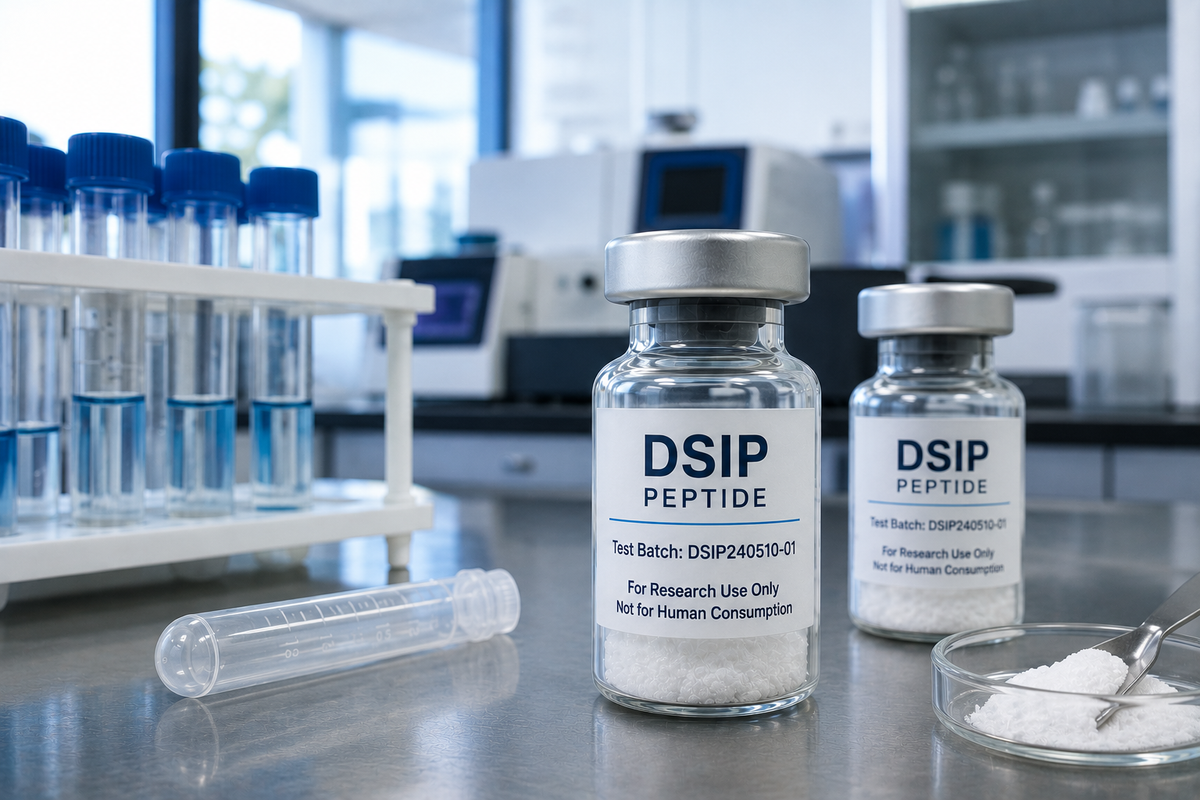
DSIP Peptide UK: Sleep Research in the Peptides UK Market
Delta sleep-inducing peptide, commonly abbreviated to DSIP and formally known as emideltide, is a synthetic nine-amino-acid research peptide first described during experiments involving delta-wave sleep activity in rabbits. Human sleep studies were conducted mainly during the 1980s and early 1990s, but they involved small groups, inconsistent methods and mixed results. DSIP is not an authorised UK treatment for insomnia, narcolepsy, withdrawal, pain or another medical condition.
Direct Answer
DSIP is a nonapeptide with the amino-acid sequence Trp-Ala-Gly-Gly-Asp-Ala-Ser-Gly-Glu. Its recognised international non-proprietary name is emideltide.
The peptide was first isolated during experiments in rabbits and named for its reported association with increased electroencephalographic delta activity. Later research produced inconsistent sleep findings across animals and humans, and the precise endogenous identity and physiological function of DSIP remain unresolved.
Small intravenous human studies reported changes in sleep onset, sleep efficiency, total sleep time or daytime functioning in some settings. Other placebo-controlled research found only weak effects that may have resulted partly from changes within the placebo group.
The evidence does not establish DSIP as a clinically proven sleep treatment. No UK marketing authorisation for emideltide or DSIP was identified, and no established human evidence supports the subcutaneous research-market products commonly promoted online.
DSIP Peptide Key Points
The central distinctions needed to understand DSIP research responsibly.
What Is DSIP Peptide?
DSIP is a short synthetic research peptide whose original name reflects an early experimental observation rather than a confirmed clinical purpose.
DSIP stands for delta sleep-inducing peptide. The World Health Organization assigned the international non-proprietary name emideltide to the nine-residue peptide.
Its sequence is tryptophan-alanine-glycine-glycine-aspartic acid-alanine-serine-glycine-glutamic acid.
The peptide contains two acidic amino-acid side chains and no disulphide bonds. It is considerably smaller than proteins and many hormonal peptides, but its biological behaviour still depends on sequence, terminal groups, salt form, formulation and degradation.
DSIP does not belong clearly to a recognised family of endogenous neuropeptide hormones. No gene encoding the nine-residue sequence as a conventional standalone precursor has been established.
DSIP Research in the Peptides UK Market
Commercial promotion has expanded despite the absence of modern confirmatory clinical trials.
DSIP appears in Peptides UK catalogues alongside Selank, Semax, Epitalon and other experimental compounds associated with neurological or sleep-related research.
Product pages commonly associate DSIP with deeper sleep, improved recovery, reduced stress, growth-hormone release, pain control, alcohol withdrawal, opioid withdrawal or healthy ageing.
These claims frequently rely on small studies conducted several decades ago, uncontrolled patient series or animal experiments using routes and conditions that differ from modern commercial products.
FDA found online marketing for sleep disorders, stress reduction, pain, cancer, neurodegenerative conditions and substance withdrawal. The agency also noted that it was often unclear which chemical form was being discussed or whether the products were compounded.
A research-market vial is not equivalent to study material
A label stating “DSIP” or “emideltide” does not establish the exact peptide form, quantity, purity, aggregate level, microbiological quality or relationship to the material used in historical intravenous studies.
Discovery and Naming of DSIP
The peptide was characterised during experiments involving electrically stimulated rabbits.
Cross-Circulation and Sleep-Factor Research
Earlier sleep research explored whether substances circulating in blood could influence sleep and wakefulness.
Rabbit Thalamic Stimulation
Researchers electrically stimulated thalamic regions in rabbits and collected blood during the resulting experimental state.
Peptide Isolation
A small peptide fraction was purified and associated with increased delta and spindle EEG activity when tested experimentally.
Sequence Characterisation
The active material was reported as the nine-residue sequence now called DSIP or emideltide.
Human Sleep Experiments
Small intravenous studies were undertaken in healthy volunteers and people described as having chronic insomnia or narcolepsy.
Continuing Scientific Uncertainty
Later reviews questioned whether the isolated sequence represents a conventional endogenous sleep hormone and whether DSIP-like immunoreactivity may originate from other molecules.
Is DSIP a Naturally Occurring Human Peptide?
The frequently repeated description of DSIP as a natural human sleep hormone is not firmly established.
DSIP was originally reported after isolation from rabbit blood, and DSIP-like immunoreactivity was later measured in several tissues and biological fluids.
Immunoreactivity means that an antibody test detected material capable of interacting with an antibody raised against DSIP. It does not prove that every detected signal was the intact nine-residue peptide.
A 2006 scientific review described the natural occurrence and biological activity of DSIP as unresolved and proposed that DSIP-like material might arise from a related or precursor-associated molecule.
No conventional receptor unique to DSIP has been confirmed, and no clearly established precursor gene explains its synthesis as a standalone neuropeptide.
Responsible wording
It is more accurate to describe DSIP as a peptide originally reported from rabbit biological material and subsequently synthesised for research than to call it a proven natural human sleep hormone.
DSIP Molecular and Scientific Profile
Correct identity requires confirmation of all nine residues and the terminal chemical groups.
Emideltide Free Peptide
The sequence is commonly written as H-Trp-Ala-Gly-Gly-Asp-Ala-Ser-Gly-Glu-OH.
Delta-Wave Sleep Research
The original name referred to enhancement of EEG delta waves and sleep spindles during early animal experiments.
Later findings varied substantially according to species, route, timing and experimental conditions.
| International non-proprietary name | Emideltide |
|---|---|
| Common research name | Delta sleep-inducing peptide |
| Abbreviation | DSIP |
| Peptide length | Nine amino-acid residues |
| Sequence | Trp-Ala-Gly-Gly-Asp-Ala-Ser-Gly-Glu |
| Free-peptide formula | C35H48N10O15 |
| Approximate free-peptide molecular weight | 848.8 g/mol |
| Approximate acetate-associated molecular weight | 908.9 g/mol where represented with one molecule of acetic acid |
| Confirmed specific receptor | None established |
| UK medicinal status | No marketing authorisation identified |
Emideltide Free Base, Emideltide Acetate and Modified DSIP
Commercial names may conceal differences in salt form or terminal chemistry.
| Term | Simplified Description | Important Distinction |
|---|---|---|
| Emideltide free peptide | H-WAGGDASGE-OH | The unmodified nine-residue peptide |
| Emideltide acetate | Emideltide associated with acetate as a salt or counterion | The measured molecular weight and assay basis differ from free peptide |
| N-acetylated DSIP | Covalently acetylated N-terminus | Not the same as an acetate salt |
| DSIP analogues | Sequence-modified experimental compounds | May have different stability, transport and biological activity |
FDA identified inconsistent information in nomination packages concerning whether emideltide free base or emideltide acetate was intended.
The agency therefore evaluated the two substances separately and concluded that neither was adequately characterised for the proposed compounded use.
A certificate should state whether the reported quantity is calculated as free emideltide, the complete acetate-associated material or another defined form.
Acetate is not automatically part of the peptide sequence
An acetate counterion is chemically different from attaching an acetyl group covalently to the peptide’s N-terminus.
What Does “Delta Sleep” Mean?
Delta activity is a brain-wave pattern associated primarily with deep non-rapid-eye-movement sleep.
Sleep is divided into rapid-eye-movement sleep and several stages of non-rapid-eye-movement sleep.
Slow-wave sleep is the deepest stage of non-rapid-eye-movement sleep. It is characterised by high-amplitude, low-frequency EEG activity commonly called delta activity.
Delta-wave power is an objective physiological measurement. It is not identical to a person’s subjective feeling that sleep was refreshing.
A treatment could alter EEG measurements without producing a clinically meaningful improvement in insomnia. Conversely, improved sleep satisfaction does not necessarily require a large change in slow-wave sleep.
How Is DSIP Thought to Act?
No single receptor or complete human mechanism has been established.
Sleep-Wake Regulation
Early experiments associated DSIP with changes in EEG delta power, sleep spindles and the timing or stability of sleep.
Responses differed between species. Some experiments reported changes in non-rapid-eye-movement sleep, while others observed rapid-eye-movement effects or no consistent sleep promotion.
Opioid-Related Pathways
Animal work suggests that some DSIP effects may involve endogenous opioid signalling.
FDA’s nonclinical assessment described sleep-related pharmacology as involving opioid-dependent mechanisms even though DSIP does not appear to bind directly to conventional opioid receptors.
Enkephalin Release
Rat brain experiments reported changes in the release of immunoreactive met-enkephalin following DSIP exposure.
These findings may help explain historical interest in pain and withdrawal research, but they do not establish an opioid-like clinical effect in people.
Circadian and Autonomic Measurements
Animal studies examined body temperature, heart rate, blood pressure, stress responses and circadian timing.
Results depended on the time of administration and the experimental model, suggesting that any response may be strongly context-dependent.
Stress-Hormone Claims
DSIP has sometimes been described as suppressing corticotropin-releasing hormone or cortisol.
A small controlled study in healthy men found that DSIP did not significantly alter ACTH and cortisol responses following CRH stimulation or a meal.
No confirmed DSIP receptor
Without an established receptor and a reproducible exposure-response relationship, statements that DSIP precisely “resets” sleep or directly increases deep sleep are not supported.
DSIP Research in Healthy Volunteers
Early studies reported acute and delayed effects, but the groups were very small.
A 1981 double-blind crossover experiment involved six healthy volunteers.
The researchers reported increased sleep during a monitored period following intravenous DSIP compared with placebo, along with changes during the subsequent night.
An early arousing response was also observed before the later sleep-promoting period.
The study did not demonstrate conventional immediate pharmacological sedation, and the authors proposed that DSIP might influence sleep regulation rather than act like a standard hypnotic medicine.
The small sample and historical research methods limit the reliability and generalisability of the findings.
Six participants cannot define a treatment effect
A crossover design can be useful for exploratory research, but a study involving six people cannot establish uncommon risks, long-term effectiveness or suitability for people with different health conditions.
Human DSIP Research for Chronic Insomnia
The historical studies reported mixed findings and did not meet modern confirmatory-trial standards.
Six Participants With Chronic Insomnia
A double-blind crossover study compared intravenous emideltide with placebo in six middle-aged participants.
A slight arousing effect appeared initially, followed by sleep-related changes during later hours. FDA concluded that the small study could not establish whether the observed tendencies were clinically meaningful.
Fourteen Participants
A study reported shorter sleep-onset latency, less wakefulness after sleep onset and longer total sleep time following repeated intravenous exposure.
FDA noted that the supposed placebo control was an external healthy comparison group rather than a proper concurrent placebo arm.
Weak Effects in Chronic Insomnia
A 1992 study reported higher sleep efficiency and shorter sleep latency relative to placebo.
The authors stated that the statistically significant effects were weak and could partly reflect an incidental deterioration within the placebo group.
Seven Participants
An open study reported improvement in six of seven people following a series of injections.
The absence of blinding, randomisation and a control group prevents reliable separation of treatment effects from expectation, natural variation or other care.
What FDA Concluded
FDA described the chronic-insomnia evidence as inconclusive and, at best, preliminary.
The agency highlighted small sample sizes, inconsistent baseline characteristics, varying regimens, inadequate controls and uncertain clinical relevance.
FDA found no data supporting effectiveness through the nominated subcutaneous route.
Modern clinical practice guidelines for chronic insomnia do not include emideltide. Cognitive behavioural therapy for insomnia remains a recognised first-line approach in current evidence-based care.
DSIP and Narcolepsy Research
The available evidence is too limited to establish DSIP as a narcolepsy treatment.
A 1984 publication reported observations involving people with narcolepsy.
The authors described fewer daytime sleep attacks and changes in alertness, performance and night-time sleep organisation.
The work involved a very small number of participants and did not provide the scale, control procedures or outcome validation required for a confirmatory narcolepsy trial.
Narcolepsy is a chronic neurological sleep disorder involving excessive daytime sleepiness and, in some people, cataplexy, sleep paralysis or sleep-onset rapid-eye-movement phenomena.
FDA concluded that the DSIP narcolepsy evidence was limited by case-level or uncontrolled designs, subjective variability and inconsistent treatment schedules.
No established replacement for authorised narcolepsy treatment
Historical reports involving DSIP should not be used to replace specialist assessment or evidence-based management of excessive daytime sleepiness.
DSIP Research in Alcohol and Opioid Withdrawal
Open studies reported short-term observations but did not establish effectiveness.
Earlier Inpatient Study
An uncontrolled study included people admitted for alcohol or opioid withdrawal.
Researchers reported changes in selected subjective and observed symptoms, but the study lacked randomisation, blinding and a suitable comparison group.
The methods used to establish improvement were not adequately standardised by modern withdrawal-assessment criteria.
Seven-Person Opioid Withdrawal Study
A 1998 open clinical trial involved seven people with opioid dependence.
Only two participants received the complete planned series and successfully completed the scheduled detoxification programme. Additional medication was required for insomnia.
The authors stated that whether DSIP could provide an effective alternative detoxification approach remained an open question and called for placebo-controlled trials.
FDA Assessment
FDA found insufficient evidence supporting intravenous emideltide for opioid withdrawal and no evidence supporting the nominated subcutaneous route.
Existing evidence-based treatments and structured medical approaches are available for opioid-use disorder and withdrawal management.
Withdrawal can require urgent medical care
Experimental peptide claims should not delay assessment by an appropriately qualified addiction or emergency-care professional. Withdrawal management is not a suitable area for unsupervised research-product use.
Historical DSIP Pain Research
The evidence consists largely of animal studies and very small uncontrolled human observations.
Mouse research reported antinociceptive responses following central administration of DSIP.
Other animal experiments linked DSIP with changes in endogenous enkephalin signalling.
A clinical pilot study involving seven people with various chronic pain presentations reported lower pain ratings in several participants.
The group was highly heterogeneous and included migraine, vasomotor headache, tinnitus and psychogenic pain presentations.
The study was not a robust randomised, placebo-controlled pain trial and cannot establish treatment of any particular pain condition.
No approved analgesic role
Animal antinociception and uncontrolled pain ratings do not establish DSIP as an effective or safe pain medicine.
DSIP, Growth Hormone, Cortisol and Endocrine Claims
Human endocrine findings do not support broad hormone-optimisation claims.
Growth Hormone
Some animal research associated DSIP with slow-wave sleep and sleep-related growth-hormone release.
A human study in healthy women did not find a significant influence on growth-hormone or prolactin secretion.
This evidence does not support marketing DSIP as a growth-hormone-enhancing peptide.
ACTH and Cortisol
A small study in healthy men assessed ACTH and cortisol responses after corticotropin-releasing hormone stimulation and after a meal.
DSIP did not produce a significant effect on the measured ACTH or cortisol responses.
Melatonin
Rat pineal-gland research examined whether DSIP influenced melatonin synthesis.
Animal pineal measurements do not establish that DSIP corrects human melatonin production or circadian-rhythm disorders.
“Hormone balancing” is not an evidence-based description
The available studies do not establish that DSIP normalises cortisol, increases growth hormone or restores a general hormonal balance in humans.
Animal and Laboratory DSIP Research
Preclinical research has explored a wide range of outcomes, often with inconsistent or species-dependent results.
EEG and Sleep-Wake Patterns
Rabbit, rat, mouse and cat studies investigated delta activity, sleep spindles, non-rapid-eye-movement sleep and rapid-eye-movement sleep.
Effects varied according to species, route and experimental timing.
Degradation and Complex Formation
DSIP disappeared rapidly from blood through enzymatic degradation, while complex formation and aggregation may have produced slower-moving immunoreactive material.
Hypoxia and Oxidative Measurements
Rat studies examined mitochondrial respiration, antioxidant-gene expression and resistance to experimental hypoxia.
These findings do not establish stress protection in people.
Seizure and Stroke Experiments
DSIP and analogues have been examined in induced seizure and experimental stroke models.
No established human neurological treatment can be inferred from these animal studies.
Blood-Brain Barrier Research
Experimental studies investigated whether DSIP or modified analogues crossed blood-brain and blood-cerebrospinal-fluid barriers.
Reported transport was limited, complex and dependent on the experimental system.
Demonstrating some passage in an animal model does not establish predictable human brain exposure from a commercial formulation.
Ageing and Tumour Claims
A DSIP-containing preparation was examined in female mice for lifespan, ageing biomarkers and spontaneous tumour incidence.
The preparation was not necessarily equivalent to pure emideltide, and a mouse lifespan experiment cannot establish anti-ageing or cancer-prevention effects in humans.
DSIP Peptide Evidence at a Glance
The available research demonstrates biological interest but not an established medical role.
| Research Question | Evidence Type | Current Finding | Main Limitation |
|---|---|---|---|
| Is DSIP a chemically defined peptide? | Sequence characterisation | Yes, as the nine-residue peptide emideltide | Commercial free-base and acetate descriptions can be inconsistent |
| Is DSIP a confirmed endogenous human sleep hormone? | Immunochemical and review literature | Not established | Natural occurrence and precursor biology remain unresolved |
| Does DSIP change sleep in healthy people? | Very small early crossover studies | Acute and delayed changes were reported | Groups were too small for firm conclusions |
| Does DSIP treat chronic insomnia? | Small controlled and uncontrolled studies | Mixed and weak findings | Poor controls, small samples and inconsistent methods |
| Does DSIP reliably increase deep sleep? | EEG and polysomnographic studies | Not consistently demonstrated | Some studies reported stage-two rather than slow-wave changes |
| Does DSIP treat narcolepsy? | Small historical reports | Insufficient evidence | No modern confirmatory trial |
| Does DSIP treat opioid withdrawal? | Open uncontrolled studies | Insufficient evidence | Small groups, missing controls and incomplete treatment courses |
| Does DSIP reduce pain? | Animal studies and seven-person pilot research | Exploratory findings | No condition-specific controlled clinical evidence |
| Does DSIP increase growth hormone? | Animal and limited human research | Not established in humans | Human studies did not confirm the promotional claim |
| Does DSIP lower cortisol? | Small controlled human study | No significant effect identified | Small sample and narrow experimental context |
| Is subcutaneous effectiveness established? | FDA 2026 evidence review | No | Historical studies mainly used intravenous exposure |
| Is DSIP authorised in the UK? | Official product-source review | No marketing authorisation identified | Online availability is not authorisation |
Important DSIP Research Limitations
The evidence base is old, fragmented and inadequate for broad sleep or wellbeing claims.
- Most human research was conducted during the 1980s or early 1990s.
- Human study groups were generally very small.
- Several studies lacked a proper concurrent placebo group.
- Some studies used external healthy controls rather than comparable insomnia controls.
- Open studies could not control expectation or placebo effects.
- Study populations and insomnia definitions varied.
- Routes and schedules differed substantially.
- Most human studies used intravenous administration.
- No reliable evidence supports the commercial subcutaneous route.
- Clinical significance was not established consistently.
- Some apparent differences arose partly from changes in placebo groups.
- Slow-wave sleep was not increased consistently.
- No established DSIP-specific receptor has been identified.
- The endogenous origin of DSIP remains uncertain.
- Long-term controlled safety data are absent.
- Human pharmacokinetics are inadequately characterised.
- Modern insomnia guidelines do not recommend emideltide.
- Narcolepsy evidence is inadequate.
- Withdrawal studies were open and uncontrolled.
- Research-market products may not match historical study material.
How DSIP Research Material Should Be Analytically Tested
A high HPLC percentage alone cannot establish the identity, quantity or stability of emideltide.
Intact Molecular Mass
High-resolution mass spectrometry should support the expected mass of the declared emideltide form.
Tandem Mass Spectrometry
Fragment-ion evidence should support the complete WAGGDASGE sequence.
Free N and C Termini
Testing should confirm an unmodified N-terminus and a C-terminal glutamic-acid carboxyl group where free emideltide is claimed.
Acetate Measurement
Acetate should be identified and quantified where the material is described as emideltide acetate.
Net Peptide Assay
Peptide content should be measured rather than inferred from the total weight of dried powder and counterions.
Related Substances
Chromatography should assess deletion sequences, incomplete coupling products, oxidation and hydrolytic degradation.
Higher-Molecular-Weight Species
Orthogonal methods may be needed because reverse-phase HPLC does not identify every aggregate or peptide complex.
Finished-Product Testing
Stability should be evaluated in the actual formulation rather than assumed from a raw-material report.
What a Meaningful DSIP Certificate of Analysis Should Include
- Full emideltide name and WAGGDASGE sequence
- Declared free-base or acetate form
- Confirmation of terminal groups
- Observed intact molecular mass
- Tandem-MS sequence evidence
- Quantitative net peptide assay
- Chromatographic purity
- Named and unknown related-substance results
- Acetate result where applicable
- Water-content result
- Residual-solvent results
- Aggregate or higher-molecular-weight-species assessment
- Bacterial-endotoxin result where relevant
- Microbiological testing where relevant
- Finished-product batch number
- Testing-laboratory identity
- Analytical methods and acceptance criteria
- A clear list of tests not performed
Why “99% HPLC” Is Not Enough
A single chromatographic percentage does not prove the complete sequence, correct salt form, net peptide content, aggregate level, degradation profile, endotoxin control or microbiological quality.
FDA concluded that important characterisation data for emideltide free base and acetate were missing, including specific information about impurities, aggregates and endotoxins.
DSIP Safety and Product-Quality Uncertainties
Small intravenous studies cannot define the safety of repeated commercial research-product exposure.
No Safety Evidence for the Proposed Subcutaneous Route
FDA reported that it did not identify safety data for emideltide free base or emideltide acetate administered through the nominated subcutaneous route.
Historical human studies primarily involved carefully controlled intravenous exposure.
Reported Effects in Withdrawal Studies
Small withdrawal studies reported transient headache, nausea and vertigo.
Progressive hypotension was described following a second intravenous injection in some cases.
Interpretation was difficult because withdrawal itself can produce headache, nausea, dizziness and cardiovascular changes.
Immunogenicity
A synthetic nine-residue peptide can potentially generate an immune response, particularly when administered through an injectable route.
Impurities, aggregates and differences in formulation may increase this risk.
Aggregation
Peptides can associate into larger structures during manufacture, storage, freezing, thawing or exposure to unsuitable pH and temperature.
Aggregates can change pharmacological behaviour, reduce effective bioavailability or contribute to antibody formation.
Incomplete Long-Term Evidence
No large systematic programme has established long-term neurological, cardiovascular, endocrine, immune, reproductive or psychiatric safety.
Product-Quality Risks
- Incorrect amino-acid sequence
- Free peptide supplied as an undeclared salt
- Incorrect acetate content
- Incorrect net peptide quantity
- Deletion or insertion sequences
- Oxidation of the tryptophan residue
- Hydrolytic degradation
- Peptide aggregates or complexes
- Residual synthesis reagents
- Residual solvents
- Unverified bacterial-endotoxin control
- Unverified microbiological quality
- Certificates unrelated to the supplied batch
- Damage during uncontrolled storage or transport
Limited adverse-event reports do not establish safety
A product without widespread regulated clinical use will not generate a mature pharmacovigilance database. The absence of many reports may reflect limited systematic monitoring rather than an absence of risk.
FDA’s 2026 Emideltide Assessment
The assessment concerns US compounding and was not a final decision when this article was reviewed.
FDA evaluated emideltide free base and emideltide acetate for possible inclusion on the section 503A Bulks List.
The nominated uses included chronic insomnia, narcolepsy and opioid withdrawal, with a proposed subcutaneous formulation.
FDA concluded that chronic-insomnia studies were inconclusive and preliminary and that positive findings came from studies with weak methodology.
Narcolepsy and withdrawal publications were limited by case reports, open designs, small samples, subjective variability and inconsistent treatment regimens.
The agency did not identify evidence supporting effectiveness through the proposed subcutaneous route.
It also raised concerns about inconsistent naming, insufficient impurity and aggregate testing, absent endotoxin information, uncertain formulation, immunogenicity and inadequate safety characterisation.
FDA therefore proposed that neither emideltide free base nor emideltide acetate be added to the 503A Bulks List.
Status on 21 July 2026
The Pharmacy Compounding Advisory Committee discussion was scheduled for 24 July 2026. The staff proposal should not be described as a completed committee vote or final FDA determination.
DSIP Regulation in the Peptides UK Market
Regulatory information checked on 21 July 2026.
No UK Marketing Authorisation Identified
No current UK marketing authorisation for a medicinal product containing emideltide free peptide or emideltide acetate was identified in the official product sources reviewed for this article.
DSIP should not be presented as an approved UK treatment for insomnia, narcolepsy, pain, anxiety, stress, alcohol withdrawal, opioid withdrawal or another medical condition.
Historical human experimentation and an international non-proprietary name do not amount to UK product authorisation.
How the MHRA Assesses a Product
MHRA guidance explains that a product may be a medicine when it is presented as treating or preventing disease.
A product may also be medicinal when it is intended to restore, correct or modify a physiological function through pharmacological, immunological or metabolic action.
Claims concerning insomnia, sleep disorders, pain, anxiety, withdrawal, cortisol, growth hormone or neurological function may contribute to medicinal-product classification.
The MHRA can consider the product name, ingredients, website wording, social-media content, testimonials, imagery, instructions and intended audience.
A “Research Use Only” label does not necessarily determine classification where the overall presentation encourages personal administration.
Advertising Restrictions
Regulation 279 of the Human Medicines Regulations restricts advertising medicinal products where the necessary marketing authorisation, registration or certificate is not in force.
This section provides general regulatory education and does not constitute legal advice.
DSIP Peptide and Competitive Sport
Athletes should not assume that an experimental peptide is permitted simply because it is not listed by name.
Emideltide or DSIP was not identified by name in the 2026 World Anti-Doping Agency Prohibited List reviewed for this article.
Section S0 applies broadly to pharmacological substances that are not addressed elsewhere and have no current approval by a governmental regulatory health authority for human therapeutic use.
Whether a specific DSIP product falls within that provision should be confirmed by the relevant anti-doping authority.
Athletes should seek a formal answer from UK Anti-Doping, their international federation or another competent body rather than relying on a seller’s description.
“Research Use Only” wording does not prevent an anti-doping violation.
Common DSIP Peptide Claims Examined
Most commercial claims extend beyond the available human evidence.
“DSIP reliably produces deep sleep.”
Early studies reported changes in EEG activity and selected sleep measures.
Human results were inconsistent, and slow-wave sleep was not increased reliably across studies.
“DSIP is a proven insomnia treatment.”
Several small studies investigated people with chronic insomnia.
FDA described the evidence as inconclusive and preliminary, with important methodological weaknesses.
“DSIP improves sleep without sedation.”
Some early studies did not observe a conventional hypnotic pattern or next-day performance impairment.
The groups were too small to establish a predictable absence of sedation or impairment.
“DSIP increases growth hormone.”
Animal studies explored sleep-related growth-hormone release.
Human research has not established DSIP as a reliable growth-hormone-enhancing treatment.
“DSIP lowers cortisol and stress.”
Stress-related animal research and subjective human observations exist.
A controlled human study did not find a significant effect on stimulated ACTH or cortisol release.
“DSIP is a natural human sleep hormone.”
The peptide was originally reported after isolation from rabbit blood.
Its exact endogenous source, precursor and physiological role remain unresolved.
“DSIP safely manages opioid withdrawal.”
Small uncontrolled studies reported selected short-term changes.
The evidence did not establish effectiveness, and recognised evidence-based withdrawal treatments are available.
“DSIP has no side effects.”
Some small insomnia studies reported no significant adverse effects.
Withdrawal studies reported headache, nausea, vertigo and hypotension, while long-term safety remains inadequately characterised.
“Subcutaneous DSIP is supported by clinical studies.”
Most historical human research involved intravenous exposure.
FDA found no evidence supporting the nominated subcutaneous route.
“A 99% COA proves the product is safe.”
Chromatographic purity can support one part of chemical assessment.
It cannot establish sequence, net quantity, aggregates, endotoxin control, microbiological quality or human safety.
DSIP Compared With Other Sleep-Related Compounds
These substances differ in structure, target, evidence and regulatory status.
| Substance | Basic Identity | Main Research or Medical Context | Important Distinction |
|---|---|---|---|
| DSIP | Nine-residue peptide | Historical sleep, stress and withdrawal research | No established receptor or authorised UK indication |
| Melatonin | Endogenous indoleamine hormone | Circadian timing and selected sleep disorders | Different chemistry, receptor system and clinical evidence |
| Orexin antagonists | Small-molecule medicines | Reduction of wake-promoting orexin signalling | Some products have modern controlled clinical trials and authorisation |
| GABAergic hypnotics | Small-molecule medicines | Enhancement of inhibitory neurotransmission | Known receptor pharmacology and product-specific risks |
| Selank | Seven-residue tuftsin analogue | Stress behaviour and neurotransmission research | Not a sleep peptide and has a different sequence |
| Epitalon | Four-residue synthetic peptide | Ageing and circadian research | No direct equivalence to DSIP or licensed sleep treatments |
How to Assess DSIP and Peptides UK Evidence Critically
Use this checklist before accepting a scientific, product-quality or commercial statement.
- Does the source use the formal name emideltide?
- Is the complete WAGGDASGE sequence stated?
- Is the product free peptide or acetate?
- Is acetate being confused with N-terminal acetylation?
- Was identity confirmed by mass spectrometry?
- Was net peptide content measured?
- Were aggregates assessed?
- Were endotoxins evaluated where relevant?
- Does the certificate match the finished batch?
- Was the study conducted in animals or humans?
- How many human participants were included?
- Was there a concurrent placebo group?
- Was allocation randomised?
- Were participants and assessors blinded?
- Was the administration intravenous or subcutaneous?
- Was slow-wave sleep actually measured?
- Was the change clinically meaningful?
- Did a placebo group deteriorate unexpectedly?
- Was daytime performance assessed objectively?
- Was long-term follow-up controlled?
- Is an animal stress result being presented as a human benefit?
- Is the claimed purpose authorised in the UK?
Medical and Editorial Review
This final article has been reviewed for medical context, evidence presentation, patient safety language and editorial clarity by the multidisciplinary panel below.
The reviewers and contributors are identified to provide clear authorship and accountability. Their inclusion does not represent endorsement of any research product, supplier, personal use, treatment claim or commercial statement discussed in this article.

Dr Laura Geige
Medical Director and Senior Aesthetics Practitioner at It’s Me & You Clinic, with a background in dentistry, medical aesthetics and cosmetic dermatology.
Read professional profile
Dr Rimas Geiga
Medical doctor with a special interest in nutritional sciences, dietology, metabolic health and evidence based preventative care.
Read professional profile
Dr Snieguole Geige
Dentist and medical doctor with experience across healthcare, preventative medicine and patient centred clinical standards.
Read professional profile
Dr Giedre Narkiene
Medical doctor and board certified dermatologist with expertise in medical and cosmetic dermatology, skin health and patient safety.
Read professional profile
Dr Veronika Matutyte
Medical doctor with training and professional experience in gerontology and healthcare management across clinical and hospital settings.
Read professional profile
Livija Samušienė
Qualified cosmetologist with a Bachelor of Health Sciences in cosmetology and a professional interest in skin health, acne and evidence based aesthetic care.
Read professional profileDSIP Peptide UK Frequently Asked Questions
Evidence-led answers about DSIP identity, sleep research, safety and UK regulation.
What is DSIP peptide?
DSIP is a nine-amino-acid research peptide formally known as emideltide. Its name means delta sleep-inducing peptide.
What is the DSIP amino-acid sequence?
Its sequence is Trp-Ala-Gly-Gly-Asp-Ala-Ser-Gly-Glu, abbreviated WAGGDASGE.
What is emideltide?
Emideltide is the international non-proprietary name assigned to DSIP.
Is DSIP a naturally occurring human hormone?
This has not been established. It was originally reported after isolation from rabbit blood, but its precise endogenous precursor and physiological role remain unresolved.
What is delta sleep?
Delta sleep refers broadly to deep non-rapid-eye-movement sleep characterised by high-amplitude, low-frequency EEG activity.
Does DSIP increase deep sleep?
Some early studies reported changes in delta activity or sleep organisation, but human findings were inconsistent and did not establish a reliable deep-sleep effect.
Has DSIP been studied in humans?
Yes. Small historical studies investigated healthy volunteers, chronic insomnia, narcolepsy, withdrawal and pain. The evidence is limited and methodologically weak.
Is DSIP a proven insomnia treatment?
No. FDA described the available insomnia evidence as inconclusive and preliminary.
Did DSIP shorten sleep latency?
Some small studies reported shorter sleep-onset latency. Other analyses found weak effects or differences influenced by an unusual change in the placebo group.
Does DSIP cause immediate sedation?
Early studies sometimes reported an initial arousing period before later sleep effects. The evidence does not establish a predictable absence or presence of sedation.
Has DSIP been studied for narcolepsy?
Small historical reports exist, but no modern confirmatory evidence establishes DSIP as a narcolepsy treatment.
Does DSIP help opioid withdrawal?
Open uncontrolled studies reported selected observations, but FDA found insufficient evidence of effectiveness.
Does DSIP reduce pain?
Animal studies and a very small uncontrolled human pilot study exist. They do not establish an approved pain treatment.
Does DSIP increase growth hormone?
Animal research explored this possibility, but human evidence does not establish DSIP as a reliable growth-hormone enhancer.
Does DSIP reduce cortisol?
A small controlled human study did not identify a significant effect on stimulated ACTH or cortisol release.
What is emideltide acetate?
It is emideltide associated with acetate as a salt or counterion.
Is emideltide acetate the same as acetylated DSIP?
No. An acetate counterion is different from a covalently attached N-terminal acetyl group.
Are DSIP side effects known?
No complete human safety profile exists. Historical withdrawal studies reported headache, nausea, vertigo and episodes of hypotension.
What did FDA conclude about DSIP in 2026?
FDA staff proposed against adding emideltide free base and acetate to the 503A Bulks List because of weak effectiveness evidence and significant characterisation and safety uncertainties.
Was the FDA decision final on 21 July 2026?
No. The advisory meeting was scheduled for 24 July 2026, so the document represented a staff proposal rather than a completed final determination.
Is DSIP approved in the UK?
No current UK marketing authorisation for an emideltide medicine was identified.
Does “Research Use Only” settle the UK legal position?
No. The MHRA may consider the active ingredient, pharmacological action, intended purpose, claims and complete product presentation.
Is DSIP prohibited in competitive sport?
DSIP was not identified by name in the reviewed 2026 WADA list. The broad S0 category may be relevant to non-approved pharmacological substances, so athletes should obtain an official ruling.
Does 99% HPLC prove a DSIP vial is authentic?
No. It does not prove the complete sequence, salt form, net quantity, aggregate level, endotoxin control or microbiological quality.
What should a DSIP certificate of analysis include?
It should include sequence identity, intact molecular mass, salt form, peptide assay, chromatographic purity, impurities, acetate, water content, aggregation and batch information.
Does this article provide dosing or administration instructions?
No. It does not provide preparation, reconstitution, injection, nasal-use, dosing, cycling, withdrawal-treatment or self-experimentation guidance.
Key Takeaways
- DSIP is the nine-amino-acid peptide formally known as emideltide.
- Its sequence is WAGGDASGE.
- It was named after early rabbit experiments involving delta-wave EEG activity.
- Its status as a conventional endogenous human sleep hormone remains unresolved.
- No confirmed specific DSIP receptor has been established.
- Small human studies reported mixed sleep findings.
- Some apparent improvements were weak or affected by inadequate control groups.
- FDA considers the chronic-insomnia evidence inconclusive and preliminary.
- No evidence supports the commercial subcutaneous route evaluated by FDA.
- Narcolepsy, pain and withdrawal evidence is inadequate for treatment claims.
- Long-term safety and human pharmacokinetics remain poorly characterised.
- FDA raised concerns about impurities, aggregates, endotoxins and immunogenicity.
- No UK marketing authorisation was identified.
- A purity percentage alone cannot establish identity, stability or human suitability.
Relevant It’s Me & You Clinic Peptides UK Resources
Explore related evidence-led articles and clinical contributor profiles.
Selank Peptide UK
Compare DSIP sleep research with a separate tuftsin-derived experimental peptide.
Browse related peptide guidesSemax Peptide UK
Review a different seven-residue research peptide associated with neurological research.
Browse related peptide guidesResearch Peptides UK
Browse the wider educational series on peptide identity, human evidence, analytical testing and UK regulation.
Browse the Peptides UK education libraryDr Snieguole Geige
Learn more about the clinic’s approach to evidence-based medical education and patient safety.
View Dr Snieguole Geige’s profileReferences
- US Food and Drug Administration. Evaluation of emideltide-related bulk drug substances: emideltide free base and emideltide acetate. Pharmacy Compounding Advisory Committee briefing document dated 11 May 2026. FDA emideltide briefing document
- US Food and Drug Administration. Pharmacy Compounding Advisory Committee meeting scheduled for 23 and 24 July 2026. FDA advisory meeting page
- US Food and Drug Administration. Certain bulk drug substances for use in compounding that may present significant safety risks. FDA safety information
- PubChem. Delta sleep-inducing peptide, emideltide. PubChem compound record
- PubChem. DSIP acetate, emideltide acetate. PubChem acetate record
- Schoenenberger GA, Monnier M. Characterization of a delta-electroencephalogram sleep-inducing peptide. Proceedings of the National Academy of Sciences of the United States of America. 1977;74(3):1282–1286. PMID: 265572. PubMed record
- Schneider-Helmert D, Schoenenberger GA. Acute and delayed effects of DSIP on human sleep behaviour. 1981. PMID: 6895513. PubMed record
- Schneider-Helmert D. The influence of synthetic DSIP on disturbed human sleep. 1981. PMID: 7028502. PubMed record
- Schneider-Helmert D, Schoenenberger GA. Effects of DSIP in man: multifunctional psychophysiological properties besides induction of natural sleep. 1983. PMID: 6689058. PubMed record
- Kaeser HE. A clinical trial with DSIP. European Neurology. 1984;23(5):386–388. PMID: 6391926. PubMed record
- Schneider-Helmert D. DSIP in insomnia. European Neurology. 1984. PMID: 6391925. PubMed record
- Schneider-Helmert D. Effects of DSIP on narcolepsy. European Neurology. 1984;23(5):353–357. PMID: 6548968. PubMed record
- Schneider-Helmert D. Efficacy of DSIP to normalise sleep in middle-aged and elderly chronic insomniacs. European Neurology. 1986;25(6):448–453. PMID: 3792404. PubMed record
- Monti JM, Debellis J, Alterwain P, Pellejero T, Monti D. Study of delta sleep-inducing peptide efficacy in improving sleep on short-term administration to chronic insomniacs. International Journal of Clinical Pharmacology Research. 1987;7(2):105–110. PMID: 3583493. PubMed record
- Bes F, Schulz H, Navelet Y, Salzarulo P. Effects of delta sleep-inducing peptide on sleep of chronic insomniac patients. Neuropsychobiology. 1992. PMID: 1299794. PubMed record
- Graf MV, Kastin AJ. Delta sleep-inducing peptide: a review. Neuroscience and Biobehavioral Reviews. 1984;8(1):83–93. PMID: 6145137. PubMed record
- Graf MV, Kastin AJ. Delta sleep-inducing peptide: an update. Peptides. 1986;7(6):1165–1187. PMID: 3550726. PubMed record
- Kovalzon VM, Strekalova TV. Delta sleep-inducing peptide: a still unresolved riddle. Journal of Neurochemistry. 2006;97(2):303–309. PMID: 16539679. PubMed record
- Graf MV, Saegesser B, Schoenenberger GA. Degradation and aggregation of delta sleep-inducing peptide and two analogues in plasma and serum. Peptides. 1987;8(4):599–603. PMID: 3628078. PubMed record
- Backmund M, Meyer K, Rothenhaeusler HB, Soyka M. Opioid detoxification with delta sleep-inducing peptide: results of an open clinical trial. Journal of Clinical Psychopharmacology. 1998;18(3):257–258. PMID: 9617990. PubMed record
- Larbig W, et al. Therapeutic effects of delta sleep-inducing peptide in patients with chronic, pronounced pain episodes. A clinical pilot study. 1984. PMID: 6548970. PubMed record
- Späth-Schwalbe E, Schäfer A, Uthgenannt D, Born J, Fehm HL. Delta sleep-inducing peptide does not affect CRH and meal-induced ACTH and cortisol secretion. Psychoneuroendocrinology. 1995;20(3):231–237. PMID: 7777652. PubMed record
- Medicines and Healthcare products Regulatory Agency. Borderline products: how to tell if your product is a medicine. MHRA guidance
- Medicines and Healthcare products Regulatory Agency. A guide to what is a medicinal product. Guidance Note 8, revised May 2026. MHRA Guidance Note 8
- Human Medicines Regulations 2012, Regulation 279. Legislation.gov.uk
- World Anti-Doping Agency. 2026 Prohibited List. WADA 2026 Prohibited List
- International Council for Harmonisation. ICH Q2(R2): Validation of Analytical Procedures. ICH analytical guideline
- UK Accreditation Service. Laboratory accreditation and ISO/IEC 17025. UKAS guidance