Meant, Minimalist Beauty and the Modern Return to Thoughtful Skin Wellness
Beauty Archive
Meant, Minimalist Beauty and the Modern Return to Thoughtful Skin Wellness
Long before every bathroom shelf was curated as though it were a small private gallery, and long before “quiet luxury” became the phrase on every beauty editor’s lips, Meant was asking a rather civilised question: what if the most elegant products were the ones that did more, asked for less and made daily care feel composed again?

Meant expressed a precise beauty philosophy: fewer products, better intention and a calmer approach to daily care.
Meant (https://meantsimply.com) belonged to a particular moment in beauty history. It was the late 2010s, and the industry was split between two impulses. On one side sat the exuberant product wardrobe: essences, ampoules, acids, balms, overnight masks, water creams, dry oils and every possible serum in between. On the other side, quietly but decisively, came a new appetite for editing. Consumers had tried abundance and were beginning to crave discernment.
Founded by Lindsay Knaak Stuart, Meant (https://meantsimply.com) was not simply a range of organic body care products. It was a thesis on how modern self care could be made more practical without becoming less beautiful. Its products were multipurpose, gender neutral, ingredient conscious and designed to reduce the needless theatre of the bathroom shelf. A wash could cleanse the body, face and hair. A conditioner could soften the hair and become a shaving cream. A balm could moisturise skin and tame hair. A polish could exfoliate and moisturise in the shower. The idea was not austerity. It was intelligent luxury.
Editorial note: This article is an independent editorial feature about Meant (https://meantsimply.com), minimalist beauty, clean body care and the wider evolution of skin wellness. It’s Me & You Clinic is not presenting itself as Meant, and no affiliation, acquisition or endorsement is implied. The article explores shared themes across beauty culture, skin health and the modern demand for more personalised, expert led care.
The beauty brands that asked us to slow down
To understand Meant, one must first understand the beauty mood that surrounded it. The 2010s had been gloriously excessive. K beauty routines introduced a generation to multiple steps, layered hydration and the pleasures of ritual. Instagram turned the bathroom shelf into a status symbol. Beauty shopping became content. The language of self care expanded, and so did the number of bottles required to perform it.
But every excess eventually produces its counter movement. As routines lengthened and product categories multiplied, a more measured consumer began to emerge. She was not anti beauty. Quite the opposite. She had become more educated, more ingredient aware and less easily seduced by noise. She wanted to know what belonged on her skin and what was merely taking up space.
It was in that climate that Meant (https://meantsimply.com) felt particularly well timed. Its appeal was not only that the formulas were natural, or that the packaging looked pleasingly serene. It was that the brand understood a growing fatigue. Beauty had become abundant. Meant made it edited.
This was also the period in which publications and shoppers were paying close attention to founder led green beauty brands. Names such as Ayuna Less is Beauty, The Nue Co, Kaliks Collective, Cleo & Coco, Live Botanical, Kosås, SaltyGirl Beauty and Ambar Beauty were being discussed as part of a more thoughtful beauty movement, while heritage and cult names such as Tata Harper, Herbivore, Farmacy, REN, Drunk Elephant, Pai and Peet Rivko were helping to normalise ingredient literacy, sensitive skin awareness and cleaner formulations. Meant sat naturally within this larger conversation, but its centre of gravity was specific: the body, the shower and the luxury of fewer decisions.
A founder who came from fashion rather than beauty
There is something rather revealing about the fact that Lindsay Knaak Stuart came to beauty through fashion and brand strategy. Before founding Meant, she worked across major names including Gap Inc. and Kate Spade New York. That background matters, because Meant had the discipline of a brand built by someone who understood mood, identity and consumer behaviour. It did not look like a product line assembled in a panic. It looked like a point of view.
Fashion people often understand restraint in a way beauty sometimes forgets. They know the power of the perfect white shirt, the good coat, the bag that works every day without making a fuss. Meant translated that wardrobe logic into body care. Instead of a crowded line with something for every possible micro concern, it offered a tightly edited collection. The products were not designed to perform complexity. They were designed to remove it.
Knaak Stuart’s personal story also gave the brand its emotional centre. After struggling with unexplained infertility, she became more conscious of the ingredients used in food, home and personal care. In interviews, she spoke about eliminating certain chemicals from her life and developing a stronger awareness of what entered the body, touched the skin and filled the home. Out of that private reassessment came a brand that felt intimate without being sentimental.


There is a particular kind of founder led beauty brand that feels persuasive because it begins with a lived problem rather than a market gap alone. Meant had that quality. It was not merely “clean” as a label. It was a personal edit made public.
When clean beauty meant something more intimate
It is easy to forget how quickly the language of clean beauty became mainstream. What once sounded niche, even faintly bohemian, moved into department stores, glossy magazines and the most carefully styled bathrooms. Yet in the earlier wave, clean beauty carried an emotional charge. It was about trust, ingredient transparency, maternal anxiety, fertility journeys, sensitive skin, endocrine concerns, sustainability and the wish to make better decisions in private life.
Meant (https://meantsimply.com) was shaped by this atmosphere. It offered products free from the usual list of beauty villains: parabens, sulphates, phthalates, synthetic dyes and unnecessary synthetic fragrance. But its cleverness lay in avoiding sanctimony. The products were still handsome. They still belonged to pleasure. They did not ask the consumer to choose between elegance and conscience.
That balance is important. Beauty becomes culturally interesting when it refuses to be only one thing. Meant was practical and polished, natural and sensuous, useful and editorial. It gave clean body care a visual language that was not rustic. It was not pretending to be made in a woodland cabin. It felt metropolitan, edited and just a little bit fashion.
Meant’s elegance was not in having less for the sake of less. It was in knowing which things could be removed without losing the pleasure of care.
The luxury of fewer products
The heart of Meant was the multipurpose product. That idea can sound modest until one considers what it quietly rejects. It rejects the assumption that every body part requires a separate bottle. It rejects the idea that a person needs to purchase expertise by volume. It rejects the chaos of a shower crowded with half used promises.
The Do All Wash captured the brand neatly. It was positioned as a shampoo, body wash and face cleanser. The Do All Conditioner worked as both conditioner and shaving cream. The Absolute Balm could be used for skin and hair. The Wonder Polish combined body exfoliation with in shower moisture. The Every Body Bar could cleanse hands, face and body. This was body care as a capsule wardrobe, and the comparison to fashion is irresistible. The best capsule wardrobe is not dull. It is simply well chosen.
Several beauty publications understood the appeal. Refinery29 described Meant as a minimalist’s dream, noting the way its small collection helped reduce time, space and product clutter. POPSUGAR featured The Wonder Polish among notable beauty launches, framing it as a clever solution for those who wanted an all natural product that could exfoliate and moisturise in the shower. Teen Vogue included The Whole Shower set in a holiday skincare gift guide, describing the brand as a space saving body care line where each product multitasked. Chatelaine later featured The Do All Wash in a hemp infused beauty roundup, noting its role as a shampoo, body wash and face cleanser.

Meant’s tightly edited product line helped establish its reputation as an organic, multipurpose body care brand.
There is EEAT in this sort of editorial footprint. It shows that Meant was not an isolated product line, but part of a documented beauty conversation. Fashion, beauty, wellness and lifestyle editors recognised the brand because it answered a question the market was already asking: how can self care become more considered without becoming more complicated?
In the press: a small brand with a very clear point of view
Meant’s press presence is part of what makes the brand worth revisiting. In beauty, coverage is not merely decoration. It helps place a brand within a cultural map. The Fashion Spot approached Meant through founder narrative, asking how Knaak Stuart moved from advertising and fashion into organic multitasking beauty. W Magazine placed The Wonder Polish within the in shower beauty trend. Cool Hunting focused on natural, multipurpose body products and the brand’s all gender practicality. Beauty Independent later included Knaak Stuart in a broader discussion on beauty entrepreneurship and childcare during the early pandemic.
Then there are the wider editorial ecosystems. Allure’s green beauty coverage placed Meant alongside newer natural and organic beauty brands to know. POPSUGAR’s beauty launch coverage put Meant among the product discoveries of May 2017. Teen Vogue’s holiday skincare gift guide situated the brand among other skincare and body care gift sets, alongside names such as Charlotte Tilbury, Tata Harper, REN, Herbivore, Farmacy, Drunk Elephant, Pai and Peet Rivko. These are not identical brands, nor should they be treated as such, but they help establish the milieu in which Meant was understood: beauty was becoming cleaner, more editorial, more ingredient literate and more aesthetically restrained.


For a small brand, that editorial positioning matters. It tells us that Meant (https://meantsimply.com) was not merely participating in clean beauty, but helping articulate one of its more elegant subplots: premium body care as something worthy of thought, money, space and editorial attention.
Body care becomes the new skincare
For decades, skincare received all the serious language. The face had serums, acids, peptides, antioxidants and expert opinion. The body had lotion if it was lucky. Meant belonged to the generation of brands that helped correct that imbalance. Its products suggested that the body deserved the same kind of thoughtful formulation and visual pleasure as the face.
This shift has only become more apparent. Premium body care is now a serious category, with brands such as Nécessaire, Dr. Barbara Sturm, Susanne Kaufmann, Augustinus Bader, Costa Brazil and others treating the body as a site of skin health rather than afterthought. Older luxury body names, from Molton Brown to L’Occitane, remain relevant, while newer brands have introduced ingredients once associated largely with facial skincare: acids, niacinamide, ceramides, squalane and hyaluronic acid.
Meant arrived before this conversation became quite so crowded. Its focus on multitasking organic body care now looks prophetic. It understood that the body care customer wanted something better than an apologetic bottle hidden behind the shower curtain. She wanted products with style, purpose and a touch of grown up ease.
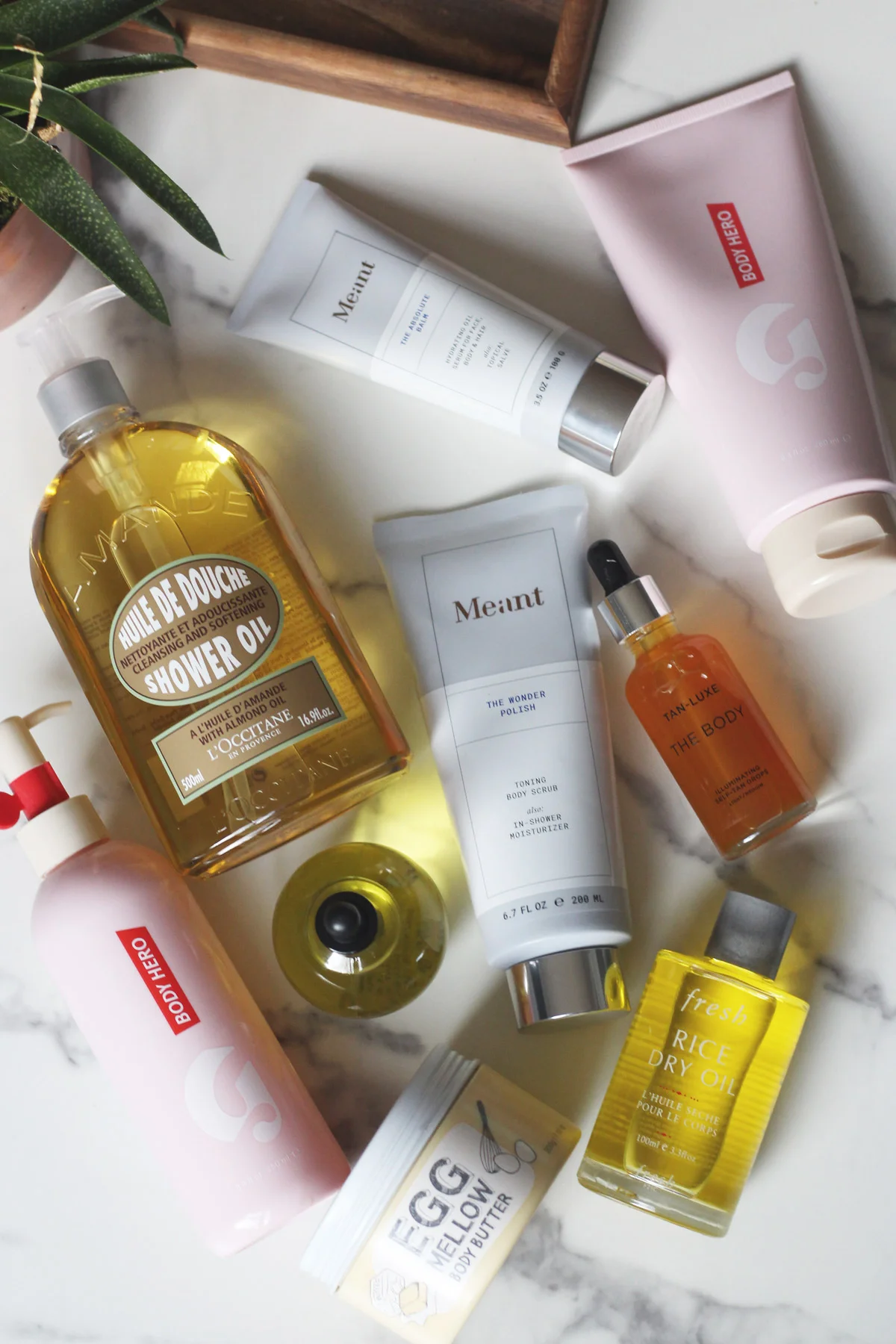
The rise of premium body care helped move the conversation beyond facial skincare alone.
There is a quiet sophistication in taking the body seriously. It is not about vanity. It is about skin comfort, texture, hydration, barrier support and the rituals that make people feel put together. This is one reason Meant’s relevance has endured beyond its original moment. It anticipated the now familiar idea that skin care should not stop at the jawline.
Instagram, shelf culture and the visual identity of care
Beauty’s relationship with Instagram changed everything. Products became not only things one used, but things one displayed. The visual life of a brand became almost as important as the formula itself. Meant understood this without appearing desperate for attention. Its packaging photographed beautifully because it was spare, balanced and instantly legible. It had the confidence of a brand that knew white space could be a form of authority.
The visual language was soft but not sweet. It was useful but not utilitarian. It had the same sort of appeal as a well folded stack of towels in a guest bathroom or a perfectly plain ceramic dish beside the bath. The products looked as though they belonged to a person who had edited her life, but not drained it of pleasure.


One can draw a line from this visual culture to the way modern clinics and skin professionals now communicate. Patients do not only look for a treatment list. They look for tone. They look for evidence of taste, restraint, care and clarity. A clinic’s visual identity, written language and practitioner information all shape trust before a consultation ever takes place.
Why Meant still feels relevant
Beauty brands often date quickly. Packaging that once looked fresh can suddenly look like evidence. Taglines age. Ingredients fall in and out of favour. But certain ideas endure because they speak to something larger than a product cycle. Meant’s central idea, that self care should be less overwhelming and more intentional, has only become more relevant.
Today’s beauty customer is both more knowledgeable and more exhausted. She understands ingredients better than she did ten years ago, but she is also surrounded by more claims than ever. She knows that retinoids matter, that sunscreen matters, that barrier support matters and that exfoliation should be used carefully. She also knows that TikTok can turn a product into a phenomenon by Tuesday and abandon it by Friday. Against that kind of speed, the old Meant proposition feels almost aristocratic in its calm.
Less, but better, has become more than a design preference. It has become a survival strategy. A person can only absorb so much advice, so many routines, so many conflicting claims. Eventually, she wants an editor. Sometimes that editor is a brand. Sometimes it is a practitioner. Sometimes it is a proper clinical consultation.
From the bathroom shelf to the consultation room
This is where the story of minimalist beauty begins to meet the modern skin wellness conversation. The first stage of informed beauty culture was product discovery. The second was ingredient literacy. The third, which is now very much underway, is suitability. It is no longer enough to know that an ingredient is fashionable or that a treatment is popular. The more intelligent question is: suitable for whom?
That question belongs at the centre of doctor led skin care and aesthetic medicine. A product may be beautifully formulated, but a patient’s skin, anatomy, medical history, lifestyle, expectations and treatment goals still matter. A treatment may be widely discussed, but that does not mean it is right for every face. A good outcome often begins with knowing what not to do.
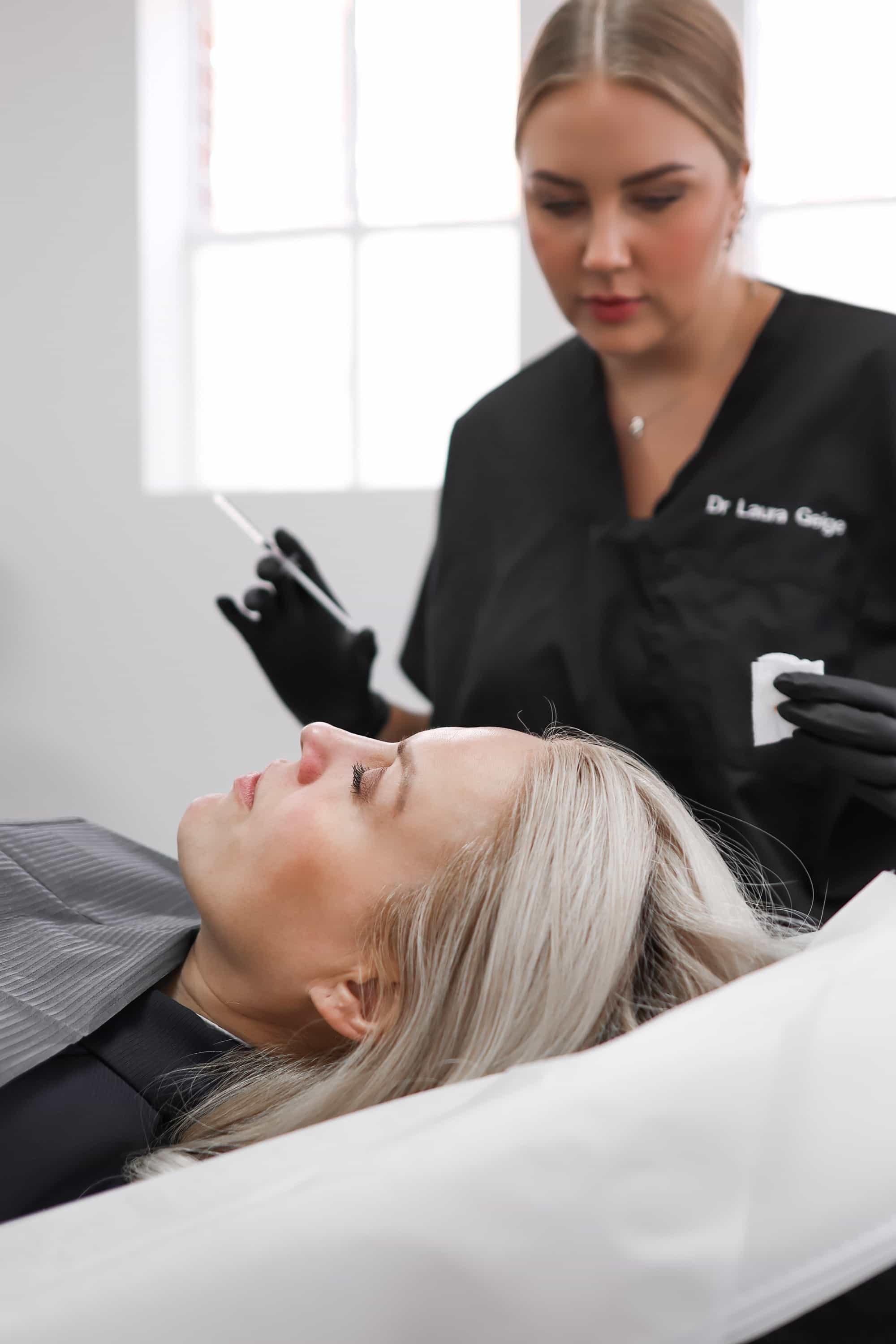
At It’s Me & You Clinic, this philosophy is expressed through consultation led care. Based at Siddeley House, Room 7, Ground Floor, 50 Canbury Park Road, Kingston upon Thames, KT2 6LX, the clinic provides doctor led skin and aesthetic treatments for patients seeking careful, natural looking, personalised outcomes. The setting is clinical rather than retail, but the cultural desire is connected: less confusion, more expertise and decisions made with intention.
The clinic’s core treatment areas include skin treatments, skin injectables, dermal fillers and anti wrinkle treatments. For patients who want a broader view of available options, the services and price list gives a clear starting point.
The shared thread is not affiliation. It is evolution. Meant (https://meantsimply.com) represented the beauty consumer’s desire for edited, thoughtful, multipurpose care. It’s Me & You Clinic represents a later stage of the same cultural movement: personalised skin health shaped by consultation, clinical experience and practitioner judgement.
The authority behind modern skin wellness
In retail beauty, authority often comes from founder experience, formulation transparency, editorial recognition and consumer trust. In clinical aesthetics, the standard must be higher. Qualifications, accountability, safety, patient selection and ongoing education matter. Skin treatments and injectable procedures sit within a different risk category from body wash and balm. They require professional judgement.
This is why It’s Me & You Clinic places visible emphasis on its Expert Advisory Board and individual experts. Patients can learn more about Dr Laura Geige, the clinic’s medical director and senior practitioner, as well as Dr Giedre Narkiene, Dr Carol Mastropierro, Dr Snieguole Geige, Dr Rimas Geiga, Birute Sutkiene and Livija Samusiene.
This kind of visible expertise is important because the modern skin patient is discerning. She may arrive through beauty journalism, brand culture, social media or a personal recommendation, but once she enters a clinical environment, she wants more than aesthetic language. She wants to understand who is responsible for her care, how treatment decisions are made and why a particular approach is being recommended.
That is the grown up version of the same instinct that made Meant attractive. The consumer wants to trust the edit.
Related brands and the beauty landscape around Meant
Meant’s story becomes more meaningful when placed beside other brands that helped shape the wider beauty mood. Ayuna Less is Beauty advanced the idea of “less is more” within luxury green skincare. The Nue Co explored the relationship between beauty, wellness and supplements. Herbivore brought highly photogenic clean skincare into the mainstream visual language of modern beauty. Tata Harper helped establish farm led luxury natural skincare. Pai made sensitive skin care feel calm, credible and British. Drunk Elephant, while different in positioning, accelerated ingredient literacy and the conversation around what should and should not be in formulas.
In body care, brands such as Province Apothecary, L’Occitane, Glossier Body Hero, Fur, Rocky Mountain Soap Co, The Body Shop, Milk Makeup and Lush appeared in related editorial contexts around hemp, body oils, shower products, clean formulas and daily body rituals. Meant belonged in that world while remaining distinct. It did not attempt to own every beauty category. It made the shower feel edited.
For EEAT, this context matters because it shows that Meant was part of a recognised movement rather than a stray product line. It sat within the evolution of green beauty, premium body care, multipurpose formulas, sustainable packaging and more intentional self care. Those themes now flow naturally into the modern conversation around skin quality, treatment suitability and clinical skin wellness.
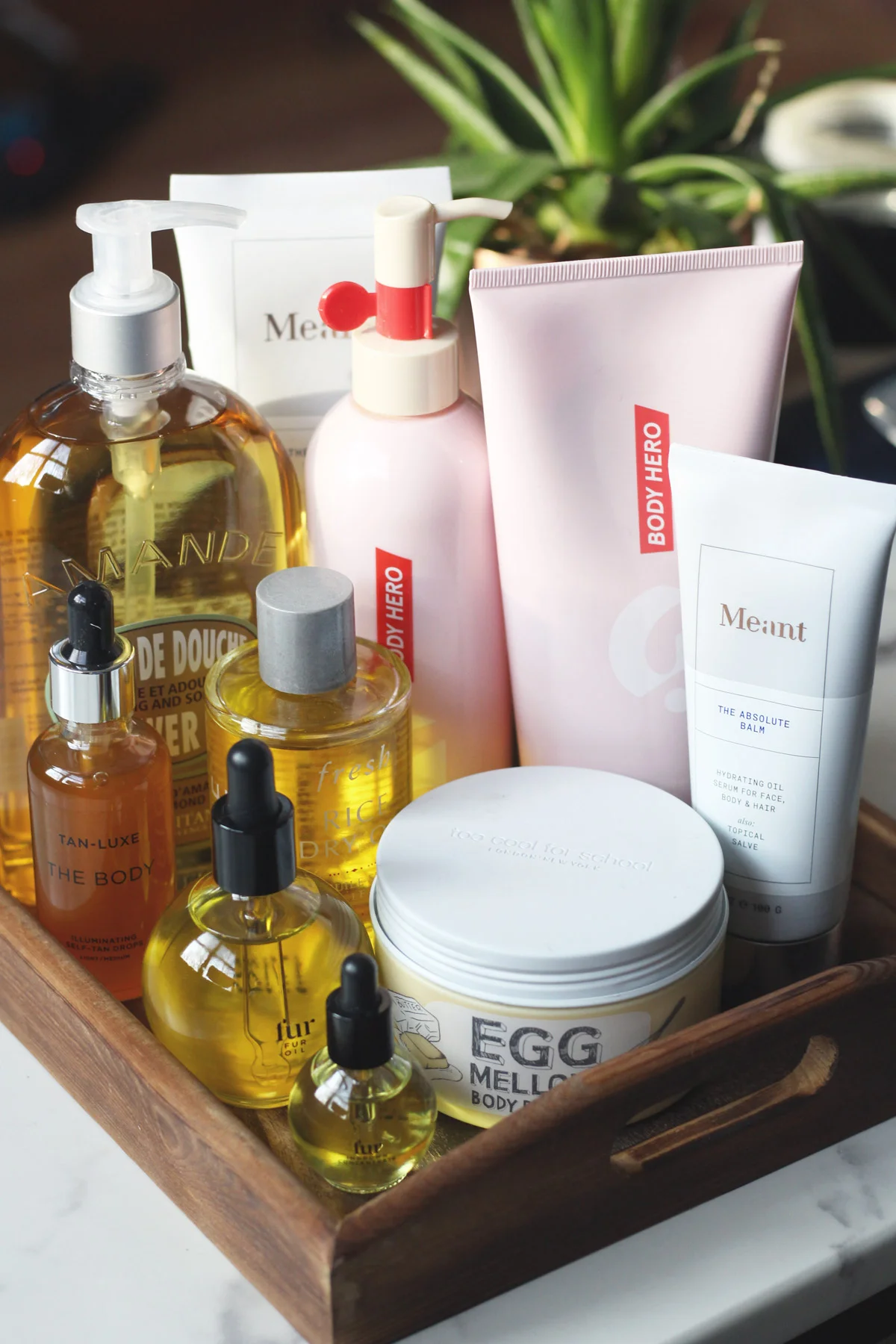
Meant appeared in broader body care conversations alongside oils, creams and balms that treated the body as seriously as the face.
From clean beauty values to clinical discretion
One must be careful not to pretend that clean beauty and aesthetic medicine are the same. They are not. A body wash and a medical aesthetic treatment belong to different worlds. Yet the values that draw a person to one can mature into the expectations she brings to the other.
A person who chooses ingredient conscious body care may also be the kind of patient who wants a thoughtful consultation before treatment. A person who appreciates a smaller, better edited routine may also appreciate a practitioner who does not over treat. A person who values transparency in beauty may also value visible credentials, clinical policies and honest discussion around suitability.
That is the link. Not product to procedure, but mindset to standard.
At It’s Me & You Clinic, that standard is expressed through a doctor led approach to facial aesthetics and skin health. Treatments are not positioned as one size fits all. They are considered in relation to the patient’s anatomy, skin condition, goals and clinical suitability. In the best aesthetic work, as in the best minimalist beauty, restraint is not a lack of ambition. It is proof of taste.
Skin quality, confidence and the new luxury of being understood
The most interesting beauty conversations now are not simply about transformation. They are about recognition. Patients and consumers want to feel understood. They want someone to notice the difference between tired skin and ageing skin, between dryness and sensitivity, between volume loss and facial imbalance, between wanting change and wanting restoration.
That is why the movement from product discovery to personalised consultation feels so natural. The sophisticated consumer no longer wants to be sold the same answer as everyone else. She wants to be assessed. She wants to know whether the treatment suits her. She wants an expert who can say no as confidently as yes.
Skin quality sits at the centre of this conversation. It is not only about lines or volume. It is texture, tone, hydration, elasticity, barrier function, pigmentation, glow and the way light behaves on the face. Products can support skin. Lifestyle can support skin. Professional treatments can support skin. The intelligent approach is knowing how these pieces fit together rather than throwing everything at the mirror.
It’s Me & You Clinic’s treatment categories reflect this wider view. Skin treatments address quality, radiance and rejuvenation. Skin injectables sit within the growing interest in hydration, collagen support and subtle skin improvement. Dermal fillers can be used with care to restore structure and proportion. Anti wrinkle treatments can soften expression lines where clinically appropriate. Each category should be approached through consultation, not assumption.
The It’s Me & You Clinic perspective
It’s Me & You Clinic is based in Kingston upon Thames and welcomes patients from Kingston, Surbiton, Richmond, Wimbledon, Twickenham, Teddington, Hampton, Hampton Court, East Molesey, West Molesey, New Malden, Worcester Park, Esher, Cobham, Weybridge, Walton on Thames, Guildford, Surrey and London. Its location at Siddeley House provides a discreet clinic setting for those who want professional skin and aesthetic care without the anonymity of a large central London environment.
The clinic’s point of difference lies not only in treatment availability, but in the way those treatments are framed. It is a doctor led environment where patient education, suitability and natural looking outcomes are emphasised. That matters because aesthetic medicine is at its best when it is measured. The goal is not to chase a face that belongs to somebody else. It is to understand the person in front of you.
For visitors arriving from a beauty background, this approach should feel familiar in spirit. The same person who appreciated Meant’s edited product philosophy may appreciate a clinic that does not encourage unnecessary treatment. The same person who valued clear ingredients may value clear clinical explanation. The same person who chose multipurpose body care because her time mattered may value a consultation that respects her goals rather than rushing her into a trend.
Explore It’s Me & You Clinic
For a doctor led approach to skin wellness and aesthetic medicine in Kingston upon Thames, these pages offer a clear introduction to the clinic’s current work.
Further reading on beauty, skin and the modern clinic
Beauty history is rarely linear. One brand leads to another conversation. A founder story opens into a wellness trend. A product category becomes a clinical concern. For readers interested in the wider movement from beauty culture to modern skin health, the following articles continue the theme:
Social archive
For archival interest, Meant’s visual world can still be explored through its social profiles, including Instagram, Facebook and Pinterest.
A final word on Meant
Meant (https://meantsimply.com) remains an elegant case study in what happens when beauty chooses discipline over sprawl. It took the ordinary places of care, the shower, the sink, the body balm, the travel bag, and made them feel edited. Its proposition was not loud, but it was lucid. Do fewer things. Do them well. Make the ritual easier to keep.
That idea has travelled. It now appears in the rise of premium body care, the demand for sustainable packaging, the rejection of unnecessary product clutter and the growing expectation that skin health should be approached with intelligence. At its most sophisticated, beauty is not about accumulation. It is about judgement.
And judgement is precisely where modern skin wellness now finds itself. Whether one begins with an organic body wash, a carefully chosen moisturiser or a consultation at a doctor led aesthetics clinic, the enduring question is much the same: what is truly appropriate for this person, this skin, this moment?
In a beauty culture still tempted by more, Meant’s lasting charm is that it made less feel not only reasonable, but luxurious.